










Ukrainian Volunteers Weave Camouflage and Care
Ukrainian Volunteers Weave Camouflage and Care
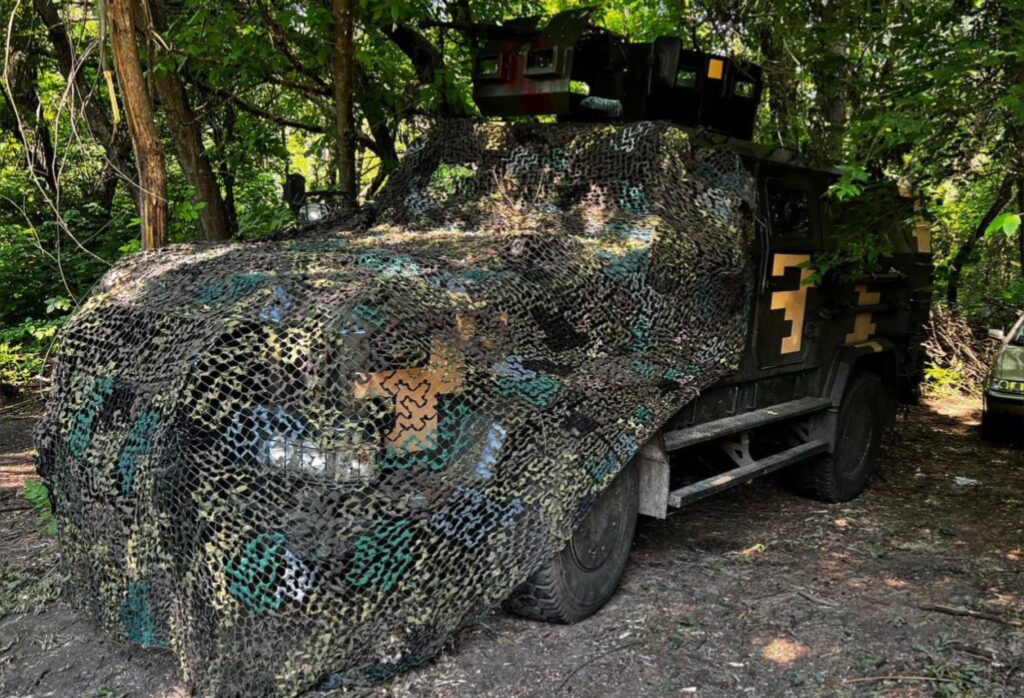
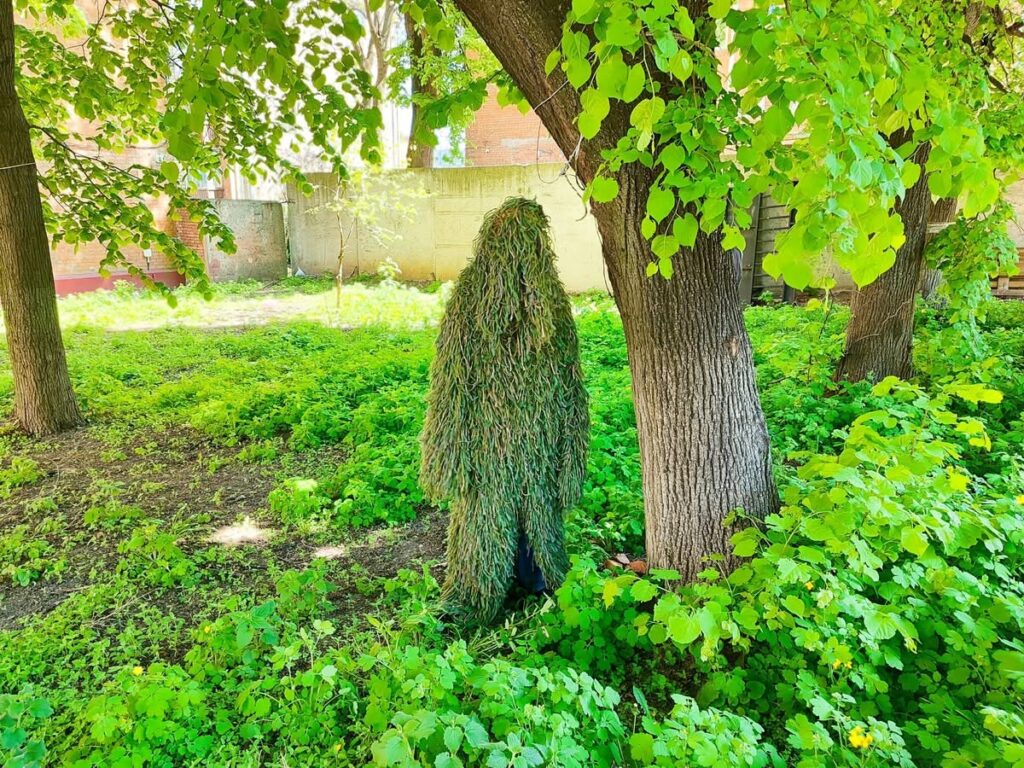
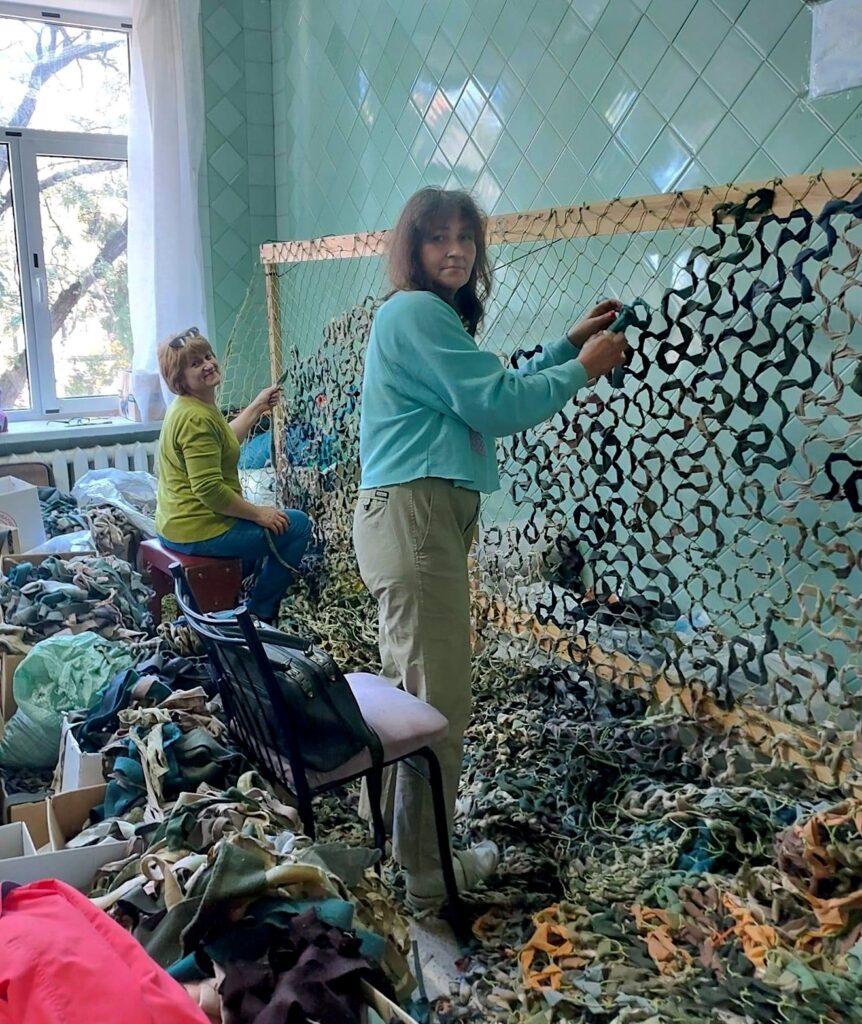
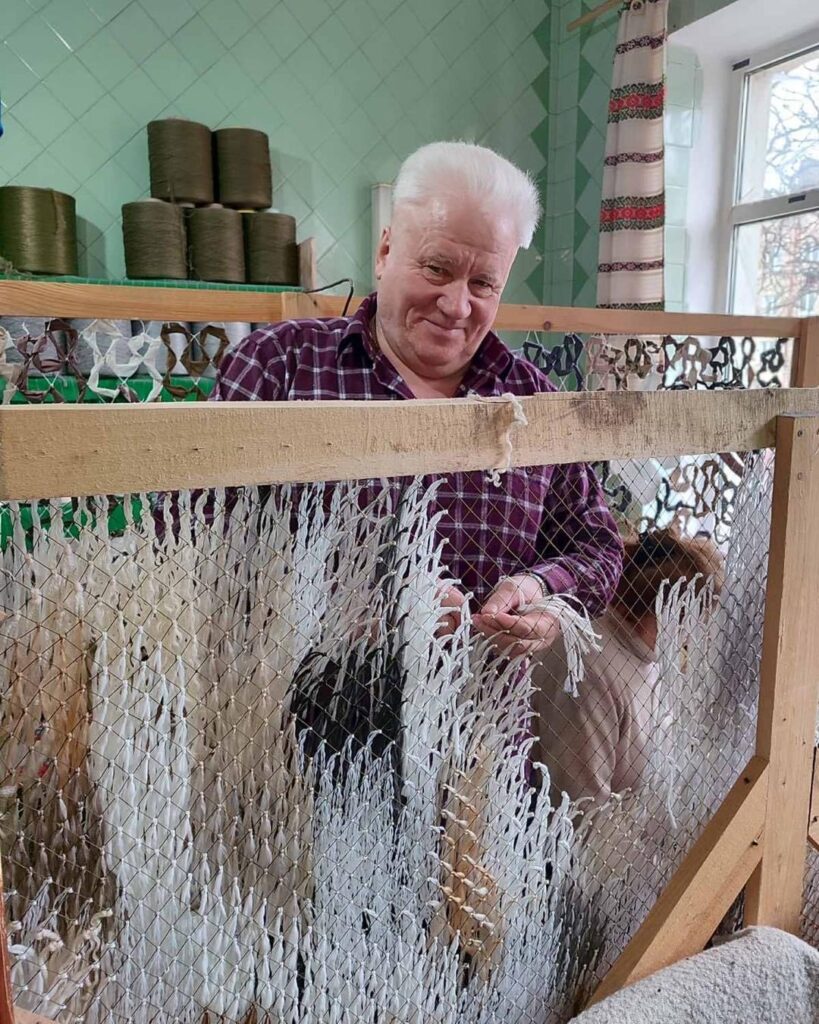
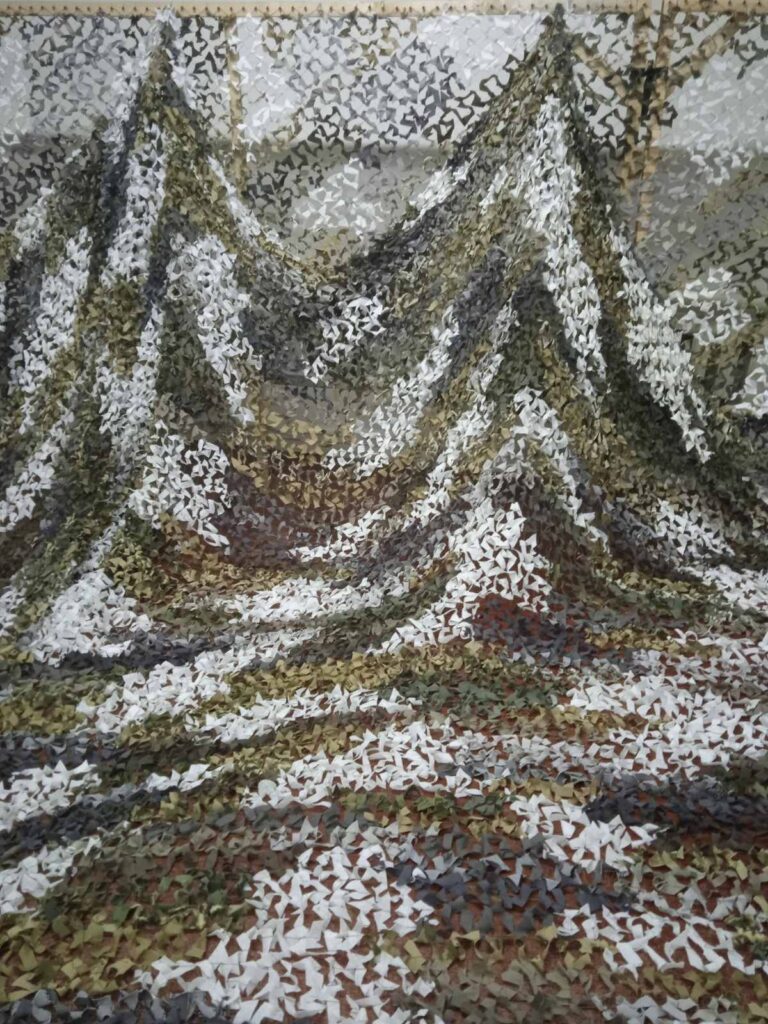
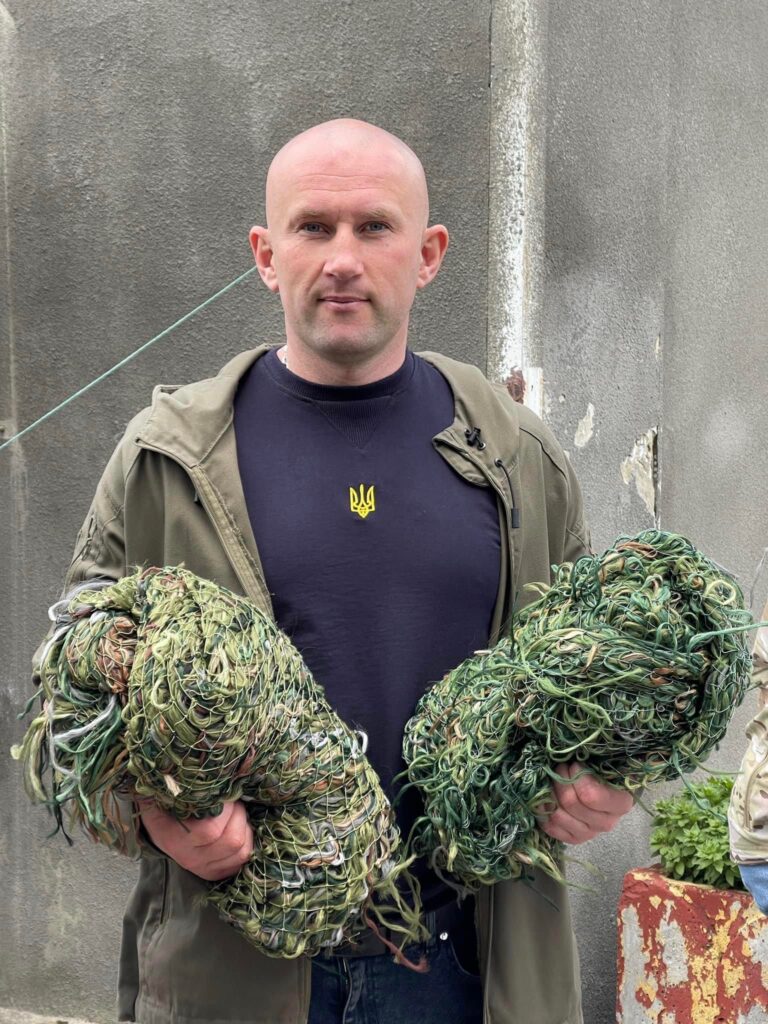
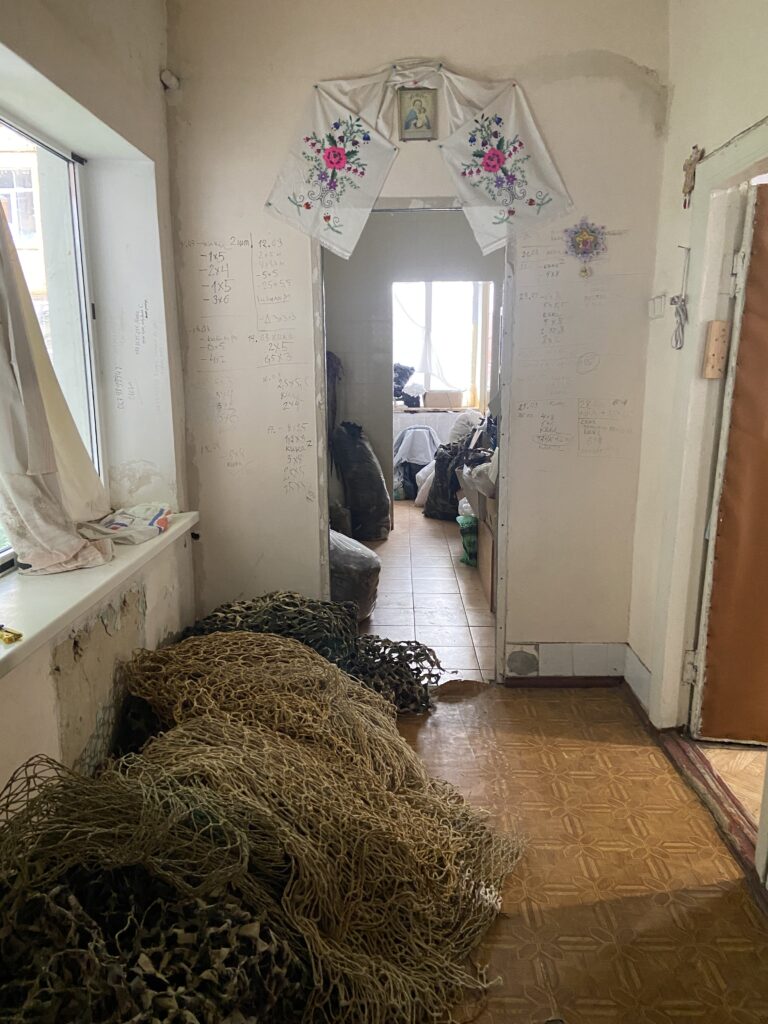
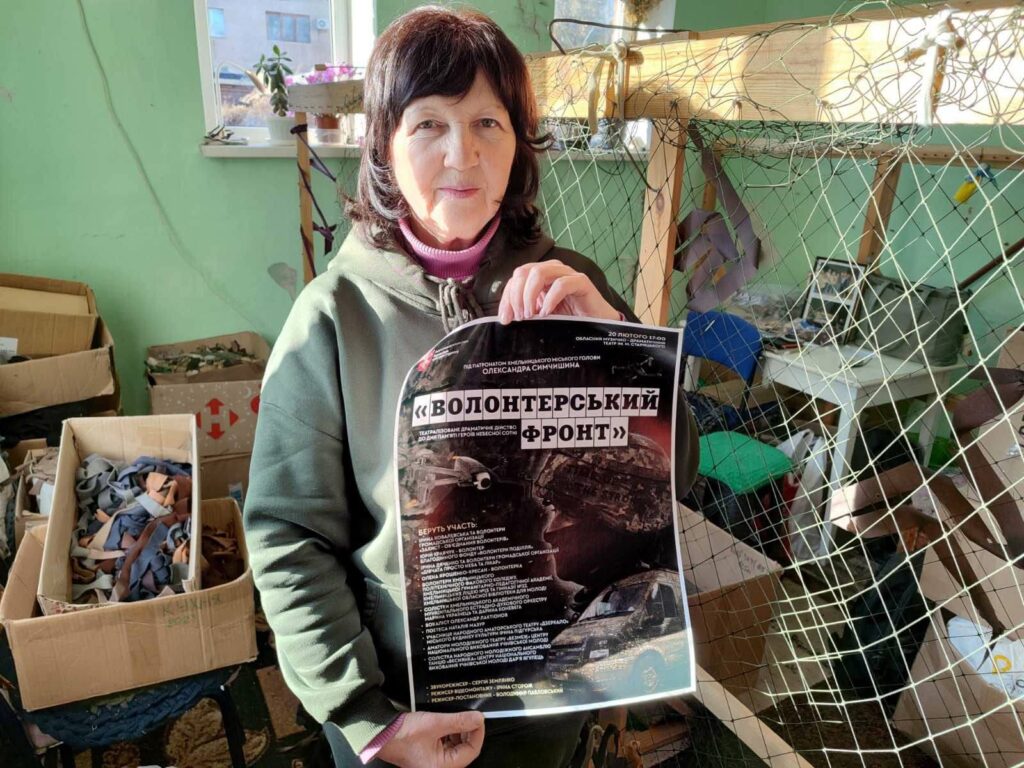
On a hot day in late July, I walk up the chipped concrete stairway of a defunct maternity hospital. I try several screechy doors until one opens into a sunlit room with tiled green walls. Inside the small, stuffy room, I meet a group of volunteers creating handmade camouflage nets for the Ukrainian army.
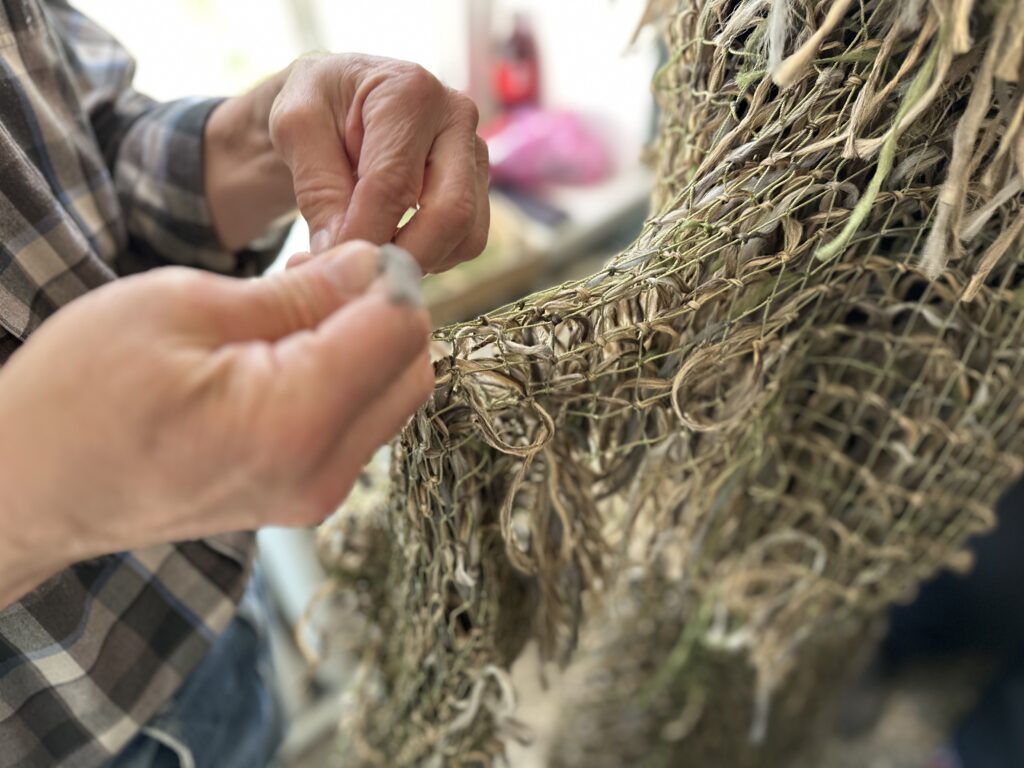
A woman with chestnut hair notices me and invites me in, showing me to a coveted spot by the open window. I watch two women sitting behind a large frame with what looks like a fishing net stretched along its perimeter. They thread strips of fabric through each cell with quick, confident hand motions, leaning back to check their work. Behind them, a mountain of cardboard boxes overflows with fabric in demure colors. I register the clanking of scissors and the ripping of fabric to my right. Five older women cut the fabric into strips, sitting close together on the wooden chairs. Their unhurried conversation goes uninterrupted by my arrival.
The volunteers featured in this photo essay are not unique. Since Russia’s full-scale invasion in 2022, when the Ukrainian government called for general mobilization in the war effort, over 600,000 civilians have turned into fighters. [1] [1] This number is an estimate based on comparing a recent interview with President Volodymyr Zelenskyy with pre-war statistics. Official information regarding the Ukrainian Armed Forces is not often made public due to ongoing military operations. The majority of the Ukrainian Armed Forces are men, but women make up more than 7 percent of the force. Others, like the people featured in this essay, have helped the war effort in other ways, such as cooking meals to be shipped to the frontlines and crowdsourcing REB systems (anti-drone equipment).
As an anthropologist who grew up in Ukraine and now researches care work, I became interested in these makeshift volunteer efforts. When a childhood friend of mine told me she had started weaving camouflage nets used by civilians-turned-fighters, I wanted to learn more. I started interviewing weavers from afar, then learned how to weave camouflage in person during my summer breaks in Ukraine in 2023 and 2024. Since then, I’ve stayed in touch and collaborated with the volunteers on articles and community events in an effort to share with wider audiences a glimpse into civilian lives in wartime Ukraine.
Many communities across Ukraine remain caught in the existential threat of war, living under “constant attacks by guided bombs, missiles, and drones.” According to a report by the United Nations in August 2025, at least 13,883 Ukrainian civilians, including 726 children, have been killed, and 35,548 people have been injured, including 2,234 children. Recent reporting suggests 60,000–100,000 Ukrainian soldiers have been killed, with a total of 400,000 casualties (including both killed and wounded). The population has shrunk by an estimated 8 million since January 2022, as many have fled the country. Russian forces have violated international law and committed war crimes, including targeting civilians.
As they weave, volunteers are simultaneously unraveling Ukraine’s colonial past and building community.
Across Ukraine, communities gather daily to weave on site or coordinate weaving by dispersed volunteers. Many of them are women, but men weave as well. Volunteers are often retirees, stay-at-home parents, internally displaced people who may have lost their jobs, college students on break, or private business owners with flexible schedules. Others make camouflage weaving their second job.
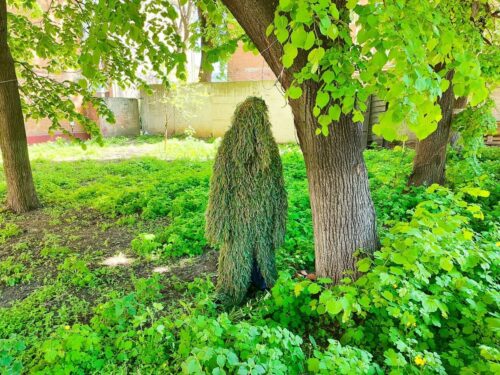
Volunteers endlessly fundraise to procure the necessary materials. The resulting nets vary by color, material, density, and design—all to ensure effective seasonal camouflage effect. Making the nets is time-consuming, yet nets are generally a single-use item: They get burnt, torn up, left behind, or ruined by moisture and mud. Volunteers do not concern themselves with the nets’ longevity, however. Instead, they work tirelessly to weave care into this handmade ephemeral armor.
Often, they work even under cover of darkness. Russia has repeatedly targeted Ukraine’s power grid since the start of the war, compromising nearly two-thirds of its generative capacity and causing regular power outages. When lights are out, volunteers mount their headlamps and flashlights and continue weaving.
According to a senior volunteer/record-keeper, the community I work with wove 101,200 square meters of camouflage between February 2022 and January 2025. This translates to 3,480 nets, 1,717 uniform covers, and 379 helmet covers. Many soldiers rely on this labor of strangers; the waiting lists to receive camouflage are long, and volunteers’ social media posts routinely implore, “More hands are needed!” Some have organized their neighbors, colleagues, students, and other local youth to weave camouflage or help with related tasks.
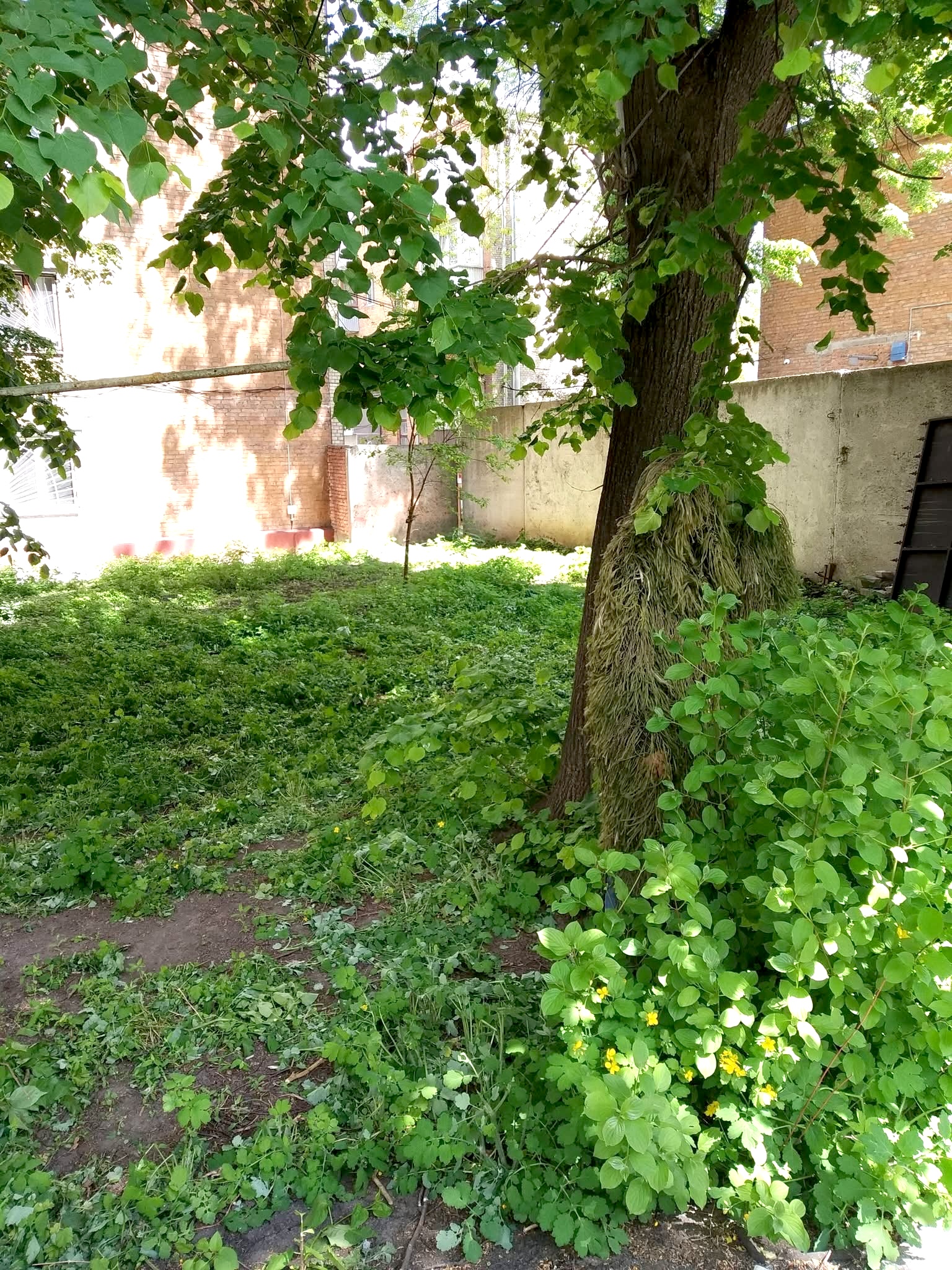
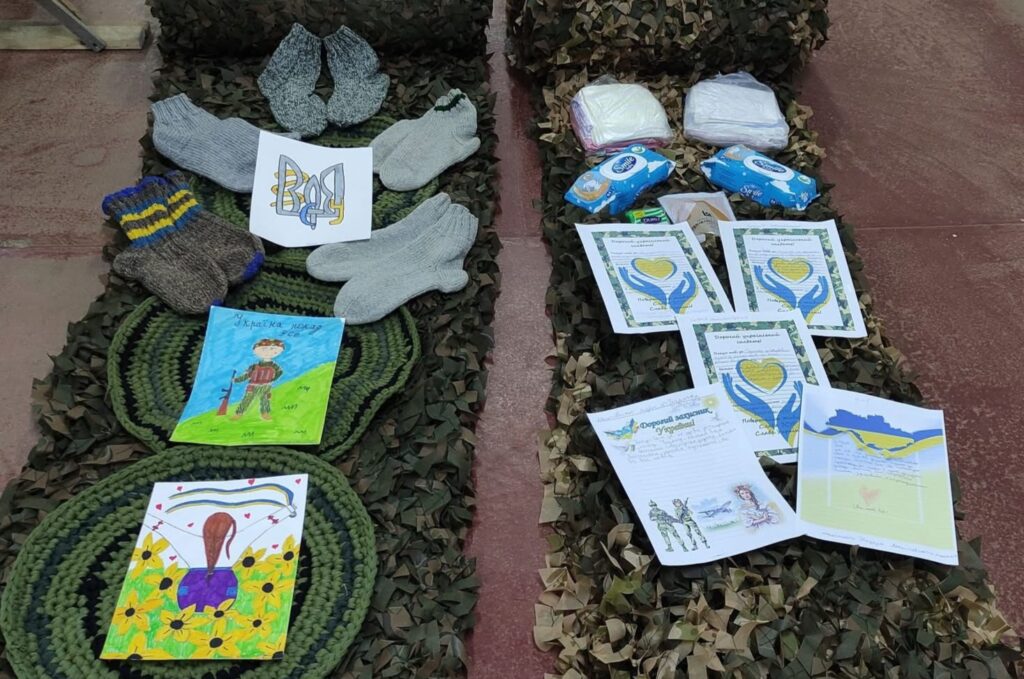
While the nets cannot guarantee soldiers’ safety, they can assure a connection between the camouflage weavers and its wearers. Soldiers who rely on these gifts of handmade camouflage nets reciprocate by sending back an occasional note or a war souvenir to volunteers, like the remnant of an enemy soldier’s gear. Sometimes these souvenirs are repurposed into an attractive decoration or a household item, like a coffee mug, and auctioned by volunteers, who put the funds back into the gift cycle.
Such human reliance on gift exchanges to build social bonds has been richly documented by anthropologists. Although market exchanges have displaced gift-giving in many areas of social life, gifts still proliferate in areas that resist commoditization, such as in foreign diplomacy, in kin-making, and, it turns out, in war. According to the volunteers I spoke with, near-miss stories of soldiers going unnoticed by Russian forces at a critical moment are the ultimate reward for their labor of care.
As they weave, volunteers are simultaneously unraveling Ukraine’s colonial past and building community. Their conversation ebbs and flows with the movement of their hands. Some weavers enjoy analyzing previous Russian invasions described in Ukrainian poetry and prose, recounting historical events in Ukraine’s long fight for independence, or discussing geopolitics and current news. Others spend their time correcting one another’s surzhik (Russified grammar)—part of a broader effort to decolonize the Ukrainian language. Being in a room of weavers often reminded me of a classroom—and no wonder, since some of the participants are retired or current teachers.
Through weaving and talking, volunteers turn fibers into ties that bind. The camouflage they create may just save someone’s life—while refashioning Ukraine into a freer nation despite all odds.

Maryna Nading is a professor of anthropology at Luther College in Decorah, Iowa. Her research focuses on health, the workforce, and gender. She has written on issues of gender segregation by medical specialty, professionalization, remuneration, and class in Ukraine. Her work has appeared in Medical Anthropology Theory, Human Organization, Medical Anthropology Quarterly, and Anthropology of Work. Nading’s research investigates sites of care that extend beyond clinical settings. She is working with several Ukrainian volunteer groups who create camouflage nets for the army. Nading argues that such war relief efforts can be understood as a type of care and decolonization that fosters radical hope in the face of adversity.
