












In Japan, the Philosophical Stance Against Having Children

Growing up in the atheistic milieu of China’s Cultural Revolution, my dad has always believed that death is the end. During the COVID-19 pandemic, when people around him began dying, he hired a lawyer and planned for his own life’s conclusion.
When I finally saw him after three years of the pandemic, my dad had grown older, balder, and more impatient. He still thinks what matters is this life rather than the next, but he makes a concession for his grandchildren. Through them, he says, he sees the future: a life beyond his own. A kind of afterlife, I suppose.
So, what if he doesn’t ever have grandchildren? What if I, his only son, stand in the way?
I told this story to Yukina (a pseudonym), a 27-year-old art student and part-time worker in Tokyo. She laughed. Pale, austere, and laced with a dry sardonic wit, she told me her own dad, like mine, put too much faith in his children.
“We have children because of social pressures,” she said. “But also because we want our children to replace us.” When her parents discovered she is a transgender woman with no plans to have a family, their hope was dashed. “Of course, it was very hard for me to accept their disappointment, although I don’t think this is a good reason to have children.”
For Yukina, there’s no good reason to reproduce. A self-identified “anti-natalist” (han shussei shugi sha), Yukina harbors the suspicion that the world is unfit for new human life—now, and maybe ever.
Over the past decade, anti-natalist social movements have emerged globally, mostly among young, urban people opposed to biological parenthood. While the term “anti-natalist” has a deeper history in 20th-century population control, since the mid-2000s it has come to refer to an ethical stance against biological reproduction. Activist organizations such as the U.S.-based Stop Having Kids and the India-based Childfree India began emerging in the late 2010s.

Between socioeconomic precarity, escalating geopolitical tensions worldwide, and a future destabilized by climate change, anti-natalists take the philosophical stance that introducing new human lives to such a perilous world is patently immoral. Unlike many who are childfree by choice, antinatalists understand their childlessness as a duty or obligation rather than a personal decision. As one anti-natalist told me, to expose another life to potential suffering is not “a risk that is ours to take.”
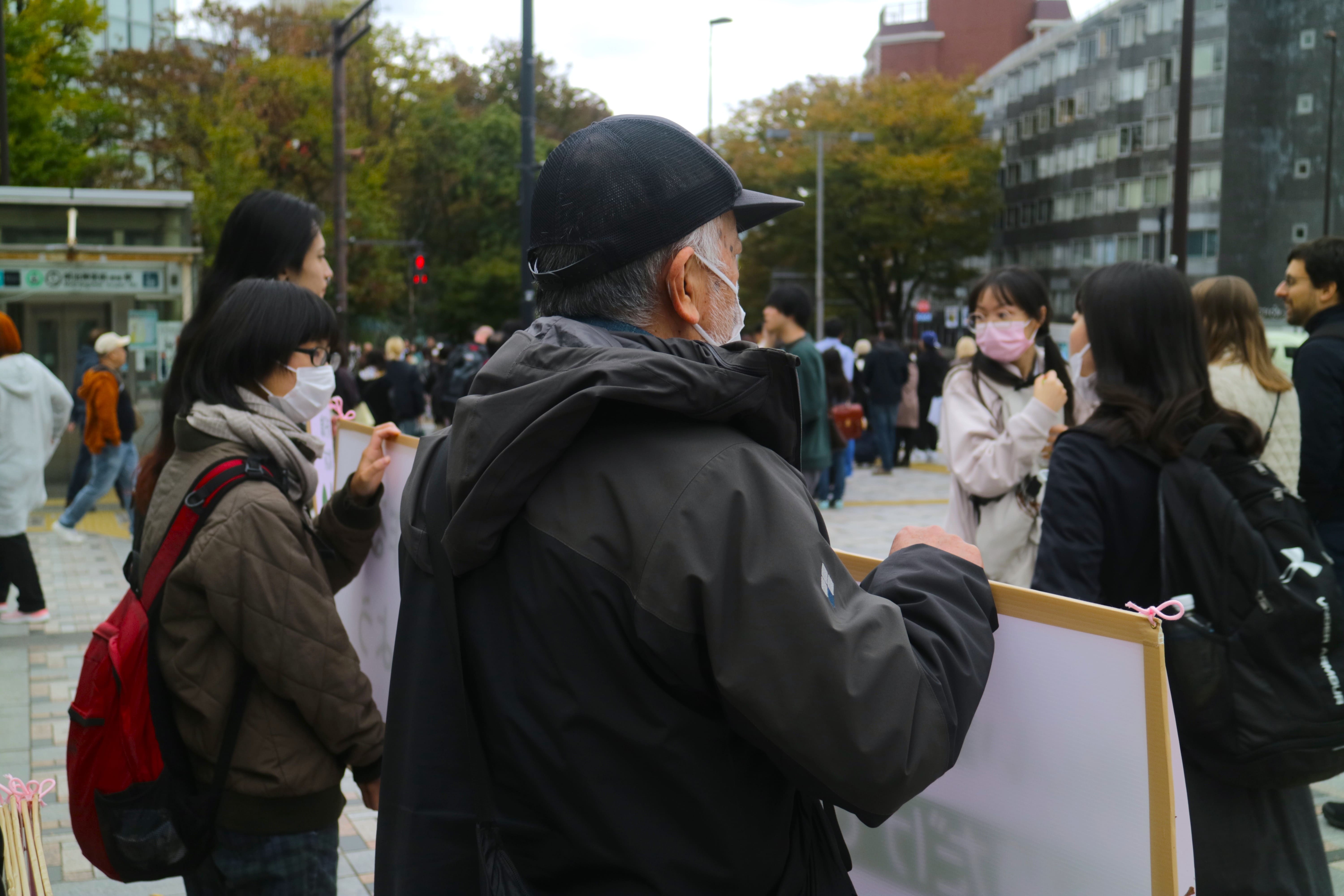
In Japan, where I’ve been conducting anthropological research on anti-natalism for the past few years, the idea of anti-natalism began in academic bioethics before becoming a trendy term on blog sites and social media in the mid-2010s. The activist group Antinatalism Japan (museishoku kyōkai) formed in 2021 to conduct monthly street outreach events, but many other groups have remained online. Across these groups, members identify with one another through their shared experiences of suffering, such as mental illness, workplace harassment, or social ostracization, and how these experiences shape their refusal to have children. One term has captured this feeling more than any other: ikizurasa, often translated as “angst,” or the pain or troubles of living.
For Yukina and others, the choice not to have children has prompted more than personal ethical reflections. In Japan, the familial fallout of “failing” to reproduce also reflects broader anxieties around depopulation and cultural extinction that have plagued the country for decades. Since the 1990s, Japan has undergone a decades-long economic decline, coupled with an aging population and declining birth rates.
Yukina’s parents, like many of their generation, are especially concerned with the social phenomenon of kodokushi, or “lonely death”—the loss of traditional familial continuity that leaves older people to die alone in their homes without caretakers. Learning of Yukina’s refusal to marry and have children, her mom accused her of “wanting them [her parents] to die alone.”
To learn more, read on from the SAPIENS archive: “In Japan, Rethinking What It Means to Care for the Dead.”
Though these worries are real, they strike Yukina as being too instrumental. “It is wrong to create a new person (hito o tsukuru) for the country or to take care of you when you’re old,” she argues. “You are treating this child as a tool.”
But as her parents have aged, Yukina admits her exacting moral philosophy has become complicated to live in practice. Usually aloof, over breakfast one morning, her 58-year-old father began talking about his retirement. In the next five to seven years, he told her, he planned to buy a home in the country. The house where Yukina still lived with her parents in Saitama, a commuter town north of Tokyo, was not big enough for three generations. “This house is for your family,” he emphasized to Yukina.
A lifelong salaryman who came of age in the 1980s, Yukina’s dad lived the quiet ascetic life that was expected of men his generation. As Japan entered its post–World War II economic boom, the political fervor of the 1960s gave way to a stable corporate life plan and the middle-class luxury it afforded. For many salarymen, this corporatism provided individual meaning in life through work, as anthropologist Anne Allison has documented. In providing for the good life of succeeding generations—through education today as well as the capital necessary to produce a new family tomorrow—work also extended the fruits of one’s labor beyond death.

In denying this succession, Yukina feels she’s undermining the proper ending her dad was seeking in life. With morbid humor, she explained: “Lately, I’ve been thinking, ‘Wow, he’s getting old,’ very often. Young people like to say that they don’t see meaning in life (imi ga naku naru), but at that age, it’s not a joke anymore.”
Yukina’s intuition about the deeper reasons for her father’s anxieties echoes what anthropologists of death have long argued—that planning for one’s death is also a way of nurturing and thus continuing to take part in ongoing collective life. This can entail mortuary rituals to ensure the dead can reach a resting place in their ancestral village to continue watching over the living, or something as mundane as making wills and planning inheritances.
Yukina felt empathy for her father, but she also did not want to be forced into accepting the gift of the family home as her inheritance. She bemoaned, “When I see him now, I feel sad. I don’t think he’s right, but I feel sad. Sad and angry.”
Many critics paint anti-natalism as a movement rejecting generational continuity and its followers as selfish, short-sighted, and nihilistic. Critiques of childlessness in general have only grown in tandem with rising pronatalist policies across the globe. Current U.S. Vice President J.D. Vance, in a 2019 speech at a The American Conservative gala, implied the childless are “sociopaths” unmoored from the well-being of their “communities,” “families,” and “country.” Others have described them as “hedonists” chasing a life of pleasure. Philosopher Ben Ware compared anti-natalism to the folly of techno-utopianism for believing that it has found the solution to worldly suffering.
These critiques are unfair and either wholly inaccurate or overly simplified. Anti-natalists have a wide range of motivations, often related to the broader social, political, and economic circumstances that shape their understandings of reproductive choice, parenthood, and the future. Anti-natalist movements around the globe do not always agree with one another or share the same concerns.
My dad sees an afterlife in his grandchildren, but maybe there are other ways to live on.
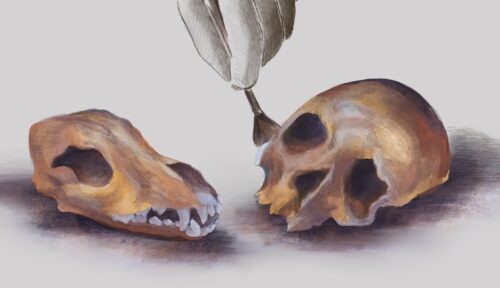
In the U.S., for instance, many anti-natalists trace their movement to Les Knight, the founder of the controversial Voluntary Human Extinction Movement, who argued that humans ought to find meaning, and comfort, in being survived by other flora and fauna. Knight’s followers believe the survival of these other lifeforms is premised on humanity’s total extinction—what better gift to give future generations?
Yukina herself is more skeptical of such romantic visions of ecological reclamation. A vegan who was not trying to save or reclaim a lost nature, she had a more modest wish: to protect other sentient beings who can feel, suffer, and die. Without humans, she thought, animals may live a better life. In her more misanthropic moments, she would even claim that she was more useful as animal feed than as a representative of her species.
“I don’t care how I die,” she said coldly during a conversation we had about her future burial. “I think cremations are very unnatural. People used to die in the ground, so the worms eat them.”
As I was writing this piece, a record-breaking heat wave hit Japan for the third summer in a row. With a planet on fire, I consider the parts of myself that might linger after my death: Will my legacy be another human being or just a decomposing body that enriches the soil? My dad sees an afterlife in his grandchildren, but maybe there are other ways to live on.

Jack Jiang is an anthropology Ph.D. candidate at The New School in New York City, studying the anti-natalist movement in Japan and India. His research interests cover intersections between the anthropology of death, kinship, secularism, ecology, and contemporary intergenerational ethics. He has also written for Anthropology Today, Public Seminar, and The Conversation. Follow him on Bluesky @jianj963.bsky.social.
