





The Many Lives of a Face Mask
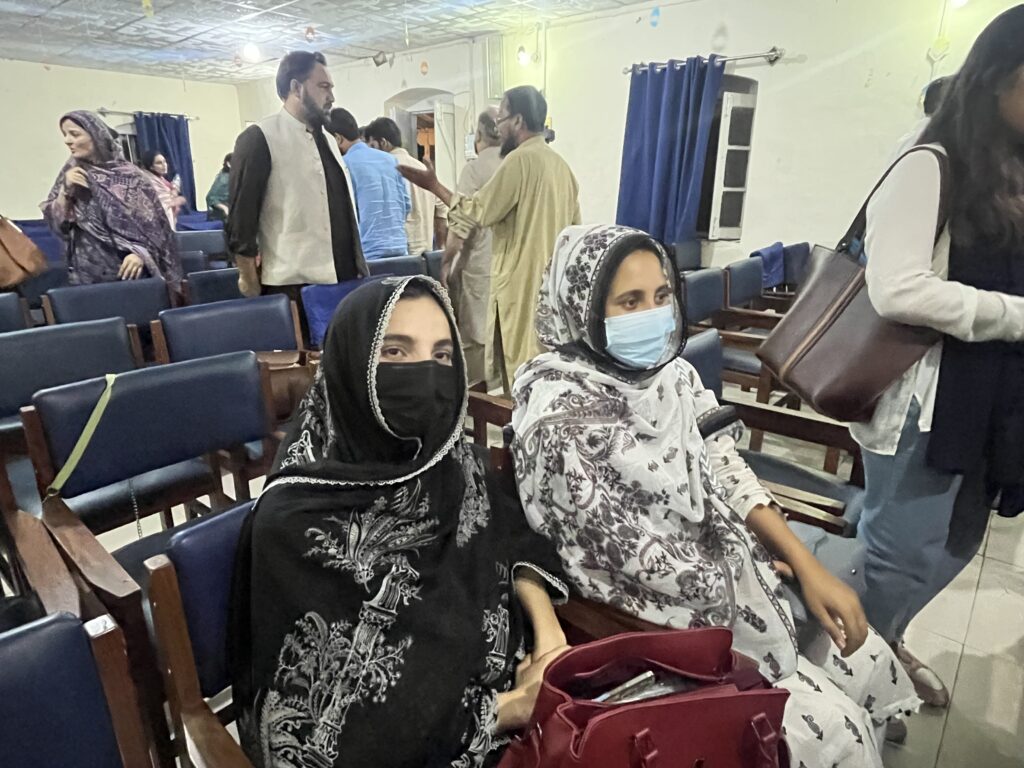
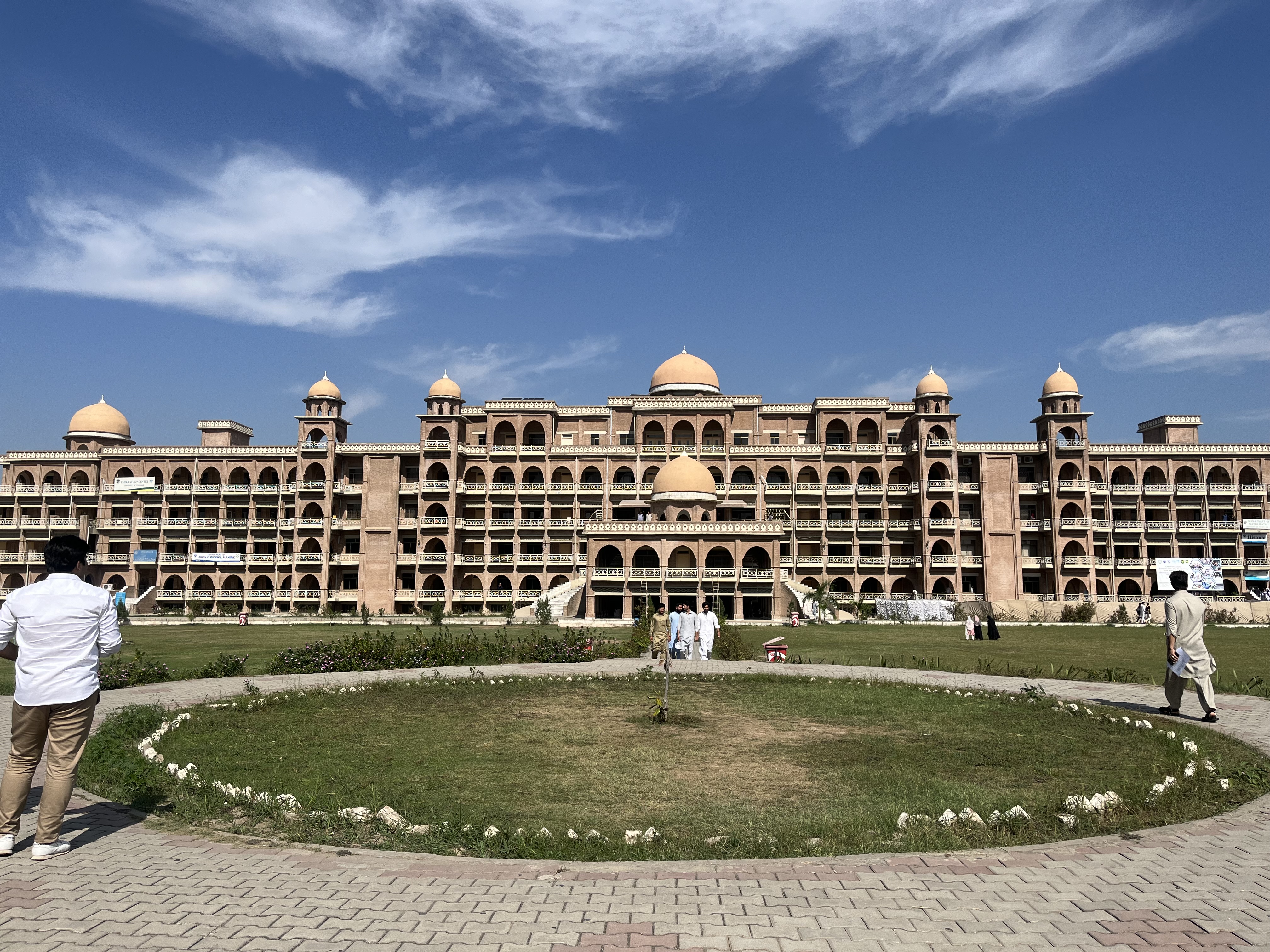
ON A HOT AFTERNOON at the University of Peshawar in October of 2024, I sat in a campus café waiting to interview Samia. [1] [1] All names of interlocutors have been changed to protect people’s privacy. She is a political science student and the first female in her family to attend a co-ed university. As I scanned the crowd, one detail stood out: Nearly every woman wore a surgical face mask. Not the thick N95s used against pollution, but the disposable kind once ubiquitous during the COVID-19 pandemic, now in a range of colors and styles.
Samia arrived in a periwinkle-blue abaya, a white mask dangling from one ear. When I pointed at her mask and asked if she was feeling unwell, she laughed. “Oh, this? No, no, it’s not because of COVID. It’s like the niqab but more convenient.”
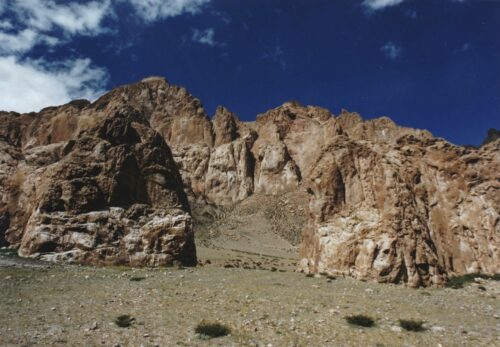
Originally from Waziristan, Samia has spent most of her adult life in Peshawar, just a few kilometers from her ancestral home but in many ways a world apart. Waziristan lies along Pakistan’s border with Afghanistan in an area known as the Tribal Belt or the erstwhile Federally Administered Tribal Areas (FATA). The name reflects the area’s semi-autonomous status, long inhabited by Pashtun tribes who followed their own customs and tribal laws—an arrangement crafted under British colonialism and carried forward by Pakistan. By contrast, cosmopolitan Peshawar boasts over 2 million residents and serves as the provincial capital of Khyber Pakhtunkhwa. This modern city is also one of the oldest on the Indian continent, dating back to more than 2,500 years ago.
As an anthropologist, I had come to Peshawar to talk with young Pashtun women about how they are navigating digital life and higher education as part of my dissertation fieldwork. Instead, I found myself drawn to something far more tactile: the afterlife of the face mask. In a city where modesty and mobility are constantly in negotiation, the mask had quietly transformed from a health precaution to an everyday tool for navigating public life on women’s own terms.
Despite Peshawar’s urbanity and diversity, modest dressing is not just a social expectation. It is a part of a broader cultural landscape shaped by Pashtunwali, the customary code of conduct for Pashtuns across the world. At its heart is its central tenet Nang (honor), a moral principle guiding personal and communal conduct, irrespective of class and gender. An unwritten socio-legal system predating Islam, Pashtunwali is preserved and transmitted through Oral Tradition, community enforcement, and everyday practices such as purdah, the tradition of gender segregation and modest dressing. In this way, Pashtun women’s clothing choices serve as clear expressions of individual, familial, and collective honor, navigating a complex visual terrain shaped by tradition, urban life, and shifting moral expectations.
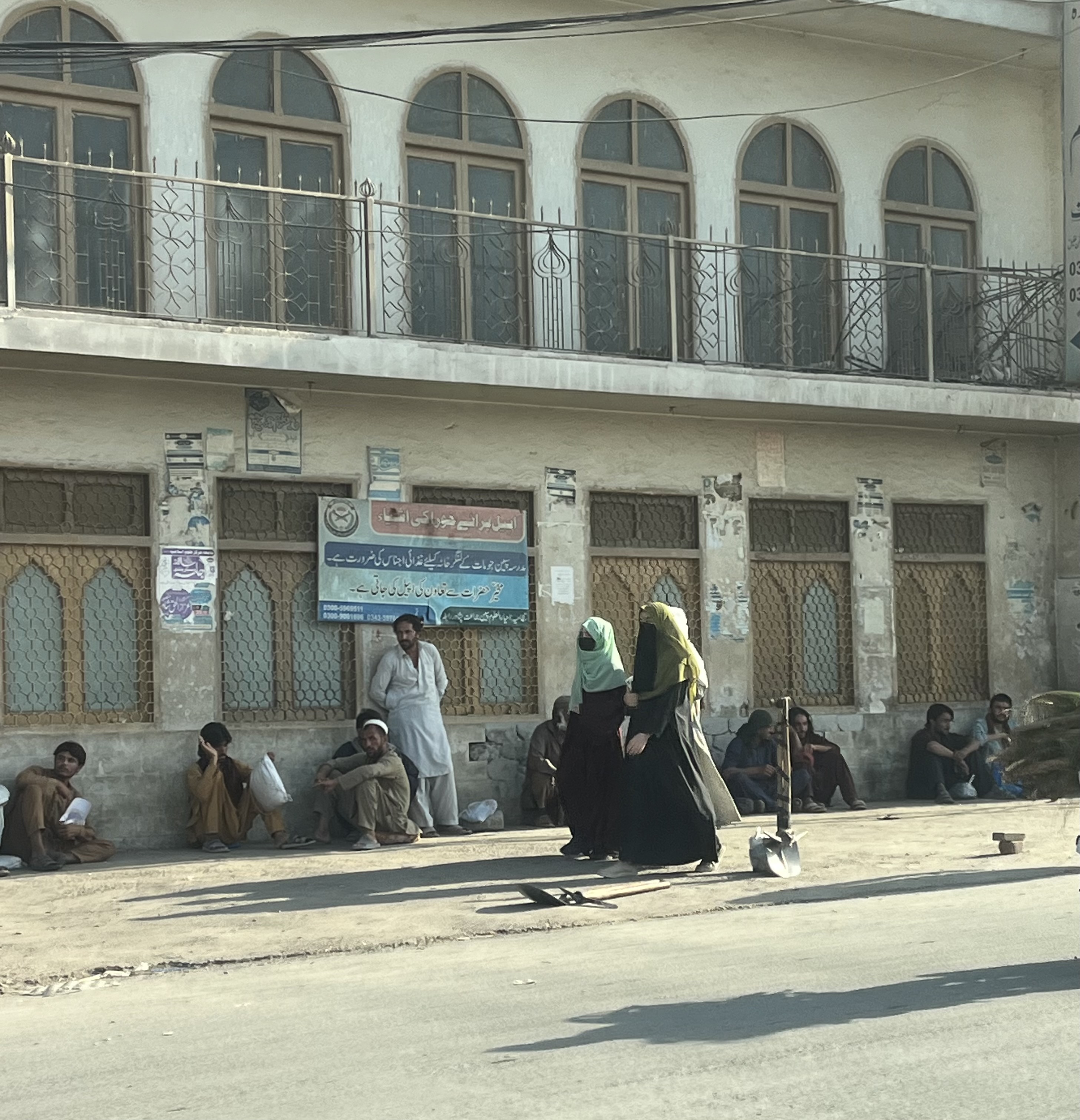
Reflective of this, women in Peshawar wear a wide variety of modest dressing styles. The iconic cap burqa covers the body from head to toe with a single cloth adorned with a dome-shaped mesh veil. Women from the Tribal Belt who have settled in Peshawar, as well as Afghan refugees and elder women, tend to wear this garment. Peshawari local women prefer the long black or white chador, a large cloth sheet covering the whole body that can be pulled or held across the face for partial concealment. Some women prefer the black abaya, or “coat burqa,” which includes a long gown, headscarf, and optional niqab as face covering. Its popularity has grown since the early 2000s, coinciding with the War on Terror, and reflects the growing influence of Gulf aesthetics in what many locals describe as the “Arabization of Pashtun culture.”
Against this backdrop, the surgical face mask has quietly entered the mix.
Samia’s insight that the mask is like a more convenient niqab stayed with me as I moved through the city. I noticed how many women, including students, commuters, daily shoppers, were using the mask in ways that blurred the line between necessity and expression.
THREE PORTRAITS OF A FACE MASK
At a welcome party hosted for incoming students at the university, I noticed how, despite being a co-ed space, many of the female students wore gorgeous dresses with adorned scarves. Matching the color of their outfits, most wore face masks—an unusual look on the university’s grounds and classrooms.
“I spent 5,000 [Pakistani] rupees on this dress,” explained Naila, a journalism student, of the approximately US$18 she spent. “I don’t want it to be hidden under an abaya,” she said, as she took selfies in the face mask to maintain her Snapchat streak with her friends.
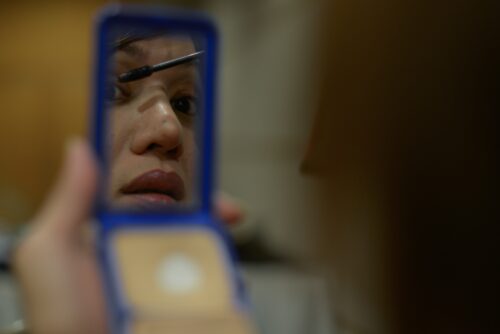
Naila further explained that the mask allows for modesty while still letting women embrace the latest trends. It removed the need for a chador big enough to stay in place over their face, giving them more sartorial options. It is also easier to remove to have food or to take pictures. The look has become especially popular at nonsegregated social gatherings, where women can be stylish and modest at the same time.
The face mask allows women to conform to social norms while also breaking from traditions. Shireen is one of only two female undergraduate students who are part of a leftist students collective on campus.
“No matter how much one tries or hopes, the niqab is seen as a symbol of not only religiosity but a specific brand of Sunni Arabized Islam,” she said. “As someone who wants to participate in liberal political fronts on campus and a woman navigating the city on her own, I feel like the mask gives me a gray area to function in, where I cannot be stereotyped nor seen as a contradiction.”
Shireen added that Pashtun men who wear traditional dress and talk about political theorists like Karl Marx are seen as radical. But Pashtun women must go through multiple social tests to prove their liberal politics, especially when constrained by limits on their mobility and influence within these circles.
“The face mask at least complements the struggle if not solves it entirely,” Shireen concluded.
In addition, the choice to wear a face mask is also deeply tied to climate change in Pakistan, one of the most climate vulnerable countries in the world. During the long, intense summers, temperatures in Peshawar often soar to 45 degrees Celsius (113 degrees Fahrenheit). Wearing abayas or multiple layers of fabric in dark colors can be unbearably hot, particularly for students like Ayesha, who must regularly conduct fieldwork outdoors for her geology dissertation.
“It’s impossible to wear my normal clothes and then add an abaya on top, especially one that covers my face,” Ayesha said. “I’ve switched to a cotton white chador and a face mask to avoid heatstroke. Completing this research is crucial for my M.Phil. degree, especially since I’m one of only five female students in my entire department. The pressure is intense.”
MASKED SELVES, reimagined
Anthropologist Arjun Appadurai writes that everyday objects possess “social lives” that acquire new meanings as they circulate through different contexts within the global milieu. The surgical face mask, once a global health tool, exemplifies this transformation in Peshawar. There, it has evolved into a subtle instrument of modesty and self-determination.
Rather than signaling illness or isolation, the mask now allows women to navigate visibility in public spaces, offering an adaptable alternative to traditional veiling. This shift resonates with Saba Mahmood’s ethnographic insights on women’s participation during the Islamic Revival movement of the late 1990s in Egypt. According to Mahmood, modesty is not simply imposed but can be a form of agency and ethical self-cultivation.
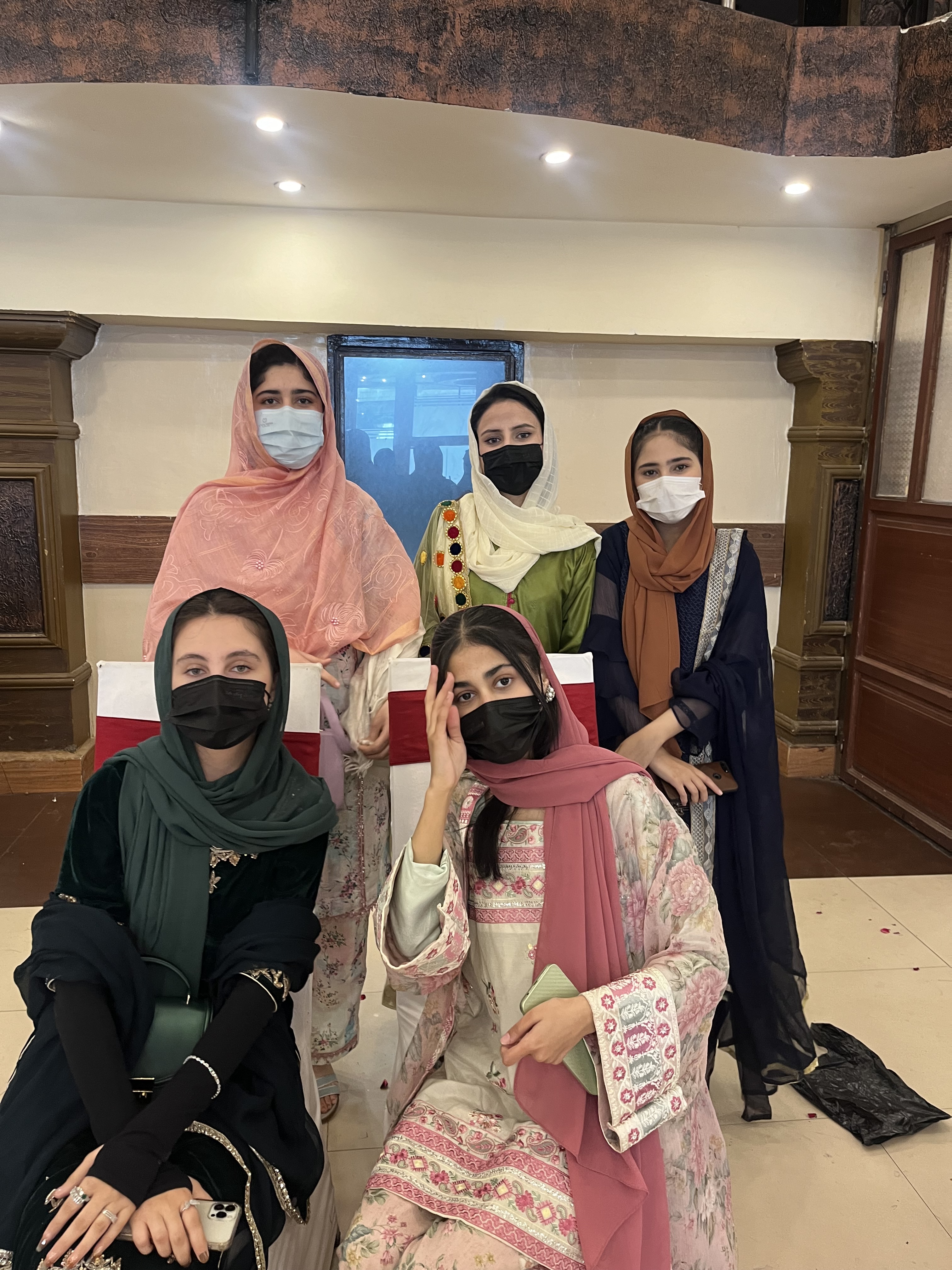
As Samia put it to me, “I like the mask because it makes me feel different, like I have the choice to bend some rules.” And who does not want to feel that way at 19? In Peshawar, the mask’s flexibility allows women to engage with norms of purdah on their own terms, complicating the idea of agency as necessarily oppositional. The face mask might not be radically disrupting social norms in Peshawar, but it allows some level of self-expression and autonomy for Pashtun women navigating the city’s demands.
While the so-called Global South gets positioned outside the scope of “modernity,” global trends have a huge impact on people’s choices and vice versa. Globally, the face mask has reemerged during demonstrations on international campuses to shield identities from administrative retaliation. The mask, therefore, symbolizes self-preservation in diverse contexts, highlighting human adaptability in navigating challenging environments.
Having never practiced modest dressing while growing up in Lahore or living in New York, I feared that adapting to it in Peshawar would feel like becoming a lesser version of myself—less expressive, less confident. And to be honest, some days it did.
But watching how women in Peshawar navigate this social and cultural terrain, not by rejecting it but by reshaping it, has shifted my understanding of what agency can look like. The face mask, once a symbol of global crisis, has become something else entirely in Peshawar and in my life: a lightweight shield, a fashion accessory, a workaround, a statement.

Zainab Najeeb is a Ph.D. candidate in the department of anthropology at Rutgers University, New Brunswick. She was previously a teaching fellow at the Lahore University of Management and Sciences after completing her double master’s degree in gender and development from the London School of Economics and Political Science and the Central European University in Hungary. Her research interests are gender, migration and displacement, digital and social activism, and postcolonial world-making, with a regional focus on South Asia.
