



















Cold-Water Swimming Brings New Life to Aging Bodies
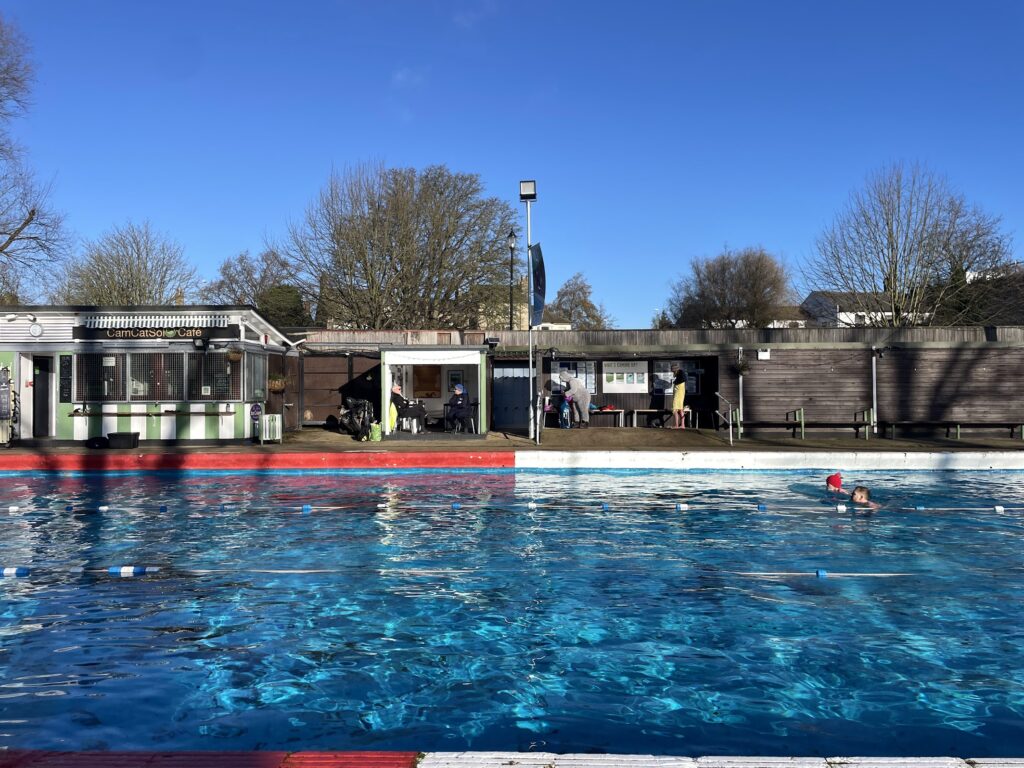
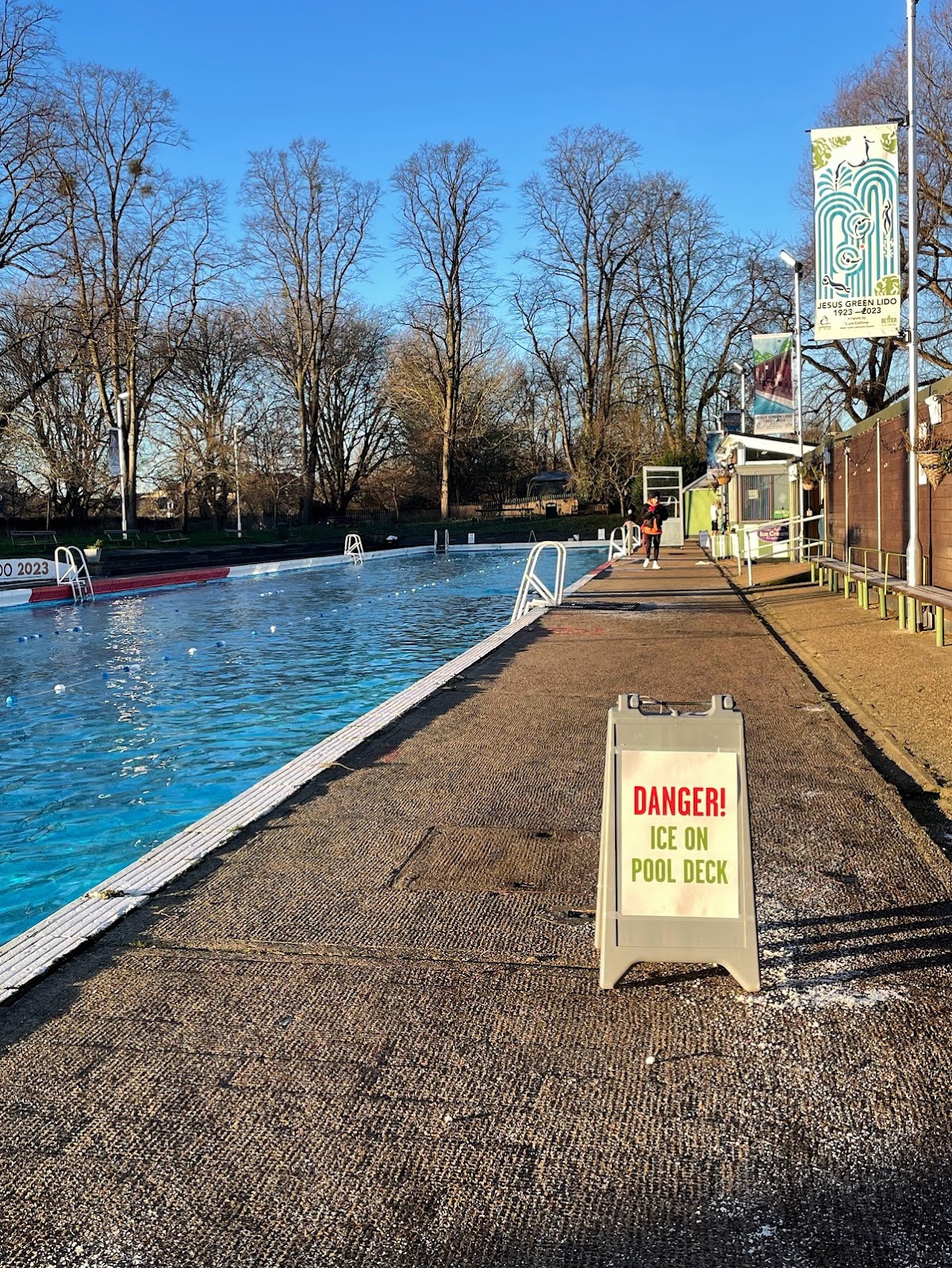
I UNDRESS QUICKLY. No point in standing half-naked by the outdoor pool when the temperature hovers just above freezing. It’s January, and dawn arrives late. At 8 a.m., the sun is just rising behind the clouds in the English winter sky.
I watch other swimmers get into the water. They can’t help but giggle, squeal, or make a sharp exhale as they lower into the pool. Some wear wetsuits and swim caps. Others wear a swimming costume and a knit hat. After some trial and error, I’ve settled on a swimsuit with neoprene gloves and socks to protect my fingers and toes from going numb, at least for the first few lengths.
All the swimmers who are here today are regulars like me. Most are double my age. I don’t know many of their names, but we nod or say good morning in passing. As I change, an older woman reaches for her towel in the bag next to mine. When I ask her about her swim, she grins and replies, “Absolutely tropical.” The water in the pool is 5.5 degrees Celsius (42 degrees Fahrenheit).
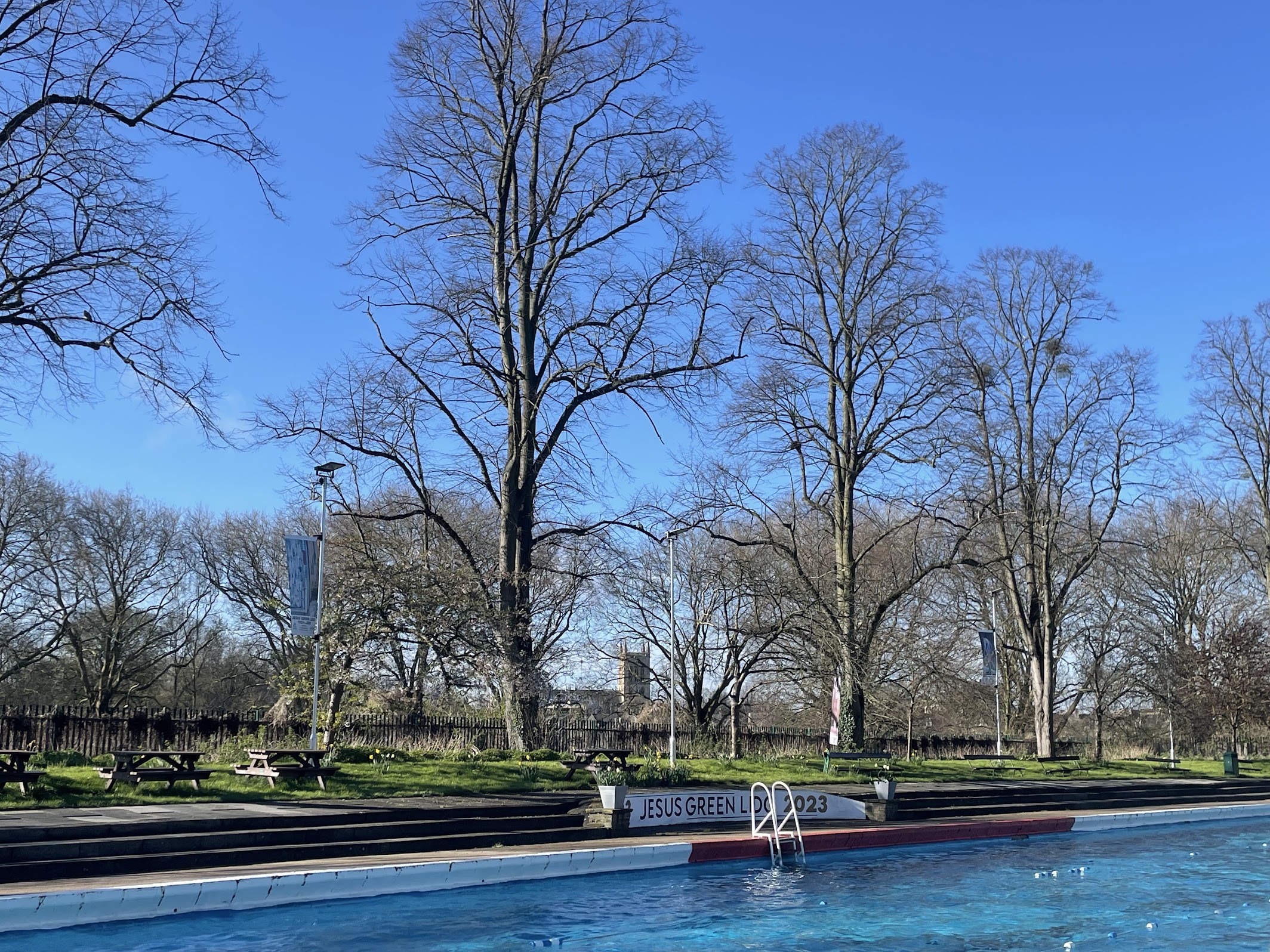
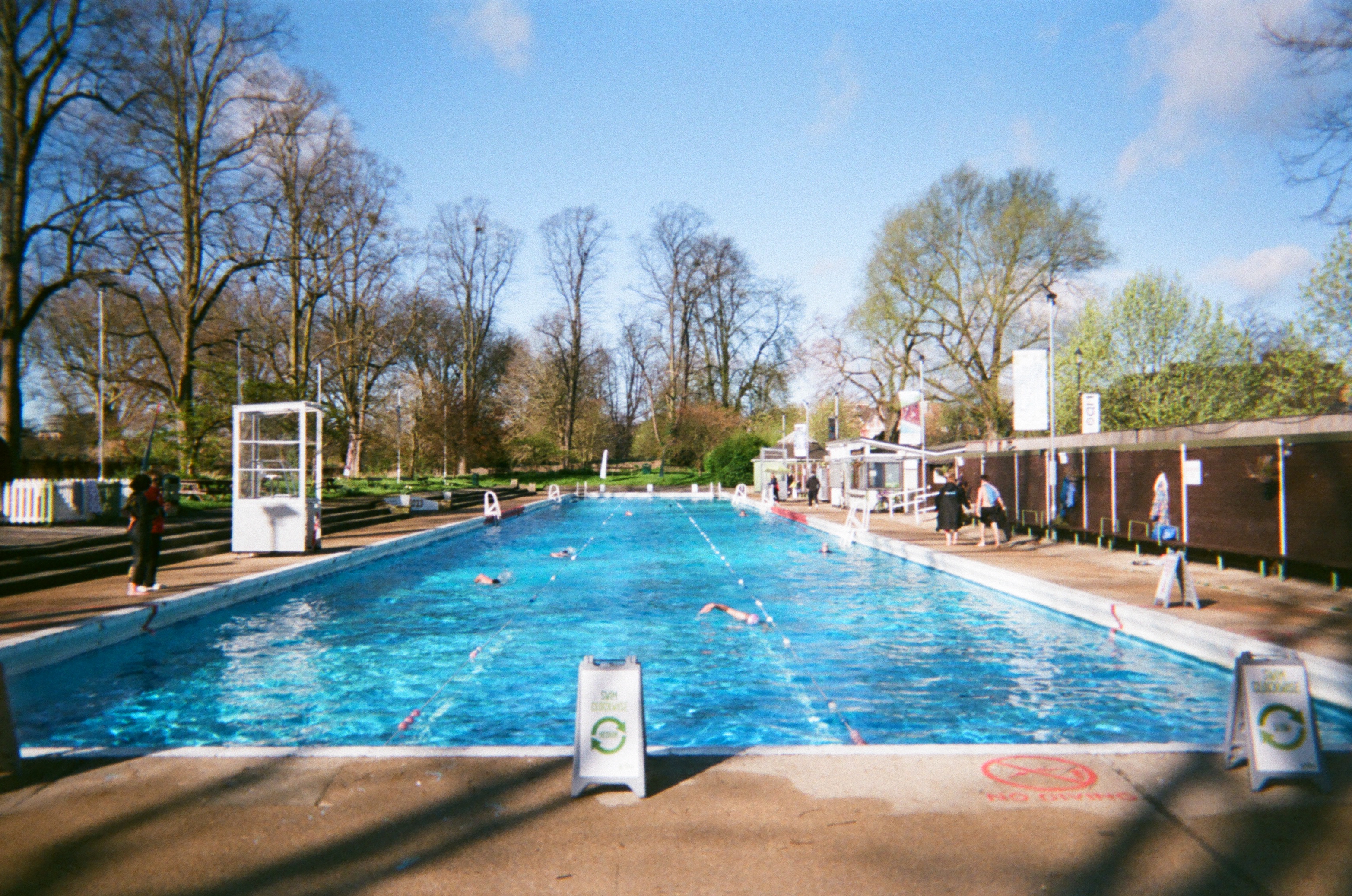
Across the United Kingdom, interest in cold-water swimming has surged in the past few years. I happily joined the trend in the fall of 2023, just after I moved to Cambridge to begin a master’s degree in medical anthropology. I started swimming at the Jesus Green Lido several times a week. (Lido is a British term for a large outdoor public pool.)
As the temperature dropped, I decided to make cold-water swimming not just a hobby but the topic of my master’s thesis. I spent the winter of 2024 conducting fieldwork at the lido, swimming with and speaking to older swimmers aged 60 and up. I was interested in how Jesus Green regulars understand the well-being benefits of cold-water swimming and what that might say more generally about what it means to live and age well.
JESUS GREEN REGULARS
In recent years, researchers have touted the health benefits of cold-water swimming, linking it with beneficial changes to the cardiovascular, endocrine, and immune systems. Outdoor swimming releases neurotransmitters, which might explain its antidepressant effects. In one study, brain imaging of participants following cold-water immersion showed changes in network structures related to improvements in mood and cognition.
But the regulars I met at Jesus Green seemed ambivalent about biomedical research on swimming. They were less inclined to talk about what swimming did to their bodies than how they felt in their bodies.
“There’s no doubt as you grow older, you have to accept you’re not going to hike many snowy mountains again,” said Celia, who started swimming regularly when she trained for her first triathlon at age 65. Now cold-water swimming is a way for her to feel a physical rush in her 70s: “It’s something you can do with a little bobble hat on and a little slow stroke, but you still feel it’s exciting.”
More than anything, the 15 swimmers I interviewed talked about pleasure. I asked them why they loved swimming in cold water, and everyone said it was because it feels so good. One person described it as a thrill followed by a sense of total calm. Others likened it to “being in the zone.”
Some struggled to elaborate. Seeing that I’d just come out of the pool, too, they simply said, “You must know what I mean.”
I did. In cold water, every cell of my body remembers it’s alive. For as long I swim laps beneath the open sky, things make sense, and I feel good. This happy and peaceful feeling stays with me for hours. As Becky, a writer and leader of the Friends of Jesus Green Lido, put it, “I find that by having swam, I can get through any day.”
Cold water helps swimmers feel physically and emotionally well. But for most people at Jesus Green, heading to the lido is about more than going for a swim. Celia told me, “I can’t unpick the experience of swimming in the lido from the pleasure of being sociable.”
Many swimmers feel a strong sense of community at the pool. After a swim, they may meet up to drink a cup of tea from the tiny lido cafe or a thermos they brought from home. There are benches along the pool where people can sit and a small, sheltered seating area that the swimmers call “The Snug.”
Repeatedly, I heard that the lido is a rare place where you can talk to anyone.
“You don’t have to know what someone does or anything like that,” explained Sylvia, who learned how to swim the front crawl at the lido to celebrate turning 60. “We’re all here, and we talk about the cold water and whether you wear gloves or socks or a wetsuit.”
The conversations I had at Jesus Green revealed how one community is understanding what it means to live and age well.
Sometimes, these poolside interactions develop into deeper friendships. But most Jesus Green regulars never hang out beyond the lido. They may see each other several times a week for years and hardly share more than the same silly jokes about how cold the water gets. What I learned at the lido is how much meaning people find in these shallow bonds.
“It isn’t just about the swimming,” said Nicky, one of the toughest cold-water enthusiasts at Jesus Green. I met her in the sauna after she’d swum over a kilometer without a wetsuit in almost-frozen water.
“I always say Jesus Green feels like your second home and a second family,” she told me. “There are so many people you know, and even if you don’t know them, you start talking away.”
Jesus Green is a community formed through friendly chats, post-swim cuppas, and the silent act of sharing the same water. At the lido, people feel well because they feel connected.
SUCCESSFUL AGING RECONSIDERED
The swimmers I met at Jesus Green are getting older at a time when medical advancements and changing demographics have put the cultural value of aging in flux. In the U.K., people aged 85 and above are the fastest-growing segment of the population.
A new ideal of active and independent older age—often promoted by the medical establishment, media outlets, and the wellness industry—is challenging the ageist assumption that life ends with a period of inevitable decline. But in a culture that stigmatizes dependence and links well-being to the individual, the aim of “successful aging” risks denying the realities of growing old.
Anthropologist Sarah Lamb has characterized successful aging as the contemporary ideal of growing older in the U.K. and other Western societies, where aging well means maintaining a productive and independent lifestyle well into later life. Personal agency is core to this aspiration. Successful aging requires making the “correct” choices of lifestyle, diet, exercise, and attitude, an approach to personal health that Lamb describes as a “self-conscious, self-disciplining project.” Adherents to successful aging embrace the idea that aging is inevitable, but growing old is a choice.
On the surface, the successful aging movement appears to challenge negative stereotypes of aging. But in the shadow of this aspirational ideal remains the possibility of “unsuccessful” aging. While those with resources and support may find the successful aging movement inspiring, it also risks stigmatizing experiences of change that are so often part of growing older.
When I started talking to cold-water swimmers about aging, I expected them to express a belief in and desire for successful aging. I thought cold-water swimming might be the kind of wellness trend that would attract the type of people who think health can be hacked.
But I was surprised to find that Jesus Green regulars had more nuanced feelings about growing older.
The swimmers I met were open about the ways in which getting older can be hard. They talked about health scares, aches and pains, and losing people they love. Some needed to use mobility aids to reach the edge of the pool. But they also told me about the joys of being older—grandparenting, a slower pace of life, and a more secure sense of self.
When I went for a cold-water dip on my 25th birthday, I happened to overhear a gray-haired woman exclaim, “You couldn’t pay me to be 24 again!”
RESILIENCE IN A MORNING SWIM
The swimmers I met at the lido are aging in a way that few people in human history likely had the chance to do. Now more people are expecting to live into their 80s and beyond, and some survive serious medical conditions like cancer or stroke. As individuals and as a society, we are figuring out in real time what to make of this.
It matters what stories we tell about growing older. The conversations I had at Jesus Green revealed how one community is understanding what it means to live and age well. Through the practice of cold-water dips, these swimmers have found a way to recognize their aging bodies as resilient and capable of pleasure.
When I talk about cold-water swimming, I’m careful not to mimic the wellness industry’s language of silver bullets or miracle cures. If anything, the time I spent at the lido showed me just how varied people’s needs are when it comes to feeling well. Accessible forms of movement and connection are essential, as well as public places that make these practices possible.
I won’t pretend that cold-water swimmers have discovered the secret to a good life. But I think they’ve at least found a good way to spend a morning.

Elizabeth Hopkinson is a city planner working in local government in London. She has a background in medical anthropology and is interested in the role of public spaces in people’s lives. She earned a B.A. in environmental studies from Yale University and an M.Phil. (Distinction) in health, medicine, and society from the University of Cambridge, where she was a Paul Mellon fellow at Clare College.
