




















Black, Pregnant, and Always Vigilant
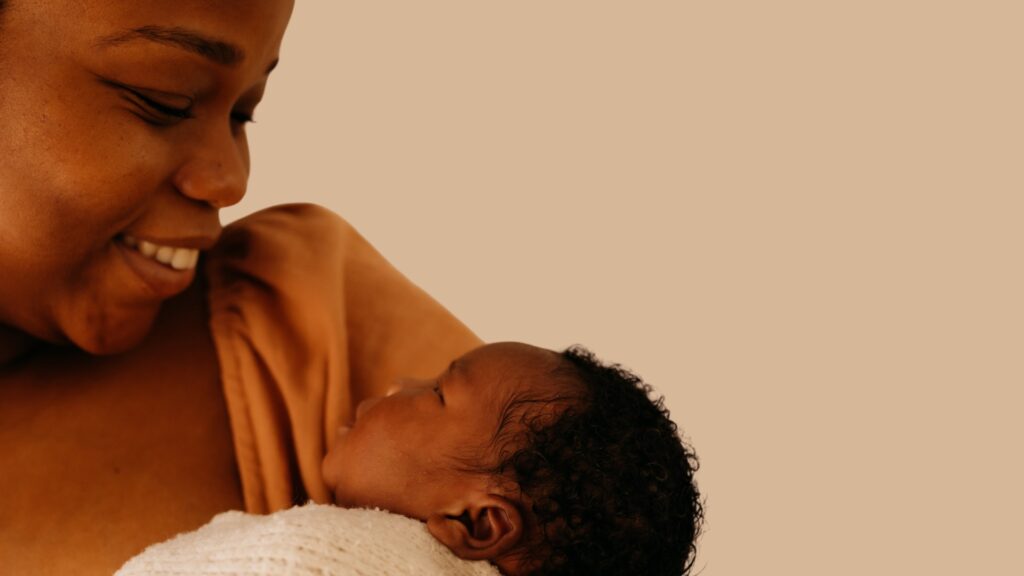
I sit at my laptop, debating whether to book a fertility health assessment. The London-based clinic’s website is hot pink and soft cyan: confident, curated, and feminine. For £600 (~US$800), I’ll get an ultrasound, blood test, and clinical consultation. Should I later choose to freeze my eggs or have fertility treatment, I can opt for an “affordable payment plan” or donate my eggs and, in turn, receive treatment at a “significantly reduced price.”
This is supposed to be a moment of agency. A small, empowered choice in a culture that urges women to plan, prepare, and preempt when it comes to fertility. But as a Black woman in the United Kingdom, it feels like the scale is tipped against me. From higher miscarriage and stillbirth rates to shocking disparities in maternal mortality, the health care system has consistently failed to protect us from danger. In a landmark report updated in 2025, the advocacy group Five X More documented how Black women continue to face considerable disparities in accessing good, safe maternity care in the U.K.
![A teal-green sliding door says, “Welcome to Maternity” and “NHS [National Health Service] East Kent Hospitals University.”](https://www.sapiens.org/app/uploads/2025/10/02-NHS-maternity.jpg)
I have come to recognize that danger has less to do with some inherent fallibility of Black women’s bodies than how those bodies are judged, managed, and valued. As a writer, multidisciplinary scholar, and former National Health Service (NHS) medical doctor, I’ve seen how racism and structural inequities show up in clinical spaces. I’ve interviewed experts, read the research, and spoken with women navigating these systems every day.
But I’m also writing as a Black woman who wants to conceive and have children. I’m planning for pregnancy with equal parts hope and fear. I am trying to take control of my reproductive future in a system not built with my survival in mind.
MANAGING REPRODUCTIVE ANXIETIES
Anticipating the future and managing risk have become defining features of reproductive life in highly medicalized societies like the U.K. “Giving every child the best start in life is a key priority,” wrote Viv Bennett at the national agency Public Health England, in a 2018 document on preconception care. Bennett continued, “A healthy, happy, and well-supported start in life will help to ensure that children go on to be healthy, happy adults.” It is a national ideal, but one that also places the weight of the future squarely on individual shoulders.
British sociologists Charlotte Faircloth and Zeynep Gürtin describe this culture as one of “anxious reproduction.” Parents, especially mothers, are expected to bear increasing physiological, psychological, and moral responsibility for the well-being of their children. These responsibilities begin well before conception: from optimizing physical health and tracking ovulation on apps to choosing the “right” partner and building a financial safety net.
To be a Black woman planning for pregnancy is to be acutely aware of both possibility and precarity.
I meet my friend Demi, a 31-year-old British Nigerian, over brunch. [1] [1] Unless a surname is included, the names of interviewees have been changed or surnames have been removed to protect people’s privacy. When I tell her I’m thinking about getting my fertility tested, she nods knowingly. She did the same three years ago. “I wanted reassurance,” she says. That reassurance came in the form of a normal blood test and, two years later, a positive pregnancy test. However, that joy was short-lived when the pregnancy ended in a miscarriage and she learned she had fibroids, a condition that disproportionately affects Black women.
“They tell you miscarriage isn’t your fault,” she says, “but they also tell you all these things you should do and shouldn’t do during pregnancy. So which is it? Could I have prevented it or not?” Demi still struggles with guilt. “If I had known about the fibroids sooner, I would have gotten treatment. It’s my responsibility to make sure my womb is as good as possible.” For her, this meant agreeing to a major operation to remove her fibroids, taking a month off work to recover.
Sitting in the garden of an East London café, we peruse the menu, and Demi tells me that she’s especially hungry these days. I look up, and she’s smiling slyly. She’s seven weeks pregnant. This time, she has stopped all exercise except walking and yoga, and she wears a ring that monitors her stress levels. I notice she doesn’t touch her runny egg yolk.
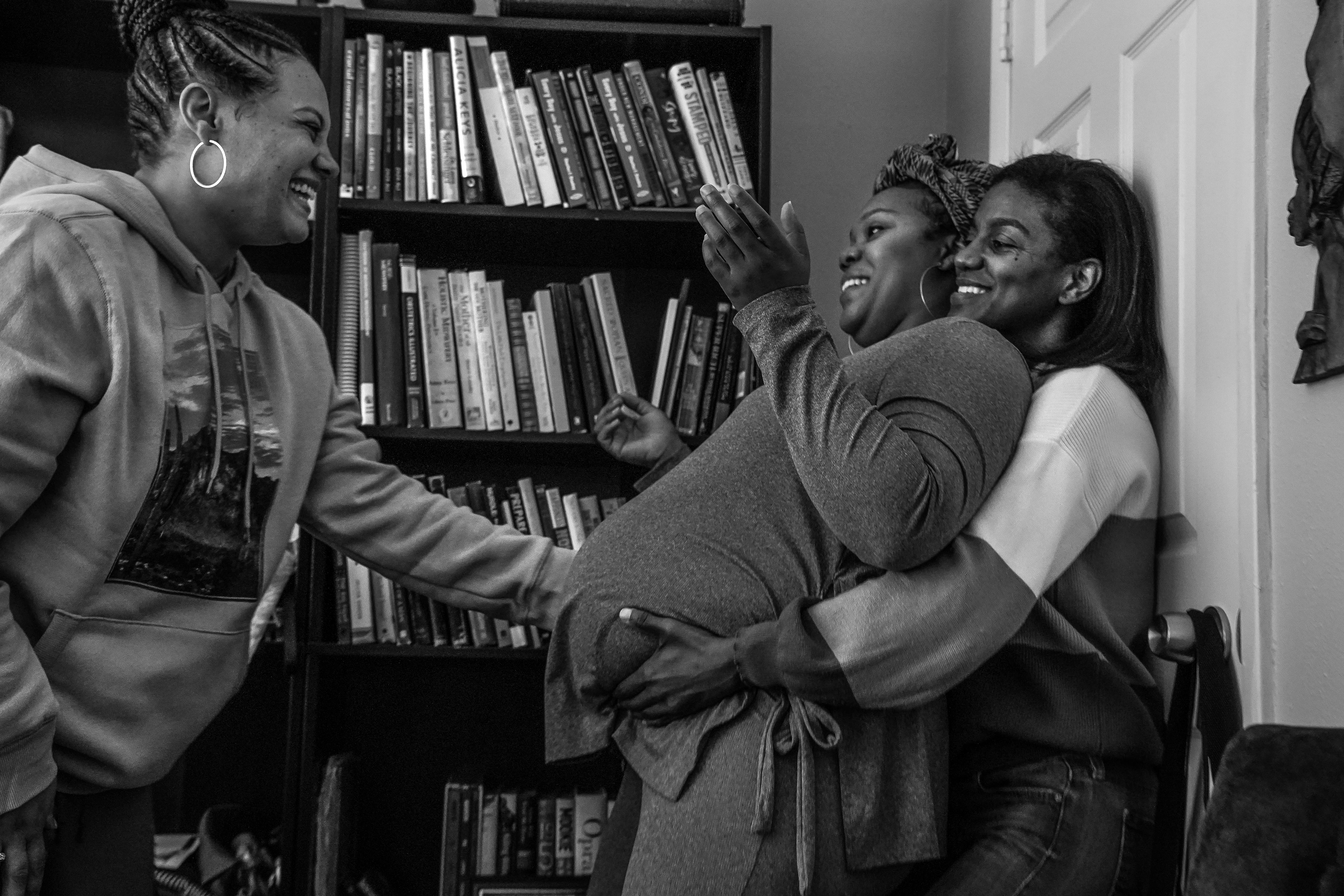
The pressure to manage pregnancy risks ran through my conversations with Black women. “It was quite a lot of pressure just making sure that I was eating all the right stuff, always taking my vitamins,” says Olivia, a British Nigerian technology worker who had her first child earlier this year. “The doctors would always be like, ‘Have you signed up to the antenatal classes? Have you done this, that, and the other?’ … I felt like I was responsible for a lot.”
That pressure also came from Olivia’s social circle, with family friends linking late-stage complications to her dietary and exercise habits. “It’s frustrating because I know I did the best for my baby,” she says. “But even still, why is there that pressure to do the best? A pregnancy is a pregnancy, anything can happen.”
Olivia also navigated cultural expectations to hide her pregnancy to avoid the evil eye—the belief, common across many cultures, that a look from an envious onlooker can cause harm or illness to a pregnant woman and child. “You want to share this joy, but you’re also scared of this evil eye thing,” she shares. “I had never subscribed to it, but while I was pregnant I felt weird about not hiding the pregnancy, because is something going to go wrong? That’s what I battled with the most.”
WHEN RISK BECOMES RACIALIZED
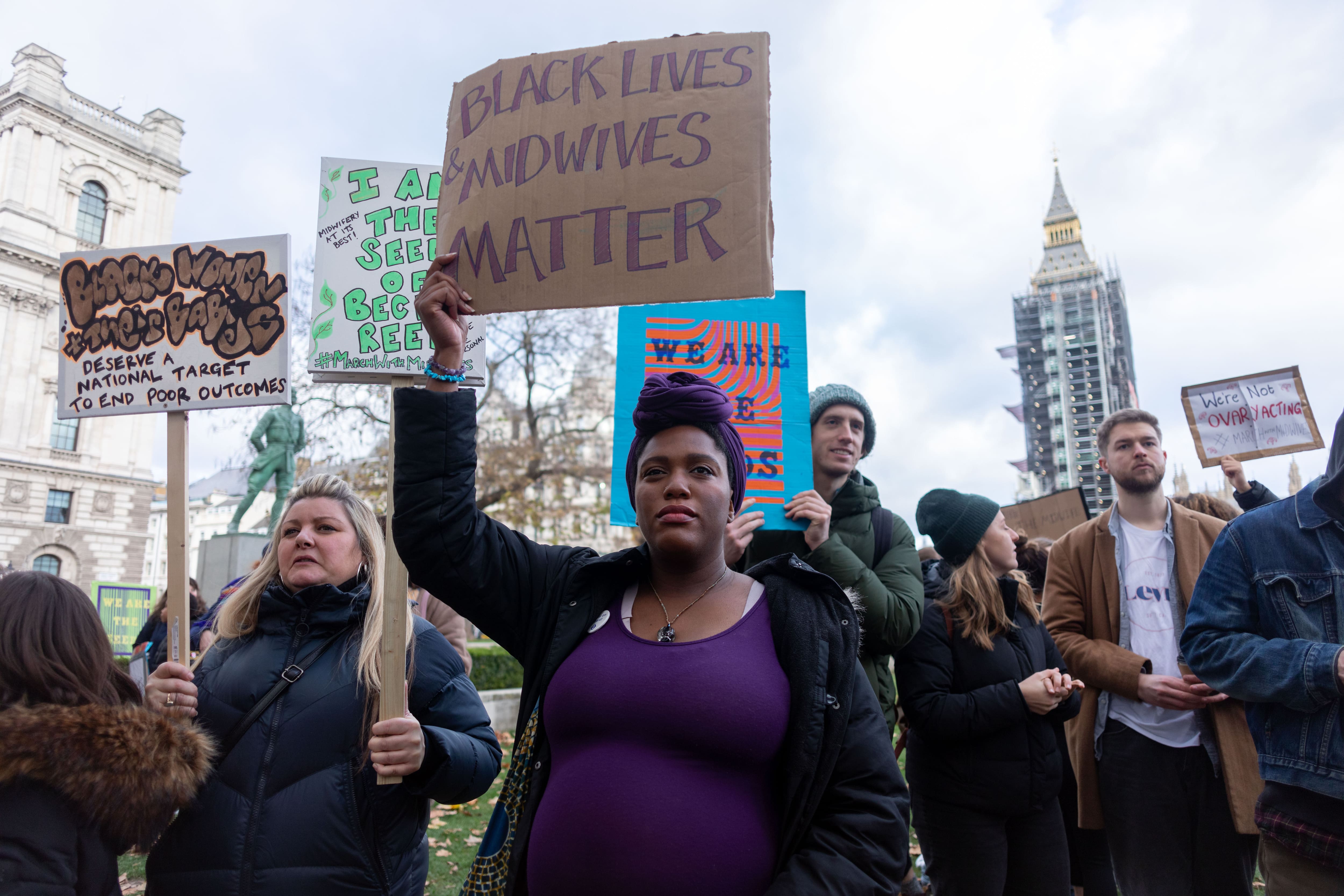
A 2024 survey by Imperial College London revealed that Black people were significantly more concerned about safety in maternity services than any other group. Their fears are warranted. In England, Black women are up to six times more likely to experience serious birth complications, and births to Black mothers are almost twice as likely to be investigated for safety failings by the NHS. Earlier this year, the U.K. Parliament’s Health and Social Care Committee described a “crisis in care for Black women,” driven by systemic failures in leadership, training, and accountability.
Five X More’s 2025 report found that racism remains “embedded in the assumptions and behaviors of staff.” Only 60 percent of Black women rated their prenatal care as good or high quality, while nearly a third faced discrimination, most often because of race. Many described clinicians who dismissed their symptoms, relied on stereotypes about Black women’s strength and resilience, or lacked knowledge of conditions that disproportionately affect them. One in four were denied pain relief they had asked for, often without explanation.
Read on from the archives: “How Eugenics Shaped the U.S. Prenatal Care System.”
Australian political scientist Carol Bacchi argues that what we propose to do about a problem reveals what we think the problem is. When U.K. public health guidance focuses on individual behaviors, such as smoking, diet, and weight loss, it’s locating risk and responsibility within individual bodies rather than systems. Across the Atlantic, similar patterns unfold. Anthropologist Khiara Bridges’ Reproducing Race describes how U.S. hospitals frame Black mothers as inherently “risky,” subjecting them to extra scrutiny and control. In this context, reproductive risk becomes less a medical evaluation than a social judgment.
Many Black women, however, know that the real dangers don’t lie within our bodies but in the systems meant to care for us. As a result, Black women often navigate clinical spaces with heightened vigilance—asking pointed questions, seeking second opinions, or enlisting family members and doulas to advocate alongside them. This work of advocating forms part of Black women’s reproductive labor—rooted in both personal experiences and collective histories of dismissal, harm, and systemic neglect.
THE LABOR OF VIGILANCE
Renay Richardson, a 41-year-old British Jamaican Trinidadian, conceived her two children through in vitro fertilization (IVF). During her first labor, Renay’s blood pressure spiked, and her baby’s heart rate dropped. Clinicians had to break her waters, and when they did, the fluid was brown: a sign the baby had passed its first bowel movement in the womb and risked inhaling it.
“I could tell that things were heading in a bad direction, so I suggested a C-section,” she says. The emergency cesarean section, luckily, resulted in a healthy baby. “But why did they let it be my decision?” she asks.
Olivia, the tech worker, also had to push for the care she needed. At her first appointment, the midwife wanted to rush through her intake questions over the phone so she could catch an early train. “I had to tell her, ‘No, you’re going to do the full hour, properly.’” Later her baby was born prematurely at 33 weeks and admitted to the neonatal unit to be fed through a tube. However, Olivia soon felt pressured to take her son home. “But I was like, what if he rips out his tube, which he was doing quite a lot. My husband and I don’t know how to put that back in.”
When staff tried to reassure Olivia she could call the team for support or bring him back into the hospital on weekends, she balked: “I have to pack up a baby, put him in the car seat, take him to the hospital? That’s crazy.”
Olivia says her complaints went unheard until her husband stepped in. “They listened to him even though I’d been saying the same thing,” she said. “And I just thought, what about women who don’t have someone to speak for them?”
Saundra, at four months postpartum when we spoke, also felt social pressure to be vigilant. “I felt quite responsible and anxious for the outcome of my baby,” she tells me. Her mother, a former midwife, urged her to advocate for herself, “especially because Black women’s pain and discomfort can be dismissed.” She took the advice seriously, reading forums, scouring Reddit threads, and trusting advice more when it came from other Black women. When the anesthetic didn’t work during her cesarean section, she insisted something was wrong. “You don’t want to be seen as troublesome,” Saundra says, “but thankfully my anesthetist praised me for speaking up.”
Saundra’s experience reflects what U.S. medical anthropologist Dána-Ain Davis calls “racial reconnaissance,” which describes how Black women strategically anticipate and manage how they will be perceived in reproductive settings. These experiences align with findings from a recent qualitative study where Black American women described modifying their tone, dress, and facial expressions to avoid being labeled as difficult or noncompliant during clinical interactions.
This vigilance often continues even in the face of good care. Tobi, a British Nigerian who had given birth three weeks before we spoke, had researched her local hospital extensively after moving out of London to a small town in central England. “I felt like I had to be super aware and take charge of my own care,” she says. “If I felt anything unusual in my body, I would call [my care team]. They were probably sick of me,” she laughs. “But for me, it was my right to get checked out.” Ultimately, Tobi had a positive pregnancy and labor experience. “I didn’t really need to advocate for myself,” she says, “but I don’t regret being prepared.”
COLLECTIVE EFFORTS
As awareness around racial disparities has grown, Black women have increasingly turned to digital technologies, including social media and apps, to support long-standing community-based infrastructures of care and resistance.
Tobi, for instance, found solidarity and reassurance after joining a group of Black expectant mothers through Peanut, which she described as “like a dating app for moms.” In the U.S., Black-owned apps like Irth encourage users to review hospitals and maternity care providers, while platforms like The Journey Pregnancy app track symptoms and vitals with the explicit purpose of helping users self-advocate during medical encounters.
When going through IVF, Renay turned to social media content creators like Melissa Lee (@missyhalle), a Black queer mom who shared her fertility journey on Instagram. “I was just seeking knowledge,” she explains. “Because I realized you need to know the questions to ask, when to advocate for yourself, when something doesn’t feel right, when to speak, and what to say.” She frequently engaged with the “Trying to Conceive” (#TTC) and “Pregnant Until Proven Otherwise” (#PUPO) communities, digital spaces of hopeful waiting. “There are even hashtags for each day after your [embryo] transfer,” she says. “I checked them daily.”
Beyond digital spaces, in the U.S., organizations such as the Black Mamas Matter Alliance and SisterSong campaign for reproductive justice: the right to bodily autonomy, to have children or not have children, and to raise children in safe, supportive environments. In the U.K., Black-led organizations such as Five X More and The Motherhood Group push for systemic accountability and equitable reform of maternal health care.
As I sit at my laptop, contemplating whether to book a fertility assessment, I know planning for pregnancy isn’t just about lifestyle tweaks, supplements, or ovulation trackers. It is about regimes that ask us to prepare, plan, and optimize while failing to account for how structural inequalities define the very risks we are supposed to manage. To be a Black woman planning for pregnancy is to be acutely aware of both possibility and precarity. Yet in strategizing, sharing, and refusing silence, we are also collectively reimagining our reproductive futures: a refusal to be confined by narratives of risk and deficiency, and a demand for just and humane care.

Samara Linton (she/her) is an award-winning writer and former medical doctor, specializing in mental health, race, and culture. She co-edited The Colour of Madness anthology and co-authored Diane Abbott: The Authorised Biography, which was named one of the best political books of the year by The Guardian and Waterstones. She is an alumna of the University of Cambridge and University College London and also holds a master’s degree in health humanities.
