


















How Women Shaped Human Evolution Through Food Processing
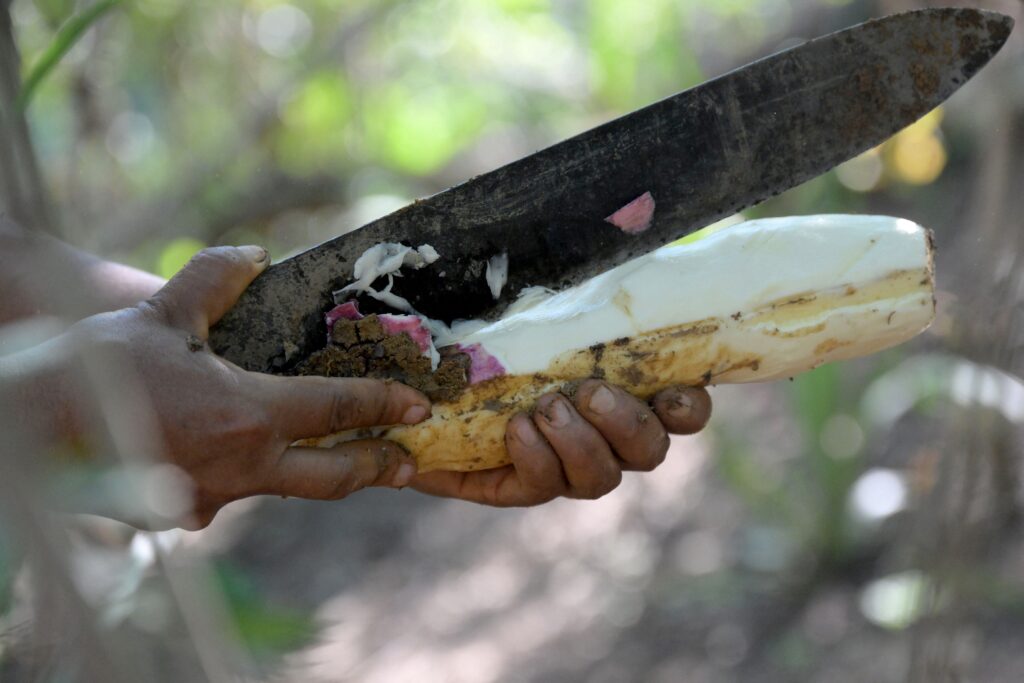
IT’S THE RAINY SEASON on the llanos of south-central Venezuela. Except for small rises of high ground, the savannas are flooded under several inches to several feet of water. Game has migrated out of the area, and fish are dispersed and difficult to find. But underground tubers are plump.
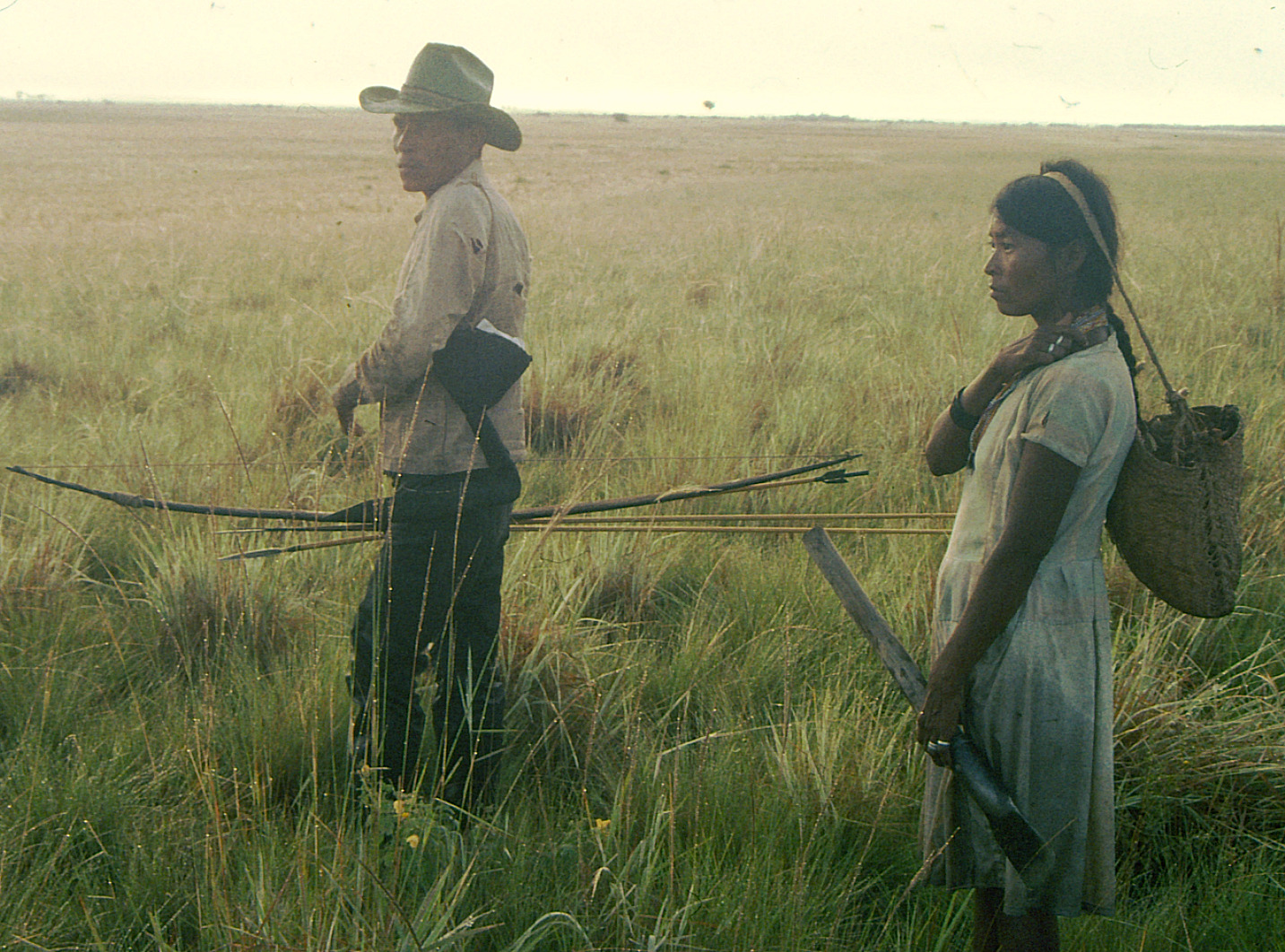
My husband and I have been living with the Pumé, South American hunter-gatherers, for some months. On a hungry morning, we accompany a group of women and children, walking single file to where they know the tubers are easy to dig out of the soggy, shallow sand. Even young girls under the age of 5 have their own small baskets to fill with the thumb-sized tubers that are the main source of food this time of year.
Back at camp, the men who had gone hunting and fishing that day had no luck. The women and children divvy up tasks, peeling, slicing, and soaking the roots to neutralize their bitterness. Later, after they are roasted soft in coals, people share the food out across hearths, hunger sated for another day.
I am an anthropologist who has studied how women and children spend their time in hunter-gatherer and subsistence farming societies for the past 30 years. Over the decades, it has puzzled me why meat has dominated the story of human evolution, with men as the prime movers shaping our biology and behavior. My research, alongside the work of many colleagues, reveals the central role that women and children play in getting food—usually processed in some way—on the collective table, day in and day out.
A BRIEF HISTORY OF FOOD PROCESSING
While human diets vary widely across cultures, food processing is common to them all. Other than some fruits, berries, and leafy greens, most foods in traditional diets worldwide are processed in one way or another—cracked, ground, pounded, grated, sifted, winnowed, mashed, peeled, smashed, leached, shelled, plucked, descaled, deboned, butchered, boiled, roasted, or otherwise cooked.
Taking these extra steps gave humans a survival edge when seasons were lean, favored foods were depleted, or when home ranges became constricted because of conflict or population pressure. Processing food broadens and diversifies our diets, allowing us to thrive in a wide range of environments. Over the last 3 million years of evolution, breaking food down into small absorbable bits shifted from a primarily gastrointestinal process to an external process. Going to this trouble had a lot of benefits.
Food processing has been a part of human adaptation since deep in the past.
Many foods humans consume are indigestible or toxic without first being processed. Cassava (also called manioc or yuca), a staple in South America, Southeast Asia, the Caribbean and Africa, contains a cyanide derivative that is noxious if eaten raw. Other common vegetables (eggplant, potato), beans (kidney, castor, lima, cacao), nuts (bitter almonds, palm nuts), and seeds (cycad seeds, rice) are either lethal, toxic, or taste bitter. But once pounded, soaked, ground, leached, fermented, or cooked they become palatable. Wheat, barley, oats, and corn are rarely eaten without pre-digestive treatment.
Processing extends the lifespan of food. During nongrowing seasons, both hunter-gatherers and agriculturalists rely on stored food. Much of the world would have remained uninhabitable if humans hadn’t perfected storage. People who live at high latitudes or elevations, or have refrigeration, can preserve food for some period by keeping it cold. Otherwise, it must be dried, salted, or smoked, and then secreted in a protected place so vermin don’t get to it first.
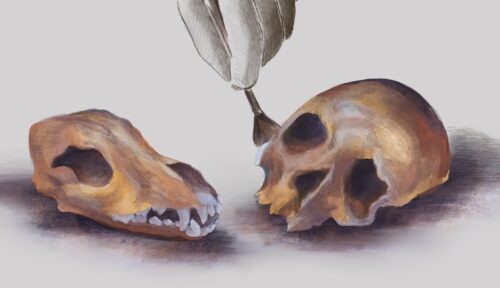
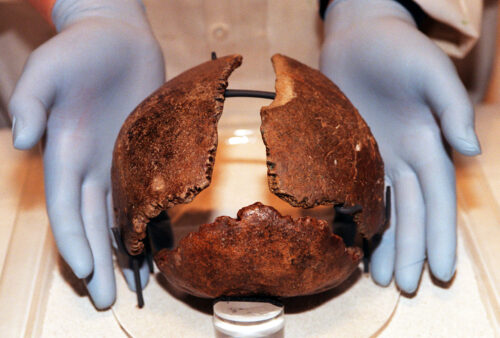
The evolutionary legacy of softening and breaking down food left its testimony on the human body. Over time, the thick, massive teeth of our early Homo ancestors were replaced by much smaller, more refined, thinner-enameled teeth. Robust skulls with bony perturbances that anchored chewing muscles gave way to more delicate faces and jaws. As our heads functioned less to buttress a built-to-chew mastication system, they made room for brain expansion. Eating partially predigested food also relaxed the need for a large and metabolically costly gastrointestinal tract, evidenced by our relatively small gut.
Eating predigested food also saves time that would otherwise be spent chewing. Chimpanzees spend almost half of daylight hours chewing highly fibrous fruits, a substantial part of their diet. Humans today spend far less time chewing—about 5 percent of their day, or about 35 minutes. This dramatically further decreases with industrially processed and highly refined food that has little to no fiber.
Humans, for most of our existence, lived as hunters and gatherers. Today only a small number of societies still rely on foraging. But studying how these groups adapt to different environments helps evolutionary anthropologists understand how our species became so widespread and successful.
WOMEN’S COOPERATIVE WORK
The excitement is palpable when hunters bring meat into a Pumé camp. Like many foragers who live near the equator, the Pumé live in small groups of about 70 people, relocating their camps and building shelters as the seasons demand. Times are good during the dry season when food is plentiful. But during the rainy season, life changes dramatically.
Once a week or so, hunters return to camp with a cayman, anteater, deer, or large bird. While meat is valued for its protein and fat, plants get the Pumé through the wet season. During this lean time of the year, women and children forage almost exclusively for roots and bring in about 85 percent of the calories. In most temperate and equatorial environments like this one, roots, tubers, seeds, beans, nuts, fruit, and berries are all staples for survival. Pumé women and children supply these bottom-line calories and process them into edible foods.
Simply put, there is not enough time in the day for any one person to forage for plants and animals, process them, haul water, chop firewood, find the raw materials, and manufacture the tools needed to procure and process food, while also finding time to construct clothing and shelter and take care of children. Fulfilling these basics needs requires cooperation. Humans do best by dividing up—by age, ability, gender—and sharing the fruits of our labor.
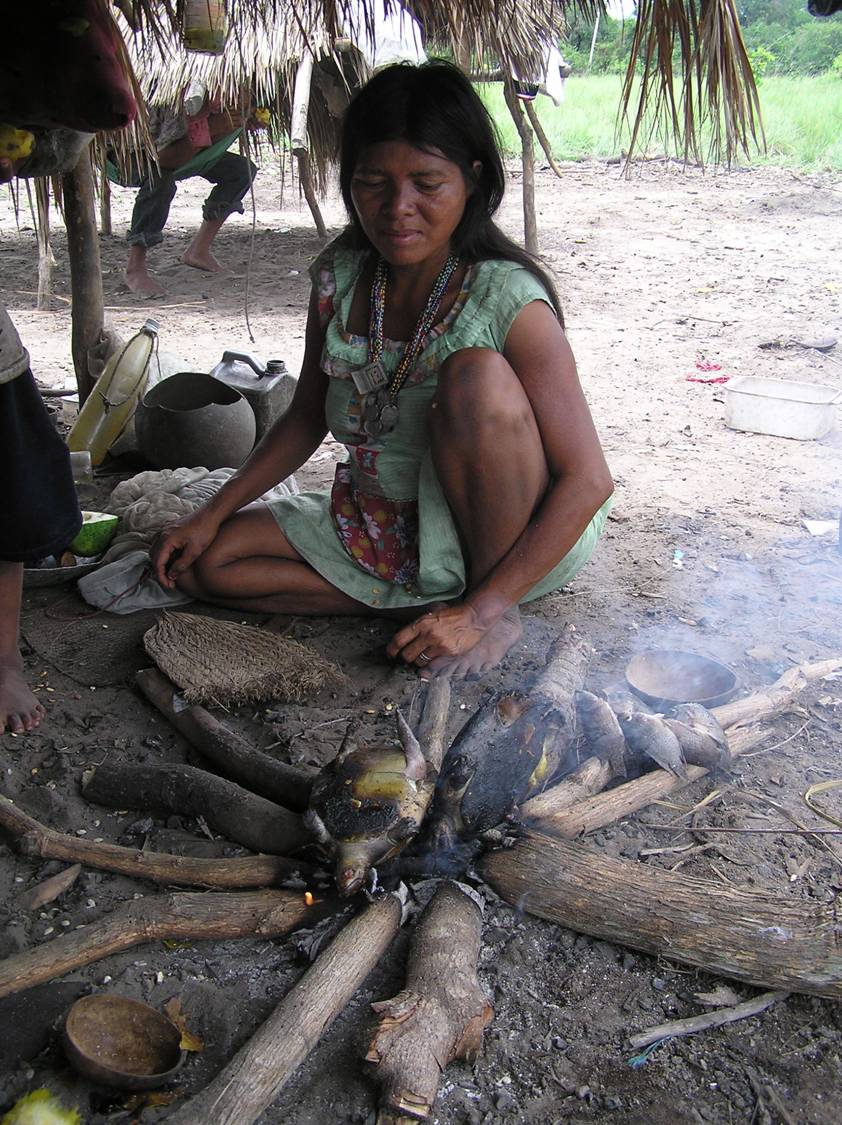
The Pumé are not unique in this regard. For hunter-gatherers, food processing is often a multistep, daily task that women and children do together. Hunter-gatherer children may stay in camp while their mothers are out collecting food, but they’re not idle. Kids from a young age hang out together, cracking nuts, roasting roots, cooking, carrying water to camp, gathering firewood, and making their own simple tools.
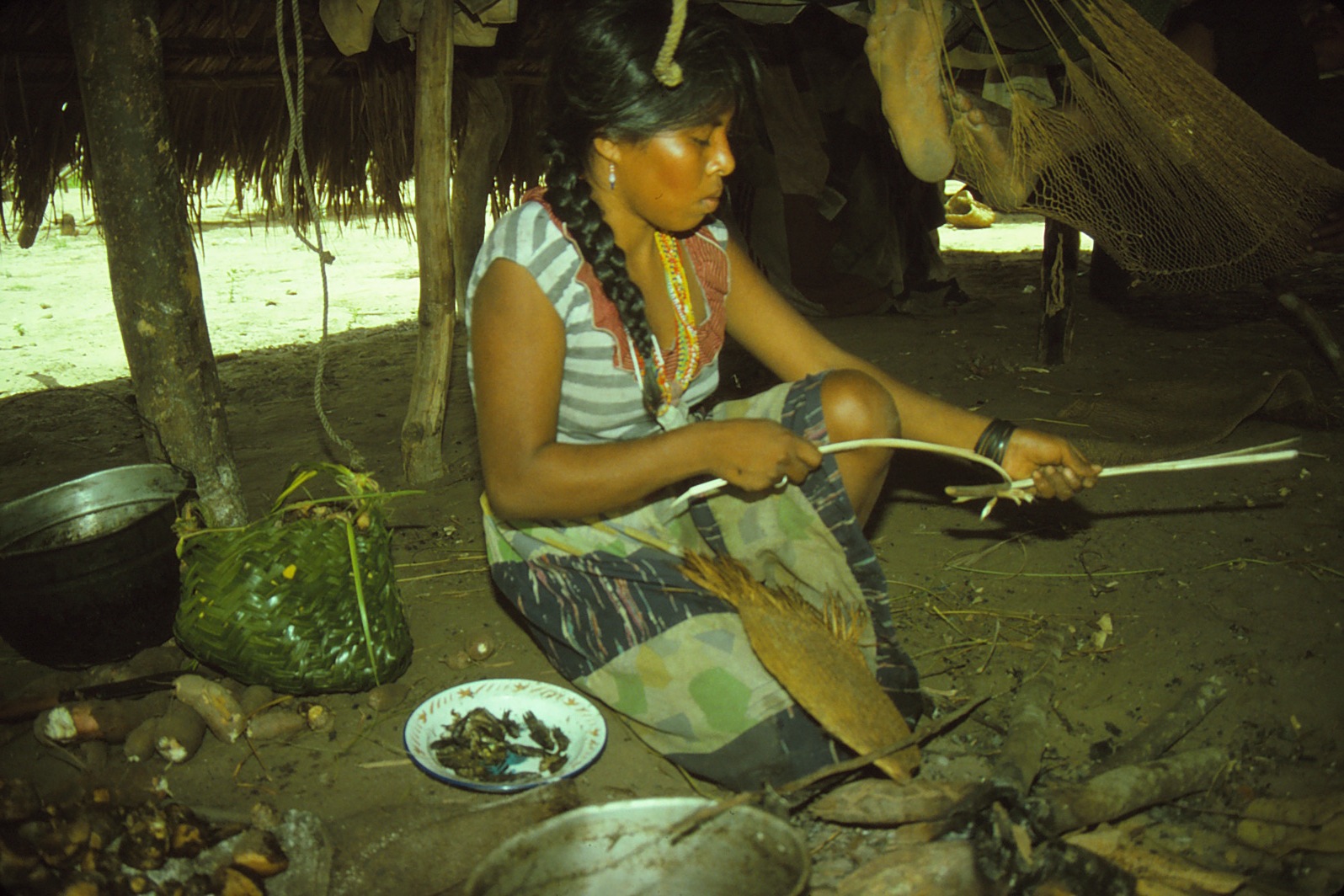
Although details vary widely across cultures, women in contemporary hunter-gatherer societies typically spend about 20 percent of daylight hours, or about three hours a day, processing food. In most societies, women and children collect the water and firewood that are essential to food processing. Women also manufacture and fix many of the tools used in their work. Pumé women, for example, spend nearly 2 hours a day stripping palm fiber, weaving burden baskets and sitting mats, sharpening digging sticks, and hollowing out gourds. !Kung women, in the Kalahari Desert, spend around an hour a day making and fixing tools.
THE FOOD-PROCESSING REVOLUTION
Food processing has been a part of human adaptation since deep in the past. Aside from the earliest-known tools in our direct hominin lineage, some 3.3 million years ago, other forms of technology specifically point to the vital role of women and children.
For example, the earliest identifiable hearths date to about 300,000–400,000 years ago. The stone tools and debris associated with them are often assumed to belong to men. But observational data collected by anthropologists living with contemporary hunter-gatherers tell a different story: Women spend significantly more time than men by the hearth, processing food, cooking, and making the tools to do so. Among the Pumé, for instance, 84 percent of the activities around hearths are of women processing food.
This raises the question: Is much of the archaeological debris deposited by hearths the byproduct of women’s work? While hunting narratives dominated anthropological accounts of foraging societies, women have typically played a major role in food processing. Take, for instance, hunter-gatherers living across the North American Great Plains for millennia. In late summer, these groups would gather to prepare for a bison hunt. Yet a closer look at early ethnographic descriptions of these camps reveals that they were timed around berry picking and women’s collective work needs.
Berries are a key ingredient in pemmican, a calorically dense, highly processed power bar of sorts made of rendered fat, shredded meat, and dried berries that were critical to get people of the Great Plains through the winter months. The unsuspecting berries, which are a natural preservative, are a critical component. Berry picking required a large female labor corps to harvest and process the berries quickly after they ripened and before birds or other scavengers got to them. Pemmican is still an important overwintering food, though market alternatives exist to procure berries.
Hunting usually takes center stage as a catalyst for the emergence of food sharing, the division of labor, pair bonding, and joint parenting—cooperative traits that came to define humanity and sent us down a very different evolutionary path than our nonhuman primate relatives. But the primacy of hunting is misplaced. Even meat—unless it’s pounded, cooked, or otherwise broken down—is difficult to tear off the bone, chew, and digest.
The next time you’re settling down for a meal, take a moment to appreciate the food-processing revolution—the pounding, cooking, mashing done by women—that opened humans to a diversity of foods that allowed us to thrive in all of the world’s environments.

Karen L. Kramer is an anthropologist who researches the evolution of cooperation, human sociality, life history, and childhood. She received her Ph.D. from the University of New Mexico and is a professor of anthropology at the University of Utah. She has worked with the Savanna Pumé, a group of South American hunter-gatherers, and with Yucatec Maya subsistence farmers for the past 30 years. Her research has been funded by the National Institutes of Health, the National Science Foundation, the Packard Foundation, the Mellon Foundation, Harvard University, and the University of Utah, among others.
