






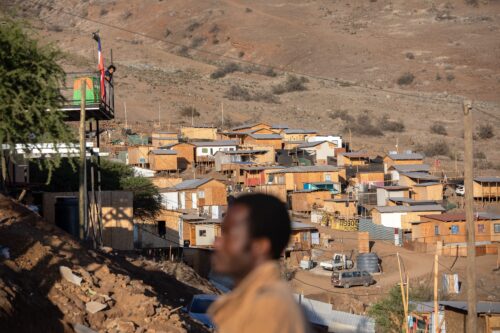



In this episode, social anthropologist Luis Alfredo Briceño González talks about his experiences as a foreign researcher in Chile. During his fieldwork, he met Marta, a Venezuelan woman residing in an informal settlement on the outskirts of Santiago. Marta and her family held a mock election to protest not being able to vote in their home country during the presidential elections in 2024. Through her story, Luis discusses the enduring emotional and political ties that migrants often have with their home countries.
Luis Alfredo Briceño González is a doctoral candidate at the Potificia Universidad Católica de Chile. His research focuses on migration and auto-constructed settlements in contexts of informality. He conducted fieldwork in Santiago de Chile, a city that has become an important host to migrants in South America. Before his Ph.D., he worked as a research assistant on the Latin American Anti-Racism in a “Post-Racial” Age project.
Check out these related resources:
- “Venezuela Blackout: What Caused It and What Happens Next?”
- “Is One Third of Venezuela’s Population About to Flee?”
- “A Multinational, Multiethnic Alternative in Chile’s Migrant Settlements”
- “221 Politicians, 23 Journalists, and Six Human Rights Activists Detained Since the Presidential Elections”
SAPIENS: A Podcast for Everything Human is produced by Written In Air. The executive producers are Dennis Funk and Chip Colwell. This season’s host is Eshe Lewis, who is also the director of the SAPIENS Public Scholars Training Fellowship program. Production and mix support are provided by Rebecca Nolan. Christine Weeber is the copy editor.
SAPIENS is an editorially independent magazine of the Wenner-Gren Foundation and the University of Chicago Press. SAPIENS: A Podcast for Everything Human is part of the American Anthropological Association Podcast Library.
This episode is part of the SAPIENS Public Scholars Training Fellowship program, which provides in-depth training for anthropologists in the craft of science communication and public scholarship, funded with the support of a three-year grant from the John Templeton Foundation.
A Venezuelan Election … in Chile
Eshe Lewis: What makes us human?
Anahí Ruderman: Truly beautiful landscapes.
Nicole van Zyl: The roads that I used every day.
Thayer Hastings: Campus encampments.
T. Yejoo Kim: Eerie sounds in the sky.
Eshe: What makes us human?
Cecilia Padilla-Iglesias: Division of labor.
Charlotte Williams: Colonialism.
Giselle Figueroa de la Ossa: The value of gold.
Dozandri Mendoza: Fun. Dance.
Justin Lee Haruyama: Cultural and social interactions.
Luis Alfredo Briceño González: Hopes for a better future.
Eshe: Let’s find out! SAPIENS: A Podcast for Everything Human.
[INTRO ENDS]
Eshe Lewis: In the last 10 years, almost 8 million people have left Venezuela. They are fleeing political repression and an economic crisis unprecedented in the country’s history. Venezuelans around the world hoped the July 2024 presidential election would bring about the change needed for them to someday return home.
In this episode, I’m speaking with anthropologist Luis Alfredo Briceño González. He tells the story of how one woman used those July elections to give voice to some Venezuelans living outside of their country.
Let’s get into our conversation.
Eshe: Hi, can you please introduce yourself and tell me a bit about what you study?
Luis Alfredo Briceño González: My name is Luis Alfredo Briceño González. I am a social anthropologist. I’m from Venezuela, which is an important fact for the development of the whole story that I want to tell you. I research migrants that are constructing an informal settlement on the outskirts of Santiago de Chile.
Eshe: And at what point in time did you become interested in migration in Chile?
Luis: I applied for the Ph.D. at the Catholic University of Chile with a research project on discrimination in Ecuador. I have been living in Ecuador for eight years, and I had participated in research about anti-racist practice in Latin America. So, I thought that I might continue with this research in Ecuador. But because of the massive migration of Venezuelans to Ecuador and Chile, the Venezuelan diplomatic services were overcrowded in both countries. So, for me and many more, renewing or having new passports turned out to be impossible. A Ph.D. in Chile seemed like a good opportunity because the Chilean authorities allowed us, the Venezuelans, to enter with our passports expired. Besides that, my atomic family had migrated to Chile during the worst years of the Venezuelan crisis, and I thought that it would be a good idea to gather again with them.
Foreseeing that if I went to Chile, I might not be able to return to Ecuador, I informed my adviser of this situation. He would start a research project about violence and policing in an informal settlement on the outskirts of Santiago. So, he told me, once you are in Chile, you can accompany the research team and figure out if something interests you.
Eshe: You are a Venezuelan anthropologist. You’re working with people who have emigrated as well. I’m wondering how your experience impacts your research?
Luis: Chile has been one of the toughest countries receiving Venezuelans and other migrants. So, living there has been an emotional roller coaster, I think. There have been many events of xenophobia and persecution. For example, Chilean Senate, they approved measures to improve the life of migrants, but these measures only criminalize the social life of immigrants—not only Venezuelans, also Haitians, Colombians, Peruvians. My personal experience as a migrant anthropologist, this changed me because my family, my parents, my sisters, are migrants today. We had to leave Venezuela for the crisis, and I am studying, but I am a migrant also.
Eshe: You said that the Chilean authorities have put some new measures in place that really are, they’re supposed to improve the lives of migrants living in Chile, but it’s, what they’re doing, or the effect that they’re having, is that they’re making these migrants’ social lives harder. Can you just say a little bit more about what that means?
Luis: Yeah. The state has migration law that comes from the dictatorship of Pinochet. And this is a law that only consider[s] the migrant as someone who comes to the country to stay one or three months, and then they must leave the country. But from 20 or 25 years, the country has a strong movement of migrants from several countries, for example, Peru, Bolivia. And so many people have tried to change this law to consider migrants as citizens, but the establishment in Chile has been very reluctant to this discourse of rights to migrants. So, for example, the Senate approved measures saying, “Oh, we improve the life of migrants,” but there is a bunch of clauses that could allow Chileans to put a claim in police. For example, if someone are playing music in a loud volume, this is a criminalization measure because they associate this with Caribbean migrants. This is one of the measures, but there are several measures to criminalize migrants.
Eshe: I would love to get back specifically to what you were working on. Can I ask you what a campamento, is and why they are such a popular topic in Chile?
Luis: A campamento is a kind of informal settlement autoconstructed by its inhabitants. It’s so popular in Chile, and it’s so popular in Latin America because campamento is a way of urbanization in our cities, Lima, Caracas, Rio de Janeiro, those places have campamentos with other names like favelas, villa miseria, barrios. So the social scientists of Chile have worked widely in campamentos because academics think that this kind of settlement allow the city to grow. And the political subjectivity emerged in these kind of places, and there are citizens that are part of the city. This is a theory that you can see in other countries of Latin America. But in Chile, the academics worked in this direction to address the creation of a political subjectivity that they call pobladores, who are very important to the creation of a particular form of urbanization.
Eshe: What do these settlements or campamentos, or encampments in English, what do they have to do with your work? What makes them so important or intriguing to you?
Luis: I visited the place, and I figure out that most of the inhabitants are migrants. And in the past, Chileans were the main characters in these informal settlements. But today, because of the migration to Chile, these informal settlements are constructed by immigrants. And this is why it’s very interesting for me.
Eshe: So, we talked about this a little bit, but I would love to come back to this question of what it’s like for you. Because as you said before, in earlier times in Chile, it would have been Chileans both living in the campamentos and then also Chilean anthropologists or social scientists working with those people, maybe observing them. Maybe there are different dynamics there. And now there are people who have come from other places to live there, and you are someone who has also come from someplace else to work and study in Chile. And so I’m wondering what that experience was like for you, or if it brought up maybe different questions for you than it did for other researchers?
Luis: At this point, I can notice that my questions are different because I am trying to think about how these places are connected with a transnational approach. For example, how this talk about global governance of migration.
Eshe: And how does your identity as a Venezuelan influence the way you interacted or maybe continue to interact with people who work with you on this project?
Luis: In the field itself, in the campamento, some people said to me that it was suspicious that a Venezuelan was doing that job. I think the job that the anthropologists do are very suspicious always. But people could think that I was part of an infamous gang, a Venezuelan gang, it’s called Tren de Aragua. It’s a criminal gang that, I don’t know, kidnapping, kill, those things.
A neighbor. He told me, “Oh, I am watching you in my surveillance cams.” I said, “No. I am a Ph.D. student. Look at my credentials.” As I mentioned, this influenced my point of view.
Eshe: No, I think that makes sense. So, there’s the negative side of this, where people can be very suspicious, maybe because of things that they know about Venezuela or, unfortunately, criminal activity.
Luis: Yeah and also, I am a Black man, to summarize my color of skin. And, my accent, those things identify me, like, “You are not from Chile.” I realized that this is important to the production of our knowledge in anthropology. Yeah, it’s important because Chile as a social unit thinks it’s a White country. And this is why I think migration, it’s a very hot spot in the discussion, the public discussion in Chile because three major groups of migration are Haiti, Venezuela, and Colombia. And most of those migrants are Brown, Black. I have a friend that is Haitian in the campamento, that they always told me, “We are Black,” he said. I don’t have that to say to him, “Oh, I am Black.” No, he said to me, “We are two Black men, and we are dangerous for this society. And this is why we need to stay calm, to take it easy. Because people could think that we are criminals.” These things. And race and national origin in Chile are two elements that are very important in anthropological terms.
Eshe: That’s really interesting. OK, we’re gonna switch gears. Can you tell me, who is Marta?
Luis: Marta is a Venezuelan woman who is living in the campamento that I researched. She has been in Chile for three years. She worked with me in my research. She left Venezuela at a critical point, and her story is an example of the most dramatic facts that Venezuelan people experienced in the migration. She lived near the border between Venezuela and Colombia. And she tried to run a beauty salon in her town, but during March of 2019, the national blackout happened in Venezuela. And this audio is an explanation of why Marta left Venezuela.
Marta: Y yo dije: “bueno ahora yo tengo esta idea y ¿cómo hago? ¿cómo prendo un secador? ¿cómo prendo una plancha? ¿cómo le lavo el cabello a mis clientas?” Y era bastante frustrante porque, por donde uno se metiera había algo que tú no podrías controlar, hay cosas que tú puedes controlar, pero esto ya era algo externo, algo de gobierno, o sea, muchas cosas. Que en Venezuela no es un solo problema, son muchos problemas. El problema de la educación, el problema eléctrico, el problema también cultural porque esta política socialista ha hecho mucho daño en Venezuela, por esa razón yo dije: “ya esto es demasiado”. qué más hago ¿cómo hago para surgir? ¿cómo hago para levantarme? ¿cómo hago? si por donde quiera que yo me meta no hay oportunidad, no hay futuro.
Marta (English dubbing): And I said: “Well, now I have this idea, and what do I do? How do I turn on a hairdryer? How do I turn on a flat iron? How do I wash my clients’ hair?” And it was pretty frustrating because, wherever you went, there was something you couldn’t control; there are things you can control, but this was already something external, something from the government, that is many things. In Venezuela, it is not just one problem; there are many problems. This socialist policy causes issues of education, electrical damage, and cultural problems, which have done a lot of harm in Venezuela; for that reason, I said: “This is too much.”
Luis: She said, also “What can I do?” She said, “There is no future. I have to abandon my country. I have to leave this.” And she had a sister living in Lima, and she, her two daughters and her husband decide to move, and first cross Colombia in a bus. And then they live in Lima for about one year and a half. But then, because of the pandemic, they had to spend all of their savings. She said that this was a moment that everything seemed to collapse. And they decide to go Chile.
Marta: Nos tardamos de Perú a Chile cuatro días para llegar acá a Chile. Vendían los boletos normales de Lima hacia la ciudad final de Perú y ya de ahí sí tuvimos que cruzar en una lanchita cruzar un río, no era tanto, cruzarlo y ya para llegar a Bolivia y luego ahí recorrer parte de Bolivia para llegar a la frontera con Chile esa fue la parte más complicada porque te llegan un poco de personas para decirte que te ayudan a cruzar y obviamente tienes que pagar. Hay como mafias que ayudan a los migrantes a cruzar, a entrar a Chile irregularmente. Había muchas personas y no solamente había venezolanos, había peruanos, había bolivianos.
Marta (English dubbing): It took us four days to get from Peru to Chile. They sold the regular tickets from Lima to the southernmost city in Peru, and from there, we had to cross a river in a small boat. It wasn’t that long to cross to Bolivia and then go through part of Bolivia to get to the border with Chile. That was the most complicated part because a large group of people come to you to tell you they will help you cross, and you have to pay. Some mafias help migrants cross to enter Chile illegally. There were many people, and there were not only Venezuelans, there were Peruvians, there were Bolivians.
Luis: And after that, when they finally entered Chile. She and her husband and her two daughters moved to Santiago, and they met with another sister living there in a campamento.
Eshe: Yeah, this sounds really hard. Marta made a really long trip to end up in Chile, right? Like it’s Venezuela to Colombia, Peru, and this whole path of getting into Chile. Can you tell me what Marta’s life has been like since she arrived in Chile?
Luis: As I mentioned, she was living with a sister. But she and her husband decided to move to a house but because they weren’t able to have a job to pay this, they had to move to a new campamento. They have been living there three years. And she said that the reality in the campamento is so hard because you don’t have water. The winter, it’s terrible in those places because the houses don’t have material to isolate from the cold. And this is an everyday struggle.
Marta: Un poco compleja, pero a la vez llena de aprendizaje y de reflexionar y de valorar porque no había vivido esta realidad. Cuando uno sale de su país uno sale buscando oportunidades, buscando avanzar, esa es la mentalidad, pero en realidad no te imaginas, no sabes con lo que te vas a encontrar. La vida migrante es complicada, es difícil, pero a la vez también es reflexionar aprender, conocer también las realidades que viven otras personas. Y bueno, me ha tocado esta realidad, en un principio obviamente feliz porque estábamos colapsados no podíamos con los gastos, estaba súper contenta así sea que no hubiera agua, no había luz en un principio, pero bueno, ya el día a día. Y a veces uno dice: “ajá esto es como parecido a [la situación en] Venezuela” es como que, como que mientras tanto mientras tú vas organizándote. Pero bueno, a pesar de eso, seguir adelante, en principio no había luz, agua, y bueno este campamento, esta comunidad se van organizando con una directiva, poco a poco, y gracias a eso han salido adelante.
Marta (English dubbing): It was a little complex, but simultaneously, it was a whole of learning, reflection, and appreciation because I had not experienced this reality. When you leave your country you go looking for opportunities, looking to move forward. That is the mentality, but you do not imagine, you do not know what you will find. Migrant life is complicated; it is difficult, but at the same time, it is also about reflecting, learning, and knowing the realities that other people live. And while I have been touched by this reality, at first obviously happy because we were overwhelmed, we could not cope with the expenses. I was super happy even though there was no water, there was no electricity at first, but well, day to day. And sometimes you say: “This is similar to the situation in Venezuela.” It is like, in the meantime, while you are organizing yourself. But despite that, moving forward, there was no light or water, and well, this camp, this community, is organizing itself with a directive, little by little, and thanks to that, they have moved forward.
Eshe: After a short break, Luis shares more of Marta’s story. We’ll be right back.
[BREAK]
Eshe: Let’s get back to my conversation with Luis. He was telling me about Marta, a Venezuelan woman who migrated to Chile.
Can I ask you what Marta’s view is or her understanding is of the political situation in Venezuela?
Luis: Yeah, Marta, she thinks the socialist government in Venezuela provoked the migration. There is a polemic point because so many people outside the situation consider that the problem in Venezuela is the struggle between left and right. It’s not an anti-communist discourse or something. But it’s important to listen to these voices, like a Venezuelan living in an informal settlement in Chile. This is part of this whole story that I tried to show, no.
Marta: Y recuerdo que cuando ganó este gobierno actual pues yo era simplemente una niña, yo en ese momento no tuve la oportunidad de elegir ni nada, lamentablemente en ese entonces eligieron nuestros abuelos, nuestros papás. Y hoy día nosotros la nueva generación joven, adulta que han visto su futuro limitado o tronchado por las consecuencias de elegir un gobierno socialista. En mi mente nunca estuvo salir de Venezuela y por todo este tipo de cosas que han pasado por malas políticas públicas y económicas estas son las consecuencias y bueno, ahora hay millones de venezolanos fuera del país. El gobierno socialista para mí se pinta muy bonito teóricamente, pero en la práctica no es nada bonito. La gente trabaja, trabaja, trabaja y no alcanza, el gas, el agua, la luz ha sido un desgaste emocional y físico también, porque en muchas partes de Venezuela no se vive, se sobrevive.
Marta (English dubbing): And I remember that I was just a little girl when the current government won. At that time, I didn’t have the opportunity to choose or anything. Unfortunately, at that time, our grandparents and parents chose. Today the young adult generation have seen their future limited or cut short by the consequences of choosing a socialist government. I never thought about leaving Venezuela, and because of all these kinds of things that have happened due to inadequate public and economic policies, these are the consequences, and well, now there are millions of Venezuelans outside the country. The socialist government looks pretty nice to me in theory, but in practice, it is not nice at all. People work, work, work, and it is not enough; there is no gas, water, electricity. In many parts of Venezuela, people do not live, they survive.
Eshe: Yeah, it sounds a million different stories, right? You’ve got a million different people who have taken their own journey outside of their country. And this is Marta’s, right? Luis, what did Marta and her family do during the last Venezuelan presidential election?
Luis: The elections were on the 28th of July. And they did a mock election in the informal settlement because their family couldn’t vote because they are in Chile, and, this is a long story but, it was very difficult to vote for the migrants. And they decided to set up a mock election in Marta’s aunt’s house. They simulate an election. And this was very powerful for me, and yeah, this is what she said.
Marta: Solamente fue una actividad familiar y fueron dos o tres compañeros de mi marido, que trabajan con él que son venezolanos entonces sentir que éramos parte de la elección a pesar de que nos robaron ese derecho, entonces, era tanta la alegría que mi tía hizo dulces tradicionales de Venezuela para compartir y estuvimos ahí rodeados de esa alegría pusimos globos, todo referente a los colores de la bandera de Venezuela, llegaron unos amigos, también del pueblo cuando vieron el centro de votación, ellos apenas vieron eso se vinieron hasta acá y nos vinieron a acompañar y participaron en nuestra votación. Ellos cuando vieron las fotos se sorprendieron y se alegraron, no hallaban tampoco qué hacer no se querían quedar en su casa. Vinieron para acá y aquí compartieron con nosotros, comieron dulces, la alegría del centro de votación los hizo vivir ese montón de emociones.
Marta (English translation): It was just a family activity, and there were two or three of my husband’s colleagues, who work with him and are Venezuelan. So feeling that we were part of the election even though the government stole that right from us, there was so much joy that my aunt made traditional Venezuelan sweets for sharing, and that joy surrounded us; we put balloons, all related to the colors of the Venezuelan flag. Some friends arrived, also from the town. When they saw the voting center, they came to accompany us and participate in our vote. They didn’t know what to do either and didn’t want to stay home. They came here and shared with us; they ate sweets, and the joy of the voting center made them live with a lot of emotions.
Luis: At midnight of that day of the 28th of July, I watched the stories on her WhatsApp. And in that moment, I’m not an emotional person or something, but I was crying and I wrote her that, “Oh, we will recover our country someday.” I don’t know, because we had hope in that election. And yeah, this is what happened, and she handled the outcome of the events in the same way. She cried. But we are here and trying to lift our hopes for a better future, I think.
Eshe: And what was that time after the election like for Marta? Like, I heard her excitement at the idea of regaining an opportunity to vote, and she talks about it as a right that was taken from her. And then to feel like she was able to participate in this for an outcome that she really didn’t want, what was that like for her?
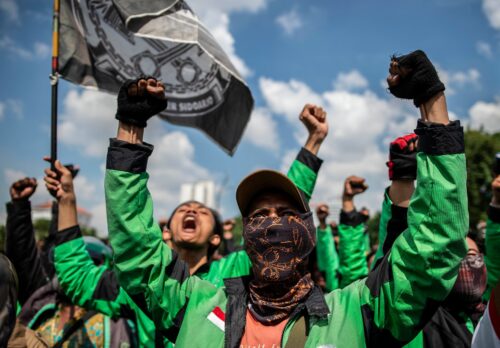
Luis: Yeah, she told me that what happened in Venezuela, because in her town, the police jailed the electoral witnesses. And she also attended a protest in the center of Santiago. She was there with her elder daughter, and they have flags of Venezuela. This was a massive protest in the center of Santiago. Yeah.
Marta: Las consecuencias principales de defender tu derecho al voto, que de hecho la gente lo hizo salió a la calle a protestar a hacer que su derecho valiera, que su derecho se reflejara y a defender su voto, la gente lo que hizo fue primero salir a protestar primero unas protestas instantáneas o sea unas protestas muy orgánicas del ciudadano de a pie, que salió y ahí se fueron sumando otros ciudadanos que creo que ni siquiera nadie los convocó sino que ellos mismos su convicción de defender su derecho empezaron a salir a las calles y muchos venezolanos se sumaron a eso. Luego vino la represión, las amenazas a algunos testigos de los centros de votación que los fueron a buscar a sus casas, todavía hay muchos encarcelados en Venezuela. La represión en estos últimos tiempos ha sido muy fuerte, muy violenta, muy agresiva. Obviamente, es algo natural del ser humano agarrar miedo, pero igual mucha gente ha dicho: qué importa, métanme preso, igual yo voy a defender mi voto y eso ha hecho. Lamentablemente esas han sido las consecuencias que hay muchos presos en Venezuela, muchos presos políticos.
Marta (English translation): The main consequences of defending your right to vote, they went out to the streets to protest and to defend their vote. First, some very organic protests by the average citizen, who went out and then other citizens joined in, who I think were not even called by anyone but rather they, out of their conviction to defend their right, began to go out to the streets and many Venezuelans joined in. Then came the repression, the threats to some witnesses at the voting centers who went to look for them at their homes; there are still many in prison in Venezuela. The repression in recent times has been extreme, very violent, very aggressive. It is natural for humans to be afraid, but many have still asked, “What does it matter? Put me in jail. I will defend my vote anyway.” And that is what has happened. Unfortunately, those have been the consequences. There are many prisoners in Venezuela, many political prisoners.
Eshe: Yeah. I can’t imagine. I was in Toronto when the election in Venezuela happened and when the results came out. But I also remember how Venezuelans reacted in Lima, where I have worked and lived, and hearing about the reactions of Venezuelans throughout South America and how difficult that was for so many people for different reasons. And, I think, Marta echoed some of the sentiments that they, that some people had, you know. Now that you’ve finished your fieldwork, do you still keep in touch with Marta?
Luis: Yeah, we always are talking via WhatsApp, and I always asking her, “How are you doing? How are your daughters?” She loves her daughters, obviously, like a good Venezuelan mother.
Eshe: I want to come back to you, Luis. I know that as anthropologists, we try to center the experiences of the people we work with, but I also believe that these encounters, they change us too. And I want to know how your experience of working in the campamentos and learning about Marta’s story and her opinion, how has all of this impacted your life?
Luis: As I mentioned at the very beginning of this interview, today I consider myself a supporter of migration and immigrants. I learned that we need to listen to these stories to contextualize our political ideas, because if you only try big ideologies, you are not able to grasp all of these elements that have humanity. And yeah, I know that anthropology always has worked with the margins, but I think we need to in a new way with other questions and trying to understand that the informal settlements, like campamentos, are places where you can find discourse about the contemporary world and the struggle for human rights.
Eshe: I can’t wait to see where your research takes you next. Luis Briceño, thank you so much for sharing with me today.
Luis: Thank you for the opportunity. I was very scared about this interview, but it was fun.
[INTERVIEW ENDS]
Eshe: Luis Alfredo Briceño González is a doctoral candidate at the Pontifical Catholic University of Chile. His research focuses on migration and auto-constructed settlements in contexts of informality. He conducted fieldwork in Santiago de Chile, a country that has become an important host of migration in South America.
SAPIENS is hosted by me, Eshe Lewis. The show is a Written In Air production. Dennis Funk is our program teacher and editor. Mixing and sound design are provided by Dennis Funk and Rebecca Nolan. Christine Weeber is our copy editor. Our executive producers are Dennis Funk and Chip Colwell. Special thanks to Rebeca Maricuto.
This episode is part of the SAPIENS Public Scholars Training Fellowship program, which provides in-depth training for anthropologists in the craft of science communication and public scholarship, and is funded by the John Templeton Foundation.
