




















When Tiger Conservation Overlooks Human Lives
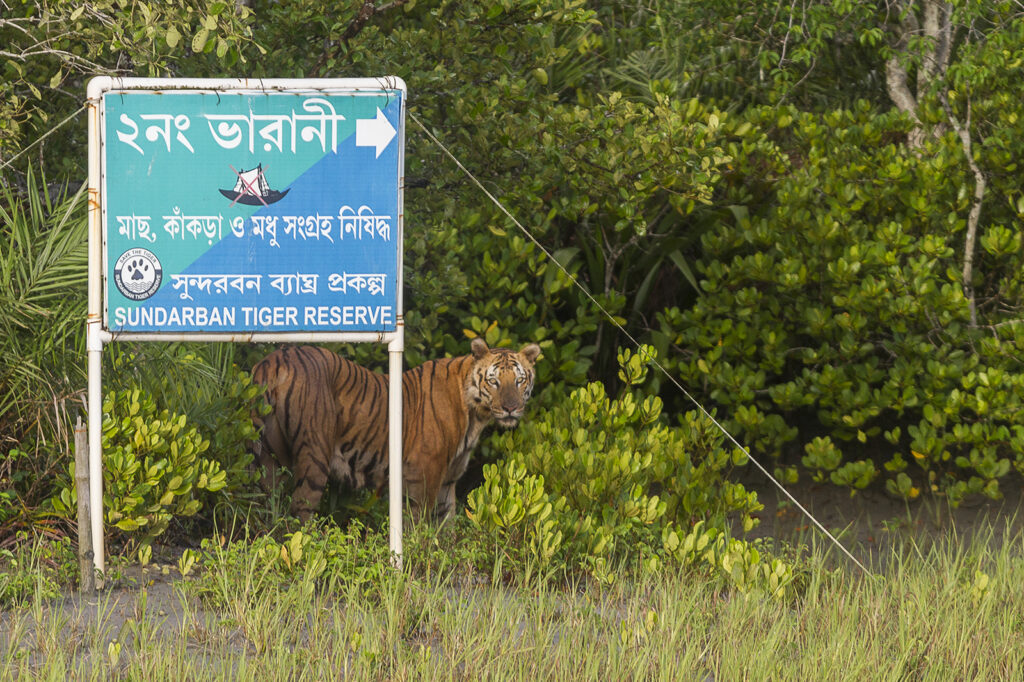
WHEN I MET Ananta in December 2022, he was preparing for a crab-catching trip, double-checking to make sure he had packed the essentials: bait, food, and water. [1] [1] Some names of interlocutors have been changed to protect people’s privacy. Ananta lived in a modest dwelling made of clay and bamboo in a village on the edge of the Sundarban Tiger Reserve (STR) in coastal West Bengal, India. After crossing the Matla River and several tidal creeks, Ananta and his team would reach the crab-catching area inside the buffer zone of STR, where they intended to stay for three to five days.
While discussing crab-catching experiences and challenges, I asked Ananta if he had ever encountered a tiger. Approximately 226 Royal Bengal tigers roam the Sundarbans, the world’s largest mangrove forest spanning 10,000 square kilometers across India and Bangladesh.
Ananta replied without a second thought. “It is our fate to live with a tiger,” he said. “We have no other choice for our livelihood, either suffer in poverty or die in a tiger attack. I’m worried about my family. What will happen if I die?”
Gazing at the sky, he took a long pause and then added, “It is the best time to catch crabs.” According to Forest Department rules, fishing and crab-catching are prohibited from April 1 to June 31. “If everything goes well this season,” Ananta said, “I will pay my debt, and I am dreaming of building a pucca house.”
Less than two months, later, I learned that Ananta died in a tiger attack.
Every word Ananta had spoken to me lingered in my mind along with vivid memories of him and his home. I could not sleep properly for a few weeks, thinking especially about what would happen to his elderly parents, 3-year-old daughter, 5-year-old son, and wife. The most upsetting part is that, like thousands of tiger victims, Ananta’s death went unrecorded in official records. He was hurriedly cremated without performing any rituals.
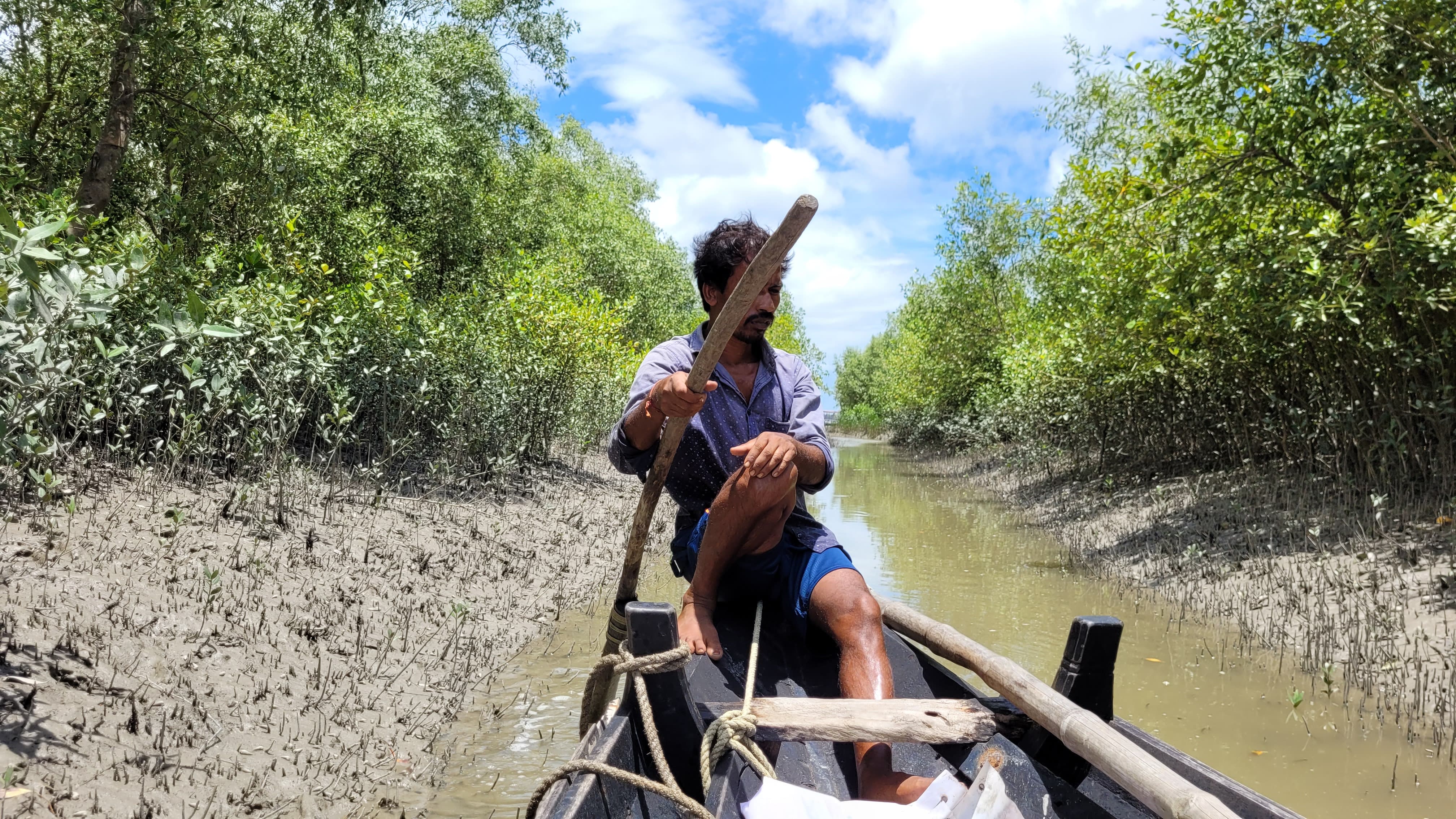
As an anthropologist, I learned about human-tiger conflict in the Sundarbans while conducting ethnographic fieldwork studying the political ecology of climate change policies and implications for the livelihoods of forest- and river-dwelling communities. This is one of the earliest sites for Project Tiger, the flagship program launched under the Ministry of Environment and Forest to safeguard the national animal—the Royal Bengal tiger (Panthera tigris tigris). The growing tiger population is often portrayed as evidence of successful conservation efforts.
While celebrating these so-called achievements, the voices of the forest-dwelling people like Ananta—who bear the brunt of conservation—remain unheard and unseen in dominant public discourse. The apparent success story of tiger conservation masks the underlying struggles and historical injustices to forest-dwelling communities.
CONSERVATION POLITICS
An estimated 270,000 people live in the 46 forest fringe villages of the Sundarbans. Just this year alone, tigers have reportedly strayed into fringe villages more than 35 times. With the help of local forest-dwelling communities, the tigers were successfully returned to their natural habitat within the STR.
But it doesn’t always end well. Over the past five decades, an estimated 3,000 men and women have been killed by tiger attacks in the area, though actual numbers could reach 6,000 or more.
After every tiger attack, forest fringe villagers maintain secrecy as a collective response to avoid legal action from the Forest Department. The urgency to cremate the dead body, and avoid mourning rituals and visits to the hospital, is driven by the knowledge that any official acknowledgment of human-tiger conflict could bring severe legal consequences.
Sujata, whose husband died from a tiger attack, once told me, “The dead body of my husband was carried stealthily during midnight, and I never got a chance to see his face one last time before cremation … even prohibited me to cry loudly.”
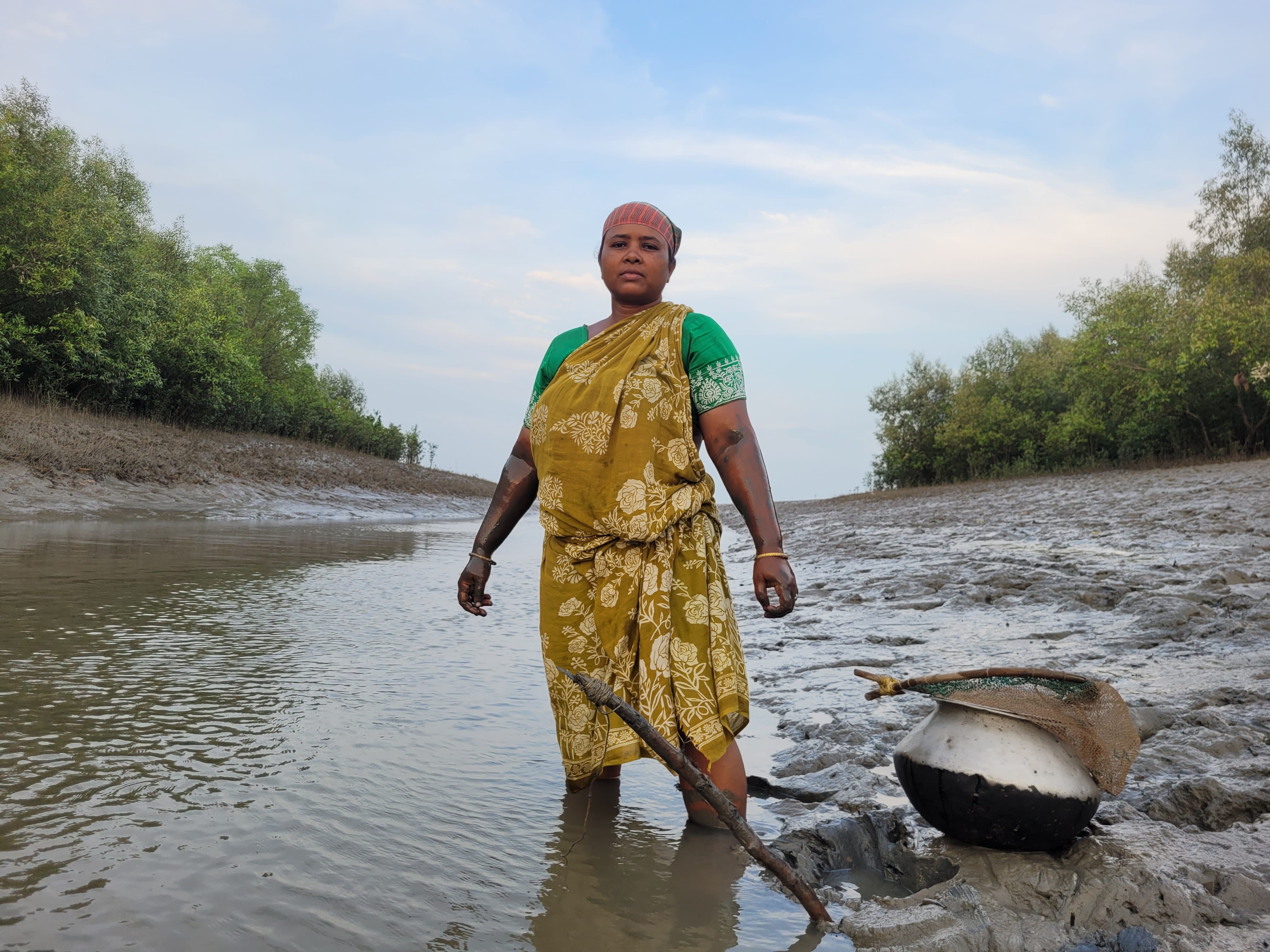
The root of this fear comes from a strict conservation policy, which can be traced back to the time when the British colonial government alienated forest-dwelling communities from their land and traditional livelihood practices by designating the Sundarbans as a “reserved forest.” After independence, the government of India did not alter this colonial legacy; instead, it upheld exclusionary forest governance. This approach was advanced after the enactment of the Wildlife Protection Act of 1972, which legalized the creation of various types of protected areas such as national parks and wildlife sanctuaries in the pursuit of conservation. Entering protected areas without prior permission from the forest department is a criminal offense that can result in imprisonment and hefty fines.
Meanwhile, declaring Sundarbans as a Project Tiger site in 1973 and separating it into two zones—core (entrance prohibited) and buffer (entrance allowed with permission)—has led to more restrictions and serious repercussions for communities who fish, collect honey, catch crabs, and gather minor forest products.
Injured tiger attack victims sometimes prefer to treat their wounds with traditional mangrove plant-based remedies secretly rather than visiting a hospital.
“Most of the tiger attack patients die due to extreme blood loss,” said Sushruta, a medical officer of a local hospital. “If any patient reaches us, we treat them accordingly. … To protect our patient, we often document it as an accident. … If we started officially reporting it as a tiger attack, individuals would stop visiting the hospital.”
LICENSE FOR EXCLUSION
In 1980, to regulate the number of boats in the STR region, the Forest Department issued 923 Boat License Certificates (BLC) to boat owners authorized to catch fish and crab in the buffer area. Currently, only 709 active BLCs are operational for more than a quarter million forest- and river-dwelling people spread across 150 villages. The number of crab-catchers alone is approximately 70,000, according to local estimates.
Non-BLC holders are never allowed to catch crabs in the STR. To legally catch crabs, one must have both a valid BLC (renewed annually) and a seasonal individual license, which is only issued upon presenting a BLC. I have observed that most BLC owners aren’t engaged in fishing activities; instead, they lease their certificates to fishermen or crab catchers for amounts ranging from 1.5 to 2.5 lakh rupees (about US$1,710–$2,850).
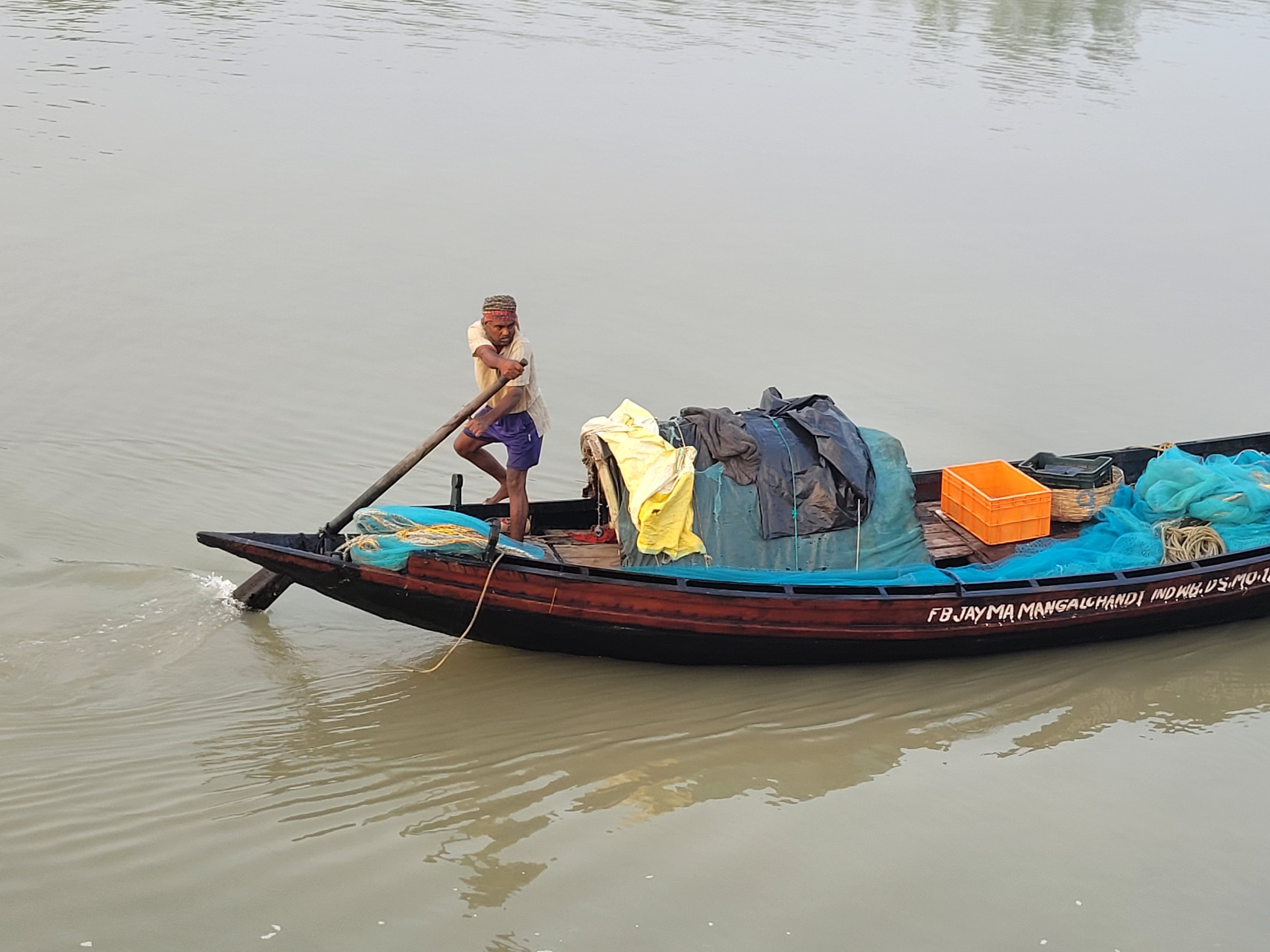
When I spoke with Jaykrishna Haldar, the secretary of the fishermen’s union, he explained how the lives of fishing or crab-catching communities revolve around BLC status.
“There is a nexus between the BLC owner and fishing businessmen who control the BLC and decide whom to give it to,” said Haldar, who has worked to restore acres of mangrove forest and establish a mangrove nursery with the assistance of local fisherfolk. “The majority of marginal fishing and crab-catching folk are unable to collect BLC, which leads them to issues like seized boats, physical harassment, and fines by the forest department.”
Despite mass mobilizations to reissue BLCs or grant communities their entitlements under the Forest Rights Act of 2006—which includes rights and access to forest water bodies—the Forest Department remained silent on the issue. Yet the BLC is crucial because it determines eligibility when it comes to compensation for the families of tiger victims.
After interviewing 25 tiger victim families, I noticed a typical pattern. First, no compensation is provided to those who ventured without a BLC. Second, no compensation is granted if the victim’s body is not recovered. And third, compensation is only granted if the Forest Department investigation confirms the incident occurred within the buffer zone and the victim held a BLC.
Those who claim compensation face nearly impossible bureaucratic hurdles: A family member must submit numerous documents including a post-mortem report, and death certificate, with official signatures from the Gram Panchayat (village government), Panchayat Samiti (regional government), Fisheries Extension Officer, Police Station, and Block Development Office.
In 2022, I spoke with Prabir Mishra, a human rights activist and vocal advocate for fishing and forest rights, who contributed to a fact-finding report on “tiger widows.” Prabir said that the present government “has deteriorated rights-based policies and is not willing to democratize forest governance.” He added that the government’s real intention is “promoting tourism, which is harming the natural ecosystem and serving the interest of the elite class, but not issuing fishing rights to marginal local people.”
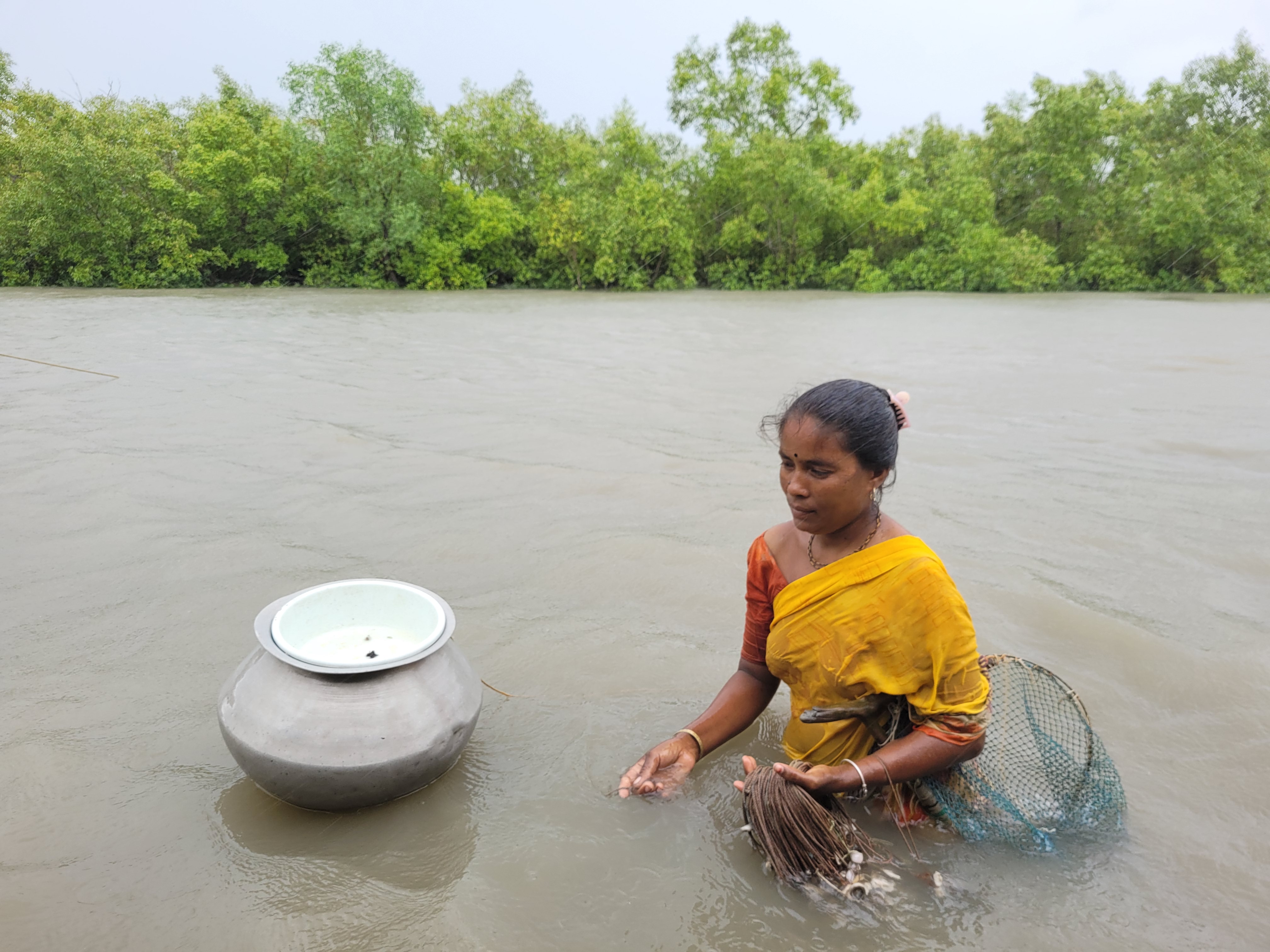
After persistent advocacy by civil society organizations—and following the 2023 Calcutta High Court judgment in the case of Shantibala Naskar vs. the State of West Bengal and others—the court simplified eligibility for compensation. It did this by removing the core or buffer zone dilemma, although the victim holding a BLC remains the primary criterion.
Over the past two years, the Forest Department has provided compensation for a total of five out of 26 families, according to social activist Mithun Mondal, who offered legal support in the Shantibala Naskar case.
HUMAN-TIGER KINSHIP
When I returned to Ananta’s house three months after he died, one of his neighbors told me that Abhagya, Ananta’s wife, left home with her two children. “Nobody knows where she went, and his parents are not in a position to talk,” the neighbor said.
The wives of victims who die from tiger attacks face social stigma, branded with derogatory labels such as “husband eater” or “tiger widow.” Many suffer from severe poverty and psychological trauma. This stigma perhaps comes from their traditional belief system, which suggests that the husband’s fate depends on the wife’s ritual practices. If a wife does not perform rituals correctly or if the gods are displeased, her husband could die in a tiger attack. Tiger victims’ wives are shunned and banned from attending marriages, newborn ceremonies, and religious festivals. Seen as bad luck, they become a living symbol of misfortune. The widows—with limited ways to earn a living—often become easy victims of sexual harassment and sometimes are targets for human trafficking.
Yet, despite these hardships, local communities—including victims’ families—say they do not harbor resentment toward tigers. According to their Indigenous cosmology, the forest is the domain of the forest goddess (Bon Bibi), and the tiger symbolizes the tiger god (Dakshin Rai). Local communities generally refer to the tiger as their uncle. They worship the forest and the tigers, and respect a mutual coexistence. They believe it is the demon of the tiger god who hunts humans and causes deaths, and see it as a symbol of bad luck. These beliefs are rooted in the Bonbibi’r Johuranma (The Miracles of Bonbibi), a religious text of the Bengal delta.
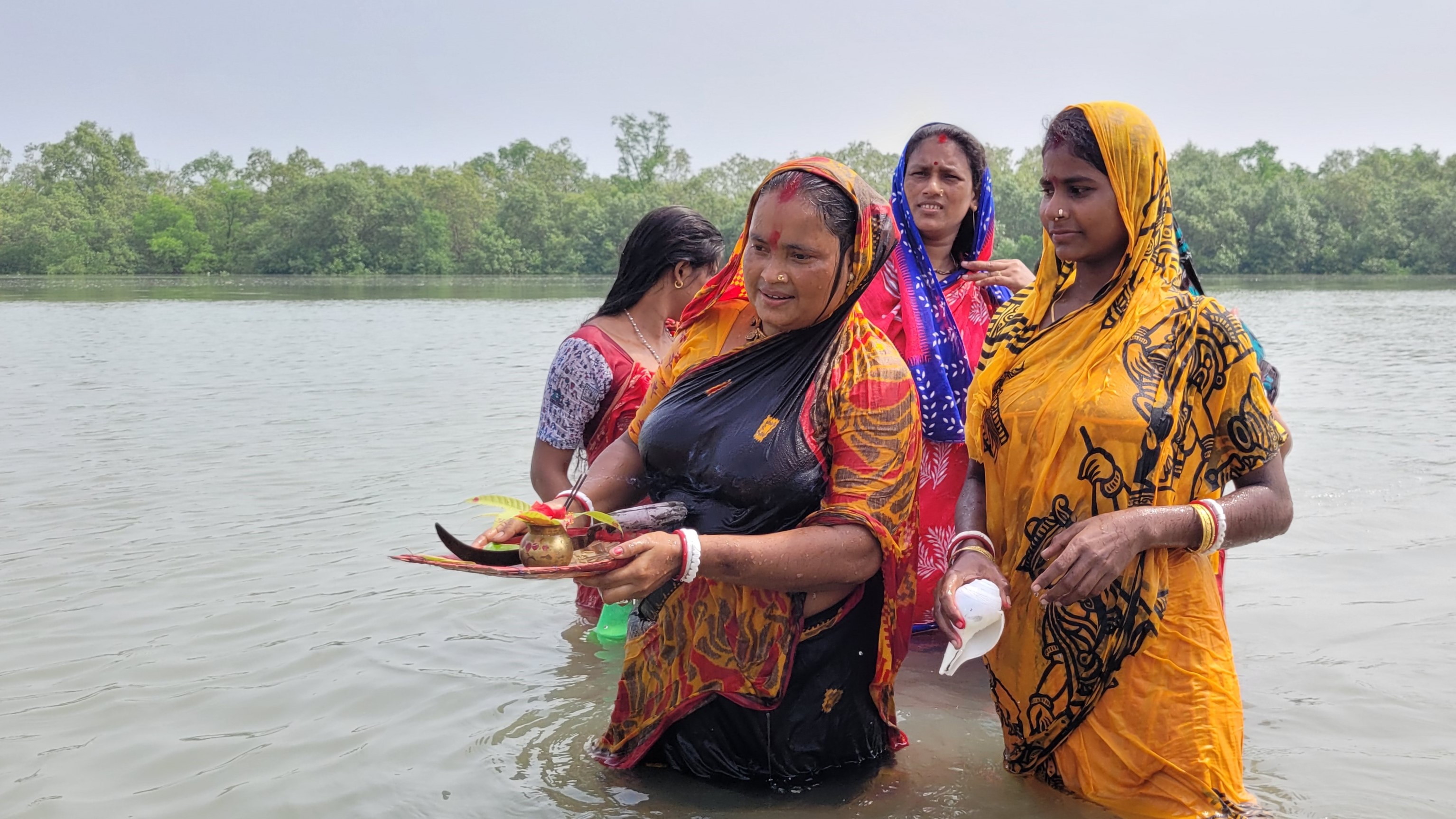
Ananta’s dream of building a permanent house and supporting his family in challenging times vanished against the backdrop of tense discourse around conservation. As a non-BLC holder, Ananta’s family was never eligible for compensation, and his family’s future was forever changed.
In the grief of losing a spouse, thousands of tiger victims’ families force themselves to live behind the mask of normalcy. Some end up continuously doing forest-based activities while others leave their homes in search of alternative livelihoods.
The people of the Sundarbans draw from traditional wisdom to navigate human-tiger relationships and avoid conflict—they’ve been living alongside wildlife since the earliest phases of settlement. Yet the present conservation model assumes that the local people are a threat to biodiversity. Until lawmakers acknowledge the reality of human-tiger conflict in this region and implement people-focused forest and wildlife management policies, communities here will suffer injustices in the name of conservation.
Editors’ note: Photos that appear in this essay by the author were taken between 2023 and 2025.

Amir Sohel is a Ph.D. student at the School of Liberal Arts, Indian Institute of Technology Jodhpur. He received his M.Phil. from the Institute of Development Studies Kolkata. His research interests focus on forest governance, political ecology, traditional ecological wisdom, and visual ethnography.
