






















What’s Behind a Michelin Star?
Amplifying anthropology
This article was originally published at The Conversation and has been republished under Creative Commons.
COULD A PHILLY CHEESESTEAK JOINT actually get a Michelin star?
The Michelin Red Guide is coming to Philadelphia, and inspectors are already scouting local restaurants to award the famed Michelin star. Michelin says the selected restaurants will be announced in a Northeast Cities edition celebration later this year. Boston will also be included for the first time.
As an anthropologist of ethics and religion who has an expertise in food studies, I read the announcement with some curiosity and a lot of questions. I had seen this small red guide revered by chefs and gourmands alike around the globe.
How did the Michelin guide begin reviewing restaurants? And what makes it an authority on cuisine worldwide?
FROM TIRES TO TERRINES
It all began in 1889 in the small town of Clermont-Ferrand in the Auvergne-Rhône-Alpes region of France. Brothers Andre and Edouard Michelin founded their world-famous Michelin tire company, fueled by a grand vision for France’s automobile industry—though there were fewer than 3,000 cars at the time in the whole of France.
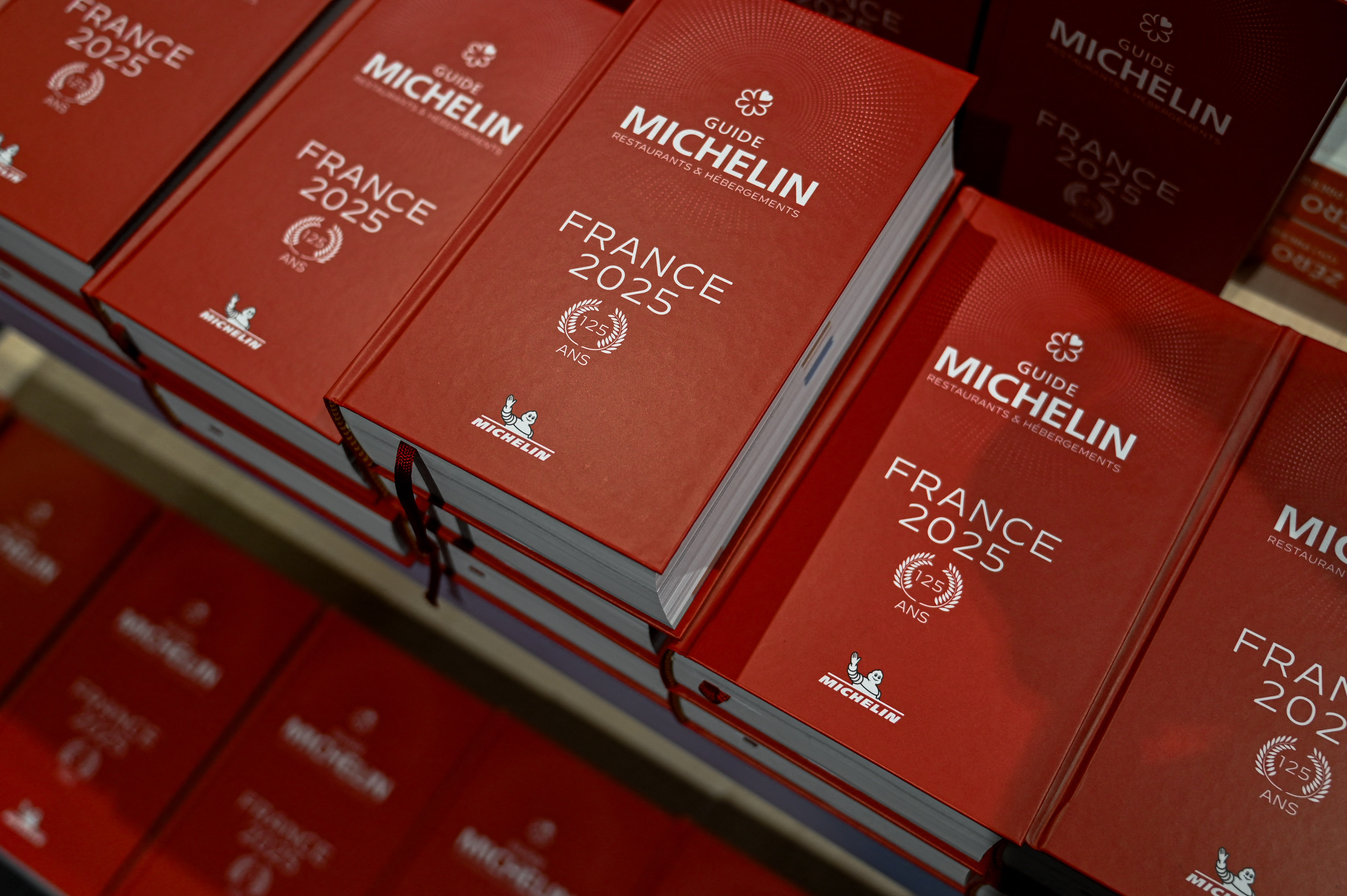
To encourage travel, they distributed a red-bound guide filled with maps and helpful tips on routes and destinations. Initially free to automobile owners, it soon started to sell for 7 francs—roughly US$1.50 at the time. The guide later added lists of restaurants and eateries along with other points of travel interest.
Being French, readers had questions about the quality of the food at these establishments, so the brothers started a rating system of a single star to denote high-quality establishments worthy of their elite customers and their fancy automobiles.
But that wasn’t enough for discerning diners. So the guide created a discriminating hierarchy of one-, two-, and three-star establishments: one star for “high-quality cooking worth a stop,” two stars for “excellent cooking worth a detour,” and three stars for “exceptional cuisine worth a special journey.”
AN ARMY OF ANONYMOUS INSPECTORS
How do restaurants get a Michelin star—or three? According to the guide, restaurants must be consistently extraordinary to garner three stars. To ensure a restaurant’s excellence is consistent, Michelin has to surveil them repeatedly, which it does using a stable of mysterious diners called “inspectors.”
You might be thinking of Inspector Clouseau, the klutzy, misguided detective from the Pink Panther movies played by the inimitable Peter Sellers. Mais non!
Michelin inspectors are dreaded anonymous restaurant reviewers. They dine at restaurants unannounced and undercover, and inevitably write scathing critiques of everything—ingredients, food, chefs, and dishes—in their reports.
In the 2015 Bradley Cooper movie Burnt, the restaurant is obsessed with the mystery Michelin inspectors, who dine incognito. Restaurateur Tony, played by Daniel Bruhl, instructs the dining room staff on how to spot them:
“No one knows who they are. No one. They come. They eat. They go. But they have habits. One orders the tasting menu, the other orders a la carte. Always. They order a half a bottle of wine. They ask for tap water. They are polite. But attention! They may place a fork on the floor to see if you notice.”
HOLY GRAIL FOR CHEFS
The inherent elitism of the iconic Michelin Guide was central, though left unspoken.
To counteract the guide’s existential classist bias, Michelin introduced the Bib Gourmand award in 1997 to identify affordable “best value for money restaurants.” Bib Gourmand restaurants are easier on the wallet than Michelin-starred establishments and offer casual dining. The award’s logo is the Bibendum, also known as the inflatable Michelin Man, licking his lips.
In 2020, the guide introduced yet another award: the green star for eateries with farm-to-table fresh quality.
Today the Michelin Guide has become a vaunted yet controversial subjective yardstick by which restaurants are measured.
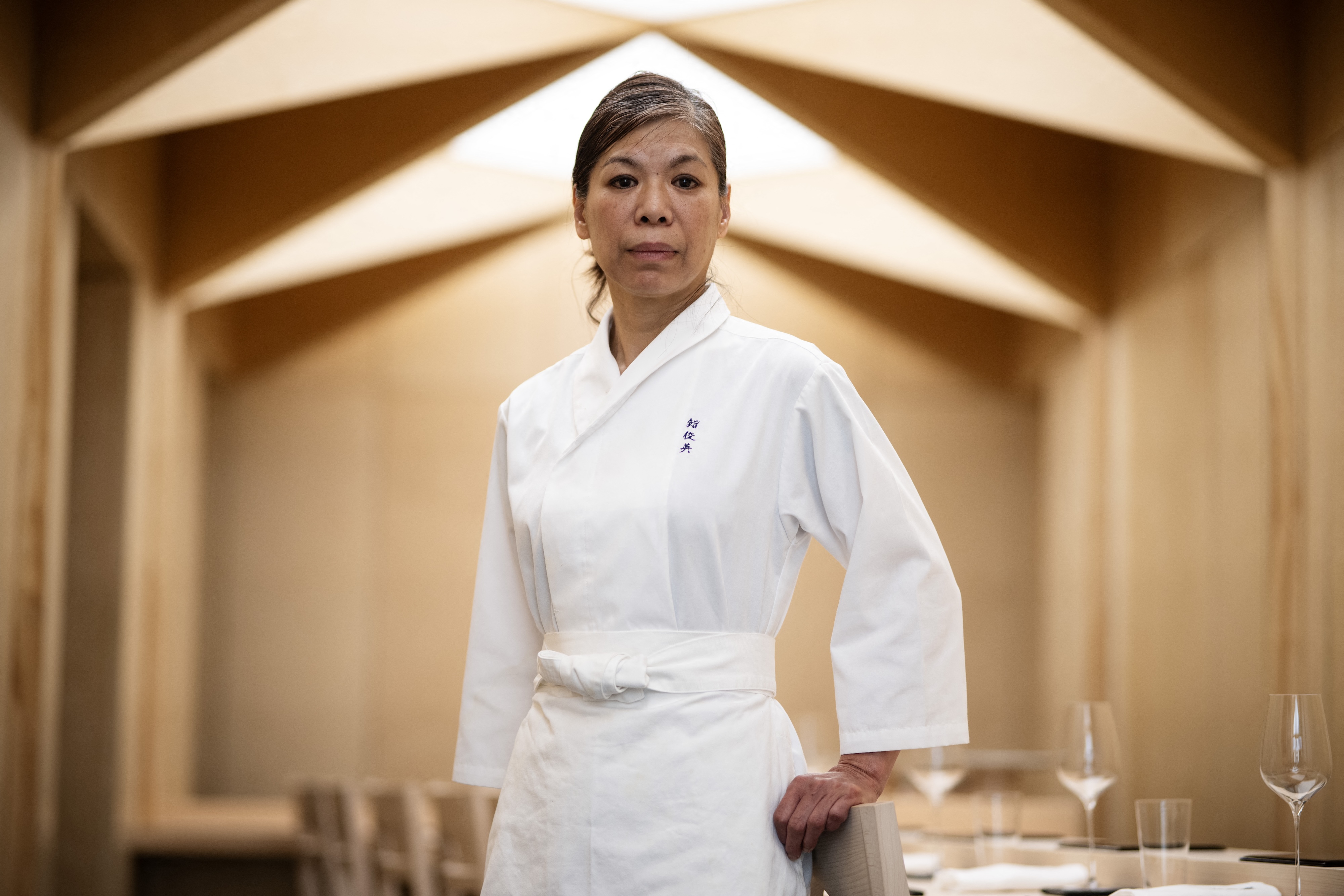
Getting a Michelin star has become a holy grail for many chefs, a Nobel Prize of cuisine. Chefs speak of earning a star as an honor they have envisaged for a lifetime, and starred chefs often become celebrities in their own right.
The 2022 dark comedy The Menu stars Ralph Fiennes as one such celebrity Michelin chef whose exclusive island restaurant has a lavish modern menu that culminates in a mystery performance. His greatest fear is losing his Michelin star—a cause for lament, mental health crises, and, sometimes, murder.
THREE STARS FOR EUROCENTRISM
The Michelin Guide evaluates restaurants on the quality of their ingredients, the mastery of their flavors, the chef’s personality in their cooking, the harmony of flavors, and the consistency of the cuisine over the course of numerous visits.
Yet somehow all these factors, seemingly easily translatable across the world’s cuisines, have led to an intensely parochial guide.
Only in 2007, 118 years after its inception, did the guide recognize Japanese cuisine as worthy of its gaze. Soon after, stars rained down on Tokyo’s many stellar eateries.
On a contemporary map charting where the Michelin Guide is found, huge swaths of the world are missing. There is no Michelin Guide in India, one of the world’s greatest and oldest cuisines, or on the African continent with its multiplicity of cultural flavors.
Perhaps a side of racism with the boeuf bourguignon?
Despite a movement to decolonize food by rethinking colonial legacies of power and extractive ways of eating, Michelin has derived its stellar reputation primarily from reviewing metropolitan European cuisine. It has celebrated obscure European gastronomic processes such as “fire cooking” in Stockholm’s famous Ekstedt restaurant, and new chemical processes such as “molecular gastronomy” in Spain’s famed el Bulli eatery.
One could say Michelin is a somewhat conservative enterprise. Rather than leading the way, it has followed consumers’ expanding palates.
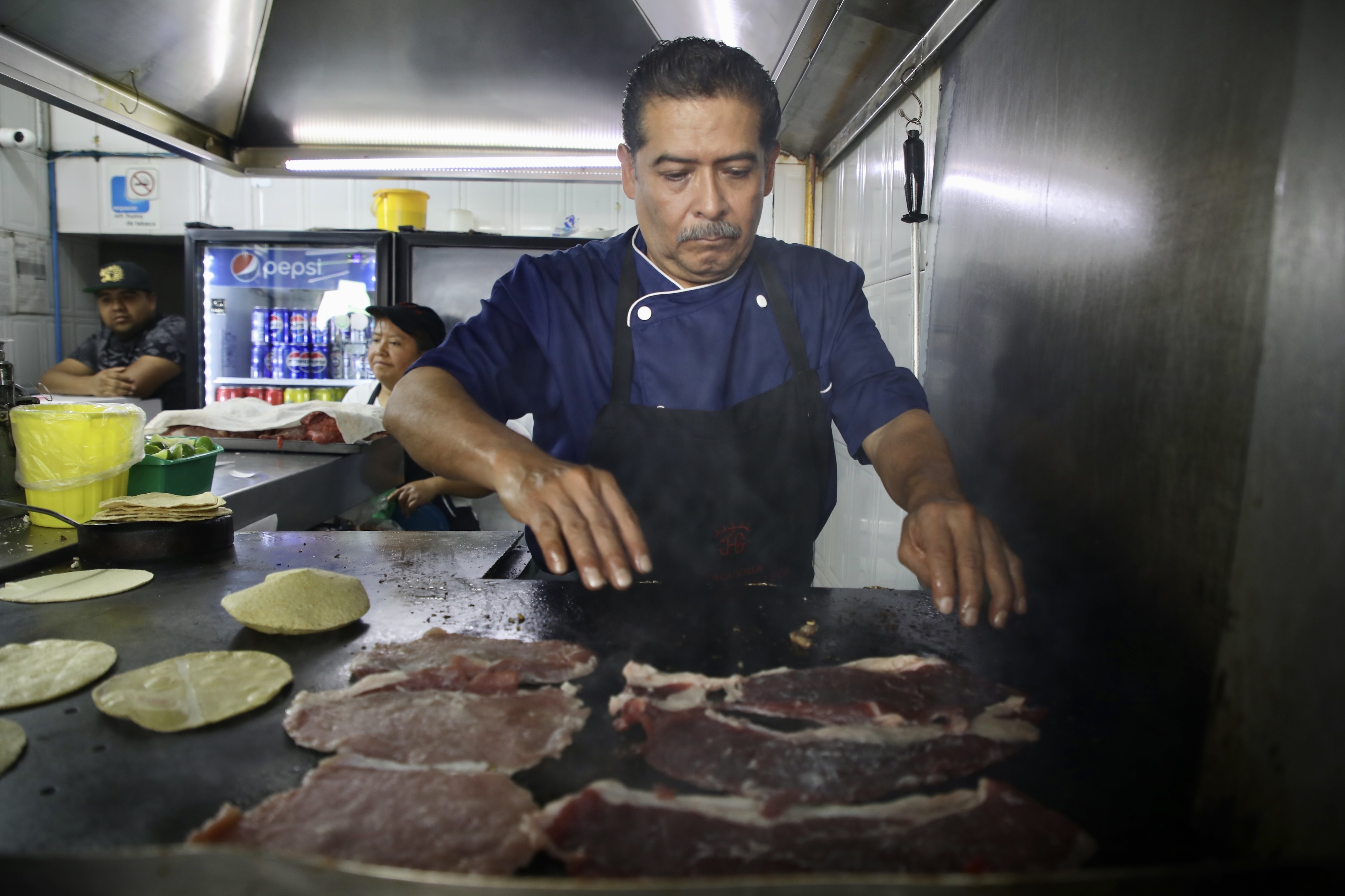
In 2024, in a rare break with tradition, Michelin awarded one star to a small family-run taqueria, El Califa De León, in Mexico City. The taqueria is known for its signature tacos de gaonera—thinly sliced rib-eye steak cooked in lard on fresh corn masa tortillas with a squeeze of lime.
Some discerning diners worried that Michelin had gone downhill.
Quelle horreur!
The decision to give a star to a Mexican restaurant that is essentially just a steel counter, fridge, and griddle was so unlike Michelin that it resorted to describing El Califa tacos as “elemental and pure”—language previously reserved only to describe elite cuisine.
A BIG BILL
Soon-to-be-reviewed Philadelphia boasts a portfolio of epicurean excellence, with contributions from a global diaspora of culinary creators. Restaurants such as Zahav, Kalaya, and Mawn—which serve Israeli, Thai, and Cambodian food, respectively—are surely eyeing their prospects for a starry future.
That Boston and Philadelphia’s tourism boards likely paid for the pleasure of the guide visiting their cities has been a topic of discussion among food cognoscenti. Reportedly, the Atlanta Tourism Board paid nearly US$1 million for Michelin to visit their city. Is Michelin merely a well-regarded shakedown? A few stars in exchange for a million dollars?
After indirectly footing that big bill, what can local diners look forward to in the wake of Michelin awards scattering across the Northeast?
Since Michelin restaurants are notoriously difficult to get into—the award invariably prompts a surge in customers and reservations—the enhanced reputation of the restaurants might translate to price increases for diners.
Starred restaurants will also likely feel tremendous pressure to maintain high food quality and service, and this, too, can add to cost—particularly in an era of tariffs on foreign ingredients and alcohols.
Diners won’t escape unscathed. Industry officials suggest that Michelin stars add an average of US$100 per diner per star. But, on the upside, diners may be able to gawk at local and international celebrities at dinner, since hanging out at Michelin-starred establishments has long been a celebrity preoccupation.
So, if you have a favorite hot restaurant in Philadelphia, better make that reservation immediately, before a Michelin star makes it impossible to get in.

Tulasi Srinivas is a professor of anthropology, religion, and transnational studies in the Institute for Liberal Arts and Interdisciplinary Studies at Emerson College in Boston, Massachusetts. She studies connections between economic globalization and urban religion. Her books include Winged Faith: Rethinking Globalization and Religious Pluralism Through the Sathya Sai Movement, Curried Cultures: Globalization, Food and South Asia (co-edited with Krishnendu Ray), and The Cow in the Elevator: An Anthropology of Wonder. Her award-winning work has been supported by the National Endowment for the Humanities, the Pew Foundation, and the Andrew W. Mellon Foundation. Srinivas has held fellowships at the Radcliffe Institute, Harvard University, the Luce-American Council of Learned Societies, and the American Institute of India Studies. Srinivas is an agenda council contributor and expert with the World Economic Forum, Davos.
