

















The Myth of “Risk-Free” Gold

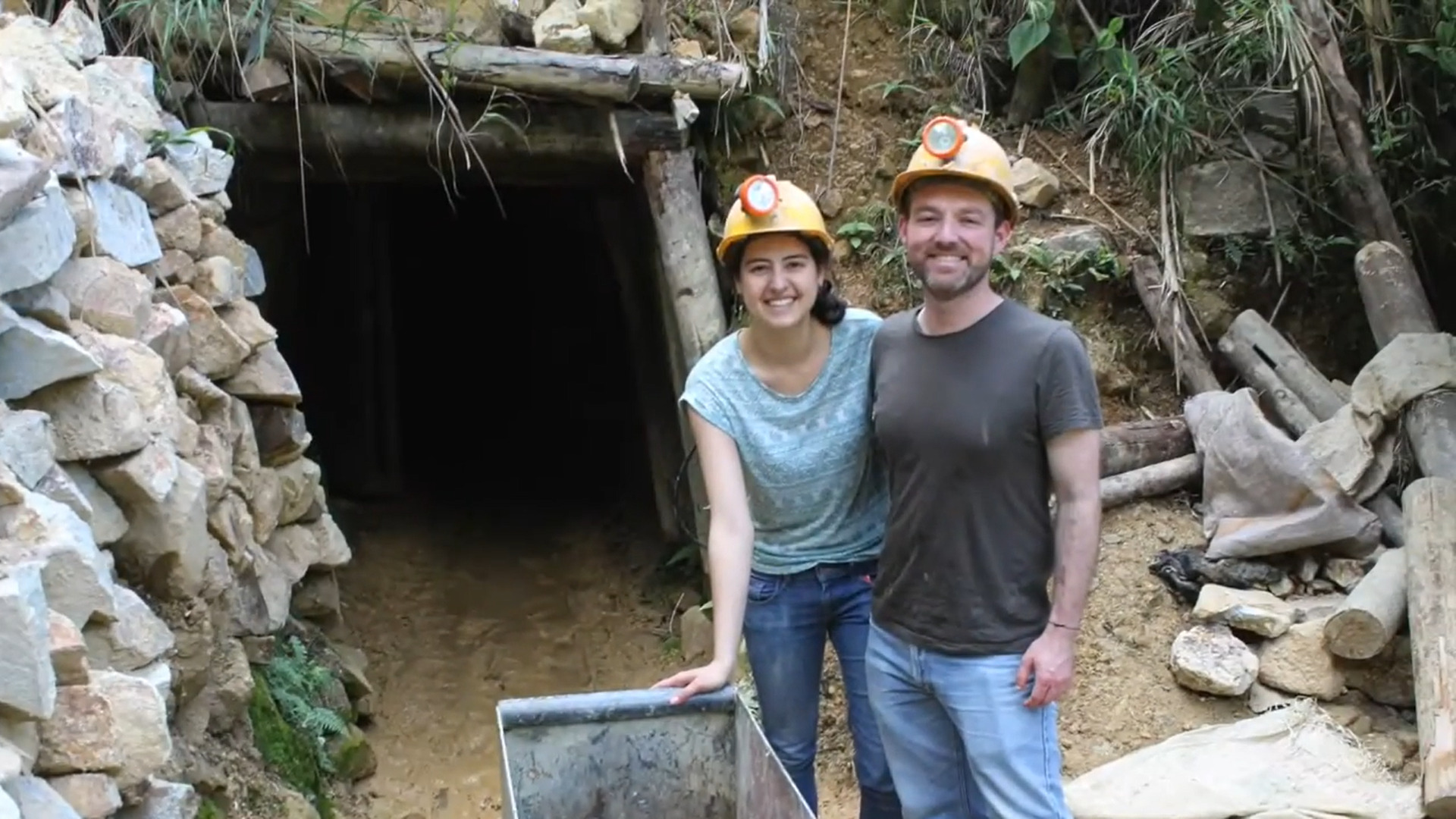
In July 2018, my fiancé and I journeyed to Marmato, a mining town in Colombia, to craft our wedding rings. At a gold processing plant, we bought a bucket of concho, tailings left over from one of the dozens of the town’s informal gold mines. We sifted the precious mineral dust through water with a batea (a wooden pan), then took it to a workshop nearby run by Javier (a pseudonym), one of Marmato’s only jewelers. He taught us how to transform the lackluster gray dust into two shiny gold pieces to symbolize our union and love.
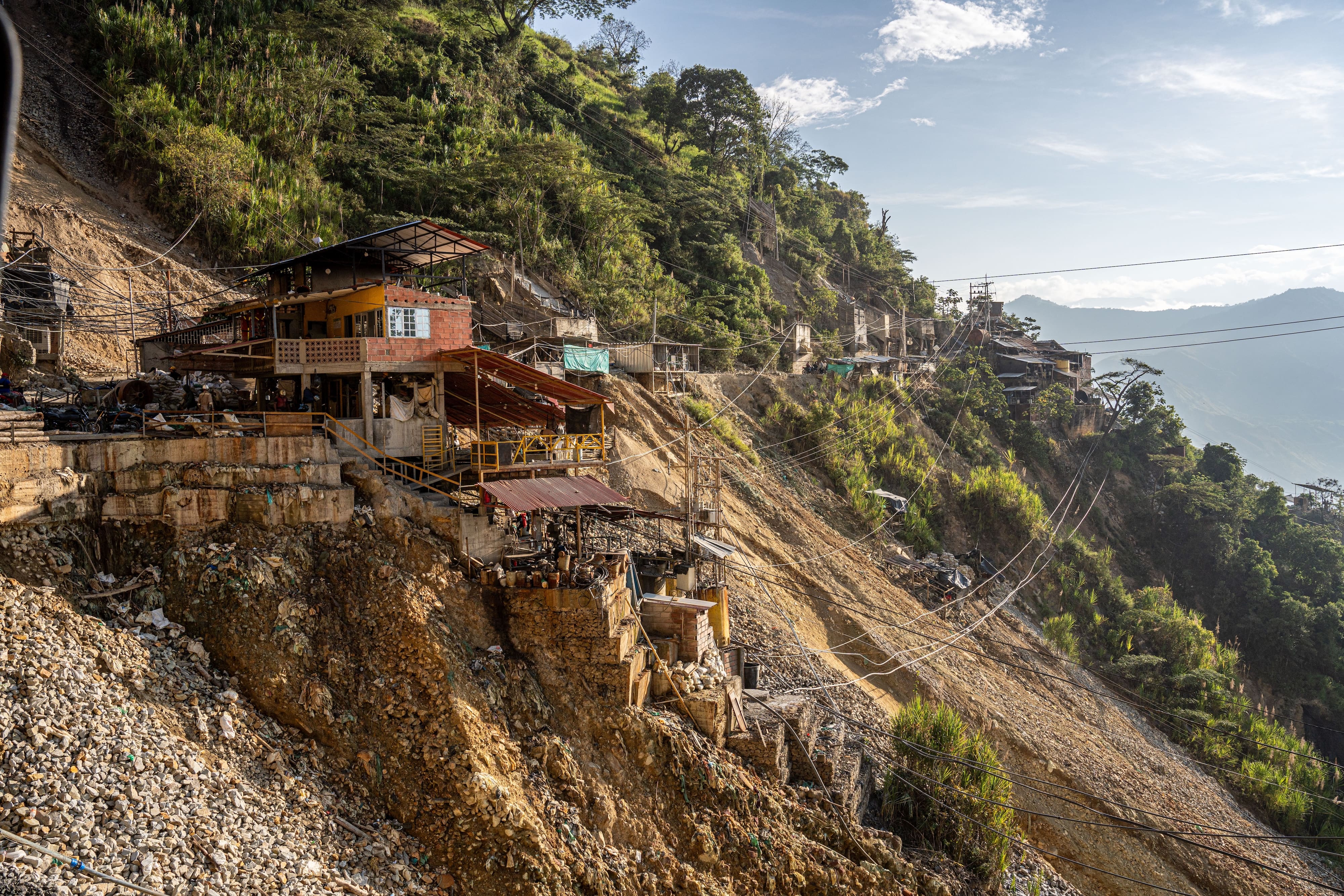
As romantic as that might sound, the jewelry workshop, like the neighboring mines, was crumbling. Marmato, located on top of a mountain full of gold, felt like a place out of a dystopian novel. Tired workers churning out gold for mass export overseas picked their way through heaps of rock, open flames, and polluted water—evidence of the environmental toll from centuries of mining. The workshop where Javier helped us create our rings seemed starkly out of place in a town where people mined gold only to watch it leave their hands.
To legally extract gold in Colombia, small-scale miners need a permit issued by the mayor’s office. Most miners in Marmato do not have such a permit, and neither did my fiancé and I. Yet that was all the more reason we wanted to be there. In a place where gold was extracted for others—not for us, and certainly not for the miners—one had to ask: Where was it all going?
As a Colombian anthropologist, I have long been intrigued by the human ambition fueling the gold rushes that have brought so much destruction to my country. In the years leading up to our marriage, my partner—also a Colombian anthropologist—and I were researching a mining boom in Marmato triggered by surging gold prices following the 2008 financial crisis. However, I soon realized that if I wanted to understand gold and its impacts, I should turn my attention to those outside of Marmato who were demanding the substance by the tons—and driving its price higher and higher. That led me to investigate the value chain of gold and the workings of the global gold financial market.
In financial markets, gold is valuable for being a “safe-haven asset.” Managers of pension funds, hedge funds, and commercial and central banks praise gold bars as a “risk-free” asset to hedge the risk of their investment portfolios and preserve wealth in times of economic crisis. But gold is not risk-free; in fact, it creates risks for racialized laborers and wider communities subjected to the intense resource extraction necessary to sustain the gold market.
In other words, the myth of gold as “risk-free” only makes sense within racial, class, and geographic hierarchies that celebrate the desire of the wealthy to accumulate gold while condemning the desire of miners to extract it.
THE RISE OF “RESPONSIBLE” AND “DIRTY” GOLD
Several elements go into sustaining the myth of gold as a risk-free financial asset—including whether it meets certain global standards and certifications. For a gold bullion bar to be traded on the global gold financial market, it must be produced by a refinery on what’s called the Good Delivery List (GDL). The 66 refineries on the list are certified by the London Bullion Market Association (LBMA), the global gold market authority. Switzerland dominates the gold refining market, processing around two-thirds of the world’s supply each year.
Until relatively recently, refiners were primarily concerned with guaranteeing the physical purity of bullion bars. But this began to change around 2010 when nongovernmental organizations, activist groups, and journalistic investigations revealed the gold industry was fueling armed conflicts and environmental devastation. Consequently, the Organization for Economic Co-operation and Development developed guidance to encourage responsible sourcing from “conflict-affected and high-risk areas.”
In response to these scandals, in 2012, the LBMA published a set of mandatory guidelines on “responsible gold.” GDL refiners who trade on the global market must now undertake a due diligence process to identify their suppliers in gold-producing countries and associated supply chain risks such as conflict financing or human rights abuses. The gold they refine must be transformed into standardized 400-ounce bars that allegedly meet both the physical and ethical requirements of the LBMA, European Union and United States regulators, and responsible investors. In 2016, Ruth Crowell, LBMA’s chief executive officer, summarized this shift in perspective: “Not only does it [gold] have to be gold, but it also has to be responsible.”
The gold market has produced the reality it now treats as dirty.
The idea of responsible sourcing promised to reduce the negative impacts of gold trade in mining regions. However, in practice, industry standards shifted responsibility onto local communities, framing them as “risk factors” for the supply chain and informally labeling untraceable gold as a source of “contamination.” Consequently, all gold from artisanal and small-scale mining (ASM) was initially classified as “high risk,” leading to its stigmatization as “dirty gold” by the international press and activist groups.
Recently, gold industry leaders have realized that engaging in limited ways with the ASM sector rather than excluding it entirely could be beneficial. Some organizations are now trying to address the disparities in the gold value chain by creating new ethical standards that include small-scale miners, such as the Fairmined Standard. However, some people are skeptical of these efforts. One interviewee told me that such initiatives sweep into the market just “la crème de la crème” of ASM gold producers, continuing to leave out many underresourced communities.
RACE, COLONIALISM, AND GOLD
Responsible gold-sourcing initiatives aim to “clean up” the industry’s reputation. But they have ended up further marginalizing entire ASM regions that are said to have “weak or nonexisting governance,” “widespread violence,” or “insecurity.” Meanwhile, large multinational companies, investors, and banks continue to benefit the most from gold’s purified value.
From my in-depth research along the global gold value chain, I’ve come to see this way of thinking about gold as either “responsible” or “dirty” as the product of a racialized hierarchy with a long history.
In South America, Amerindian Indigenous communities began extracting gold in precolonial times around 4,000 years ago. They often used the precious metal in rituals as powerful offerings to their deities to maintain the balance of the world and fabricated standardized personal ornaments, such as nose rings, earrings, and breastplates, in specialized artisanal goldsmithing workshops.

However, during the European conquest of the Americas starting in the 15th century, gold became a visible symbol of individual ambition. Colonizers built an entire mining enterprise sustained by the exploitation of Indigenous and enslaved African people.
As archaeologist Carl Langebaek has argued, it was not gold that corrupted people but colonizers who corrupted gold when they started using it for capital accumulation. This limited way of seeing gold purely as an economic asset and determining who was allowed to desire gold and who was not depended on racist, colonial hierarchies that devalued certain communities and places.
These dynamics continue to shape the gold industry today. The majority of Marmato’s miners are descendants from Indigenous communities and enslaved Africans tied to colonial-era mining contracts. Most of them are small-scale entrepreneurs and migrants from other regions of Colombia or from neighboring countries who depend on gold for their livelihoods.
EXACERBATING INEQUALITIES
Efforts by the gold industry and governments to uphold the metal’s status as a “risk-free” asset have only deepened the dangers faced by those who risk their lives extracting it.
As a soft, indestructible metal, gold can be melted and mixed infinitely without losing its value. In mining towns like Marmato, the boundaries between informal, illegal, and legal forms of extracting and selling gold are often blurred, making traceability (determining the exact origin of specific amounts of gold) almost a utopian endeavor.
Anthropologist James H. Smith in his ethnography on mining in the Eastern Democratic Republic of Congo compares traceability to “a church” that exercises moral authority by “excluding those deemed unclean.” In other words, gold can only be “purified” from the complex social reality of its extraction by systematically excluding people and places that do not fit the story the gold industry tells about itself as morally good.
To learn more about the author’s work, listen on the SAPIENS podcast: “The Purification of Gold—and the Racialization of Miners.”
Except for the very few pieces of jewelry that Javier crafts in his workshop, most of the gold extracted in Marmato is smuggled into major cities such as Cali or Medellín, where it gets mixed with gold from other regions of Colombia to form small ingots. Prior to the implementation of responsible sourcing standards, these ingots were primarily exported to GDL refineries in Switzerland and the United States. But now legitimate ASM gold (often mixed in the same ingot with gold extracted by criminal groups) is taking a “detour” toward non-GDL refineries in the United Arab Emirates.
Once there, it gets processed and transformed into “recycled gold” and shipped to GDL refiners, who sell it to banks and luxury brands in the Global North. Through this roundabout process, potentially “dirty gold” transforms into a “pure” financial asset that satisfies investors’ desires for a stable, solid, and safe metal.
The policies and initiatives developed to control the unbridled extraction of gold tend to focus narrowly on controlling miners, who are most often from poorer areas of the world. Many gold industry participants I met during my research argued these efforts could be effective economic development tools for mining communities. These arguments were often paternalistic—based on assumptions the miners were inherently irresponsible and needed “support” to participate in the global economy. During my research, I observed how these paternalistic ideas were frequently propped up by visual imagery in industry reports and public relations materials that depict dark-skinned miners with stained hands and clothes, and financiers—mostly light-skinned—in clean clothes and environments.
Ultimately, the inequalities are systemic—not the fault of miners. If wealthy investors and consumers continue to demand gold by the tons, it will continue to be extracted by the tons, with devastating consequences for local communities.
CONTESTING GOLD’S (MORAL) PURIFICATION
When my husband and I made our rings, we were not legally allowed to extract the gold we used or even to buy it directly from Marmato’s miners. Instead, to be “ethical” consumers, we were supposed to buy the rings in a jewelry shop where the gold should have come from a GDL-certified refinery that very well might have sourced it as “recycled” from a refinery in the United Arab Emirates.
Seven years later, the global gold price has almost tripled. In September 2025, it hit a record high of US$3,526 per ounce compared to US$1,200 in 2018. Gold rushes have now become the baseline reality.
If Marmato was such a dystopic place in 2018, imagine how the situation is in the world’s largest gold deposits right now, let alone the devastation facing environmentally critical regions such as the Amazon rainforest. To keep pace with the global demand for bullion, I’ve seen how ASM miners have shifted away from traditional means of extraction, such as using bateas and ancestral plants to separate gold from other metals to relying on dredges, backhoes, and toxic chemicals like mercury or cyanide. Gold mining leads to deforestation, transforming forests into contaminated ponds, and pollutes rivers with mercury. Once released into the environment, mercury can cause serious neurological harm to both humans and wildlife.
In other words, the gold market has produced the reality it now treats as dirty.
One way to counteract and change these systems that legitimize such unbridled demand for gold and devalue gold mining communities and environments is to question the dominant understanding of gold as a financial investment. That way of thinking not only upholds colonial ideas of who can desire gold and who cannot, but it curtails the diverse and creative ways human societies have long related to the precious metal.
Today when I look at my wedding ring forged illicitly in Marmato, I refuse to see it as an “asset.” Instead, I’m reminded that human connections with gold existed long before their usurping by the global financial market—and they persist today in places like Javier’s workshop.

Giselle Figueroa de la Ossa is a Colombian anthropologist and a Ph.D. candidate in anthropology at the London School of Economics. Her research explores the labor, ethics, and affects that make gold a valuable substance demanded by the tonnes. She draws from her multisited ethnographic research among bureaucrats, technocrats, and entrepreneurs who work on a gold mineral traceability project in Colombia, and financiers who work on responsible gold sourcing in London, Switzerland, and Paris. She is the founding director of the Laboratorio de Antropología Abierta (Open Anthropology Lab), an organization in Colombia that, since 2018, produces audiovisual content for nonacademic audiences to increase the impact of academic research.
