

















In Zambia, Jehovah’s Witnesses and Chinese Migrants Find Common Ground
The taxi pulled into the driveway, 10 minutes late for the meeting. Inside the car, we were sweating from the mix of nerves and the strong sun beating down on the roof of the car—typical weather in Zambia during the hot season.
“Here we are, as I promised,” said our driver, Simapuyo. [1] [1] All names have been changed to protect people’s privacy. “The Jehovah’s Witness Kingdom Hall where they are worshipping in Chinese.”
A Witness himself, Simapuyo had generously offered to drive me and Zhang Xiu, a friend who sometimes accompanied me on research outings, to the meeting free of charge.
Zhang and I hurried into the building.
As soon as we entered, two Zambian men rose from their seats with what appeared to be reactions of surprise and then delight. With broad smiles, they came to shake our hands vigorously with whispered words of “你好, 你好” (in Mandarin, “hello, hello”), then quietly directed us to seats in the back of the hall.
Zhang and I sat, not quite knowing what to expect. Nearby congregants passed us the worship meeting agenda, which was printed in Chinese. A large quote topped the agenda: “耶和华守护侨居的外人” (Jehovah is protecting the foreign residents). The congregation of around 50 people, almost all Zambian, had apparently read an article on this subject before the meeting, and a man at the front was leading the congregation through a question-and-answer session.
Both the questions and answers were in Mandarin. The discussion focused on the growing numbers of Chinese and Indian entrepreneurs and Congolese refugees in Zambia, and the importance of being able to speak with these foreigners in their own languages.
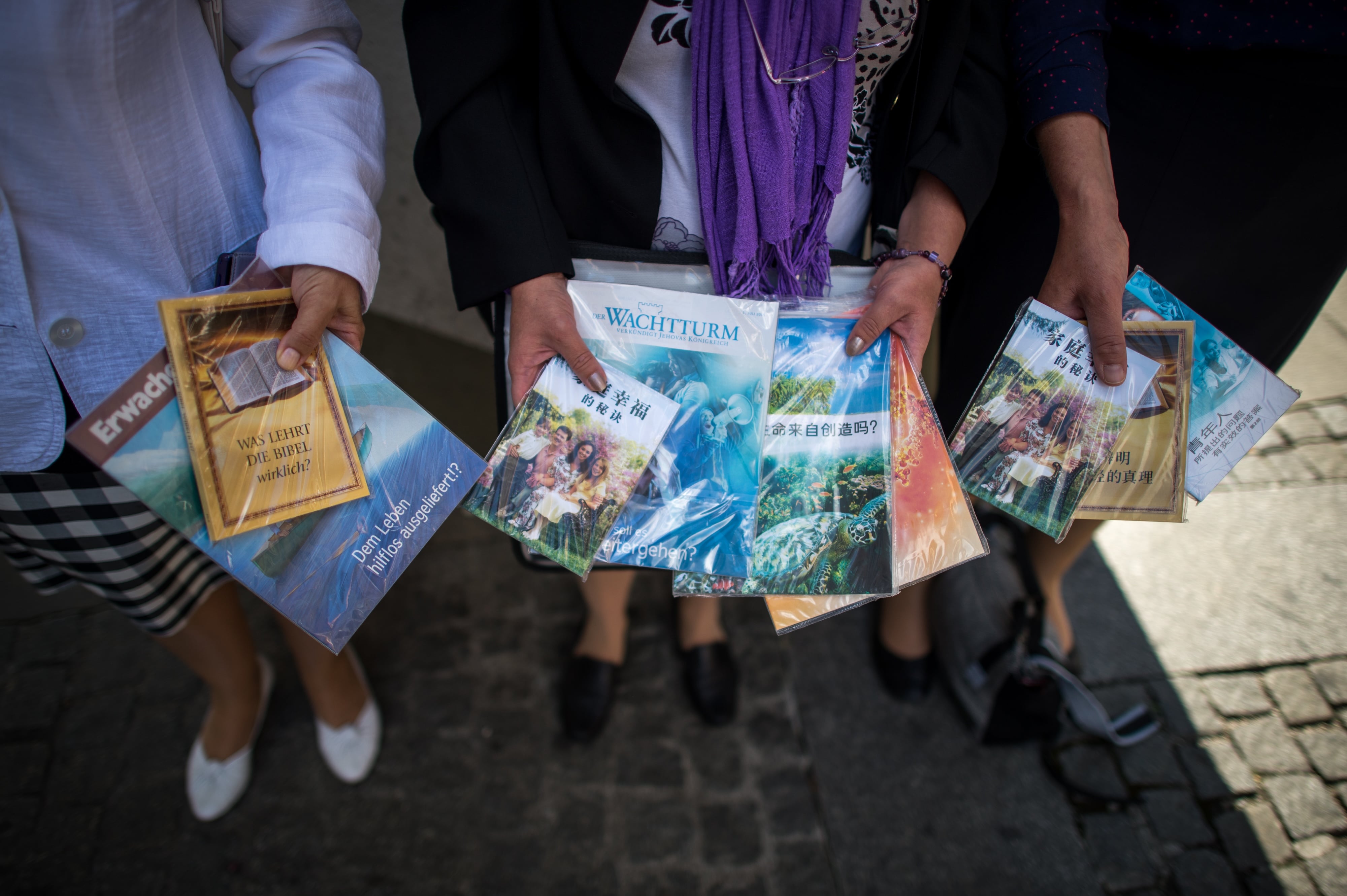
After about an hour, the meeting ended, and many congregants warmly greeted us. With typical expressions of Chinese 谦虚 (modesty), they apologized for their poor Mandarin skills. They also shared recently published pamphlets, available in both Mandarin and English, titled “偏见有药可治吗” (Is There a Cure for Prejudice?). The congregants explained they endeavored to distribute these pamphlets to both Zambians and Chinese migrants, depending on the language of their target audience.
As Simapuyo drove us back to our respective homes, Zhang and I talked about how shocked we were by the experience. Though Zhang had lived in Zambia for over a decade and I for several years, neither of us had ever encountered or even heard of a Chinese-language congregation that included Zambian congregants, much less an entire community of Zambians who were learning Mandarin from scratch to conduct their meetings.
Why were Jehovah’s Witnesses in Zambia going out of their way to reach out to Chinese migrants? To find out, I began attending meetings at these congregations regularly as part of long-term anthropological research on the often fraught relationships between Chinese migrants and Zambians.
As I was to find out in the following years of ethnographic fieldwork at various Jehovah’s Witness “Kingdom Halls,” the congregation Zhang and I attended is just one example of a growing phenomenon. Despite incidents of severe xenophobia against Chinese migrants in Zambia, Jehovah’s Witnesses in this and other African countries are mastering Mandarin and founding Mandarin-only congregations to welcome Chinese migrants into their religion. Their success rates at conversion remain low—but that doesn’t mean they’re not having an impact.
THE GROWING CHINESE PRESENCE IN ZAMBIA
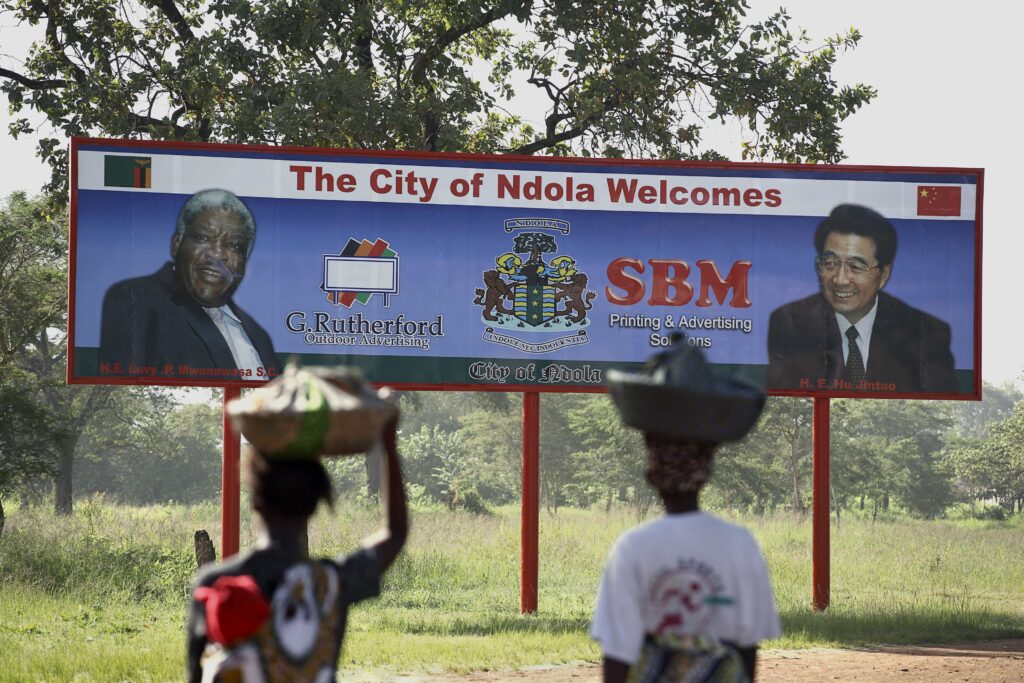
As in almost all of Africa, Zambia has seen a massive influx of loans, capitalist investment, and migration from China over the last two decades. Since 2000, the Chinese migrant community in the country has grown from almost nothing up to 100,000, according to some estimates, concentrated in urban areas of central and northwest Zambia.
Most Chinese migrants come to Zambia to establish their own businesses or to work as managers (usually of Zambian employees) in existing Chinese-owned enterprises. These Chinese-operated businesses are now common in almost every sector and at every scale of the Zambia economy, from mining and construction to agriculture and retail commerce, and from some of the largest corporations at the heights of the Zambian economy to mom-and-pop stores.
As I learned, this influx of Chinese investment and migration to Zambia had been accompanied by tension and controversy and, at times, horrific acts of violence.
This violence usually takes place in the context of labor disputes: Frustrated Zambian workers who have been stymied in demands for improved labor conditions have turned to rioting or murder to achieve their demands, and Chinese managers have fired into crowds of protesting laborers to disperse them.
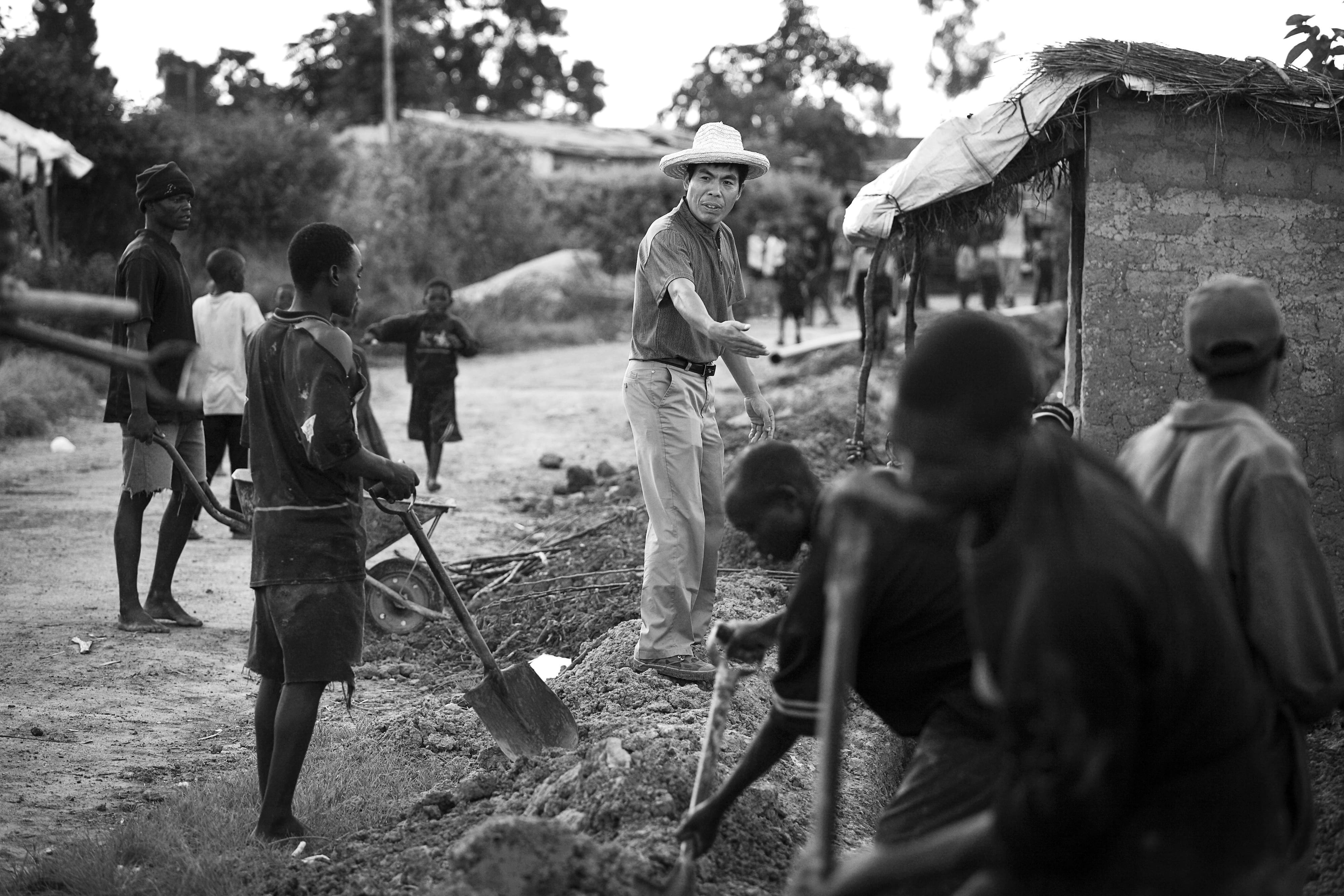
Within this context, I often heard Zambians accuse Chinese of being racist, and many of the Chinese expatriates I met lived in fear of their Zambian neighbors, keeping their homes hidden behind high walls and fierce guard dogs.
I found these tensions were often exacerbated by language differences: Most Chinese expatriates arrive in Zambia without full proficiency in English or any other Zambian language, and rarely learn these languages once they are there. They instead rely upon a simplified pidgin language, mixing elements of both English and Chinese to communicate with Zambian employees, customers, and neighbors.
For example, instead of saying, “Is this OK?” as one might in Standard (Zambian) English, a Chinese migrant might use the phrase, “good-uh no good-uh?” The phrase “you are welcome in my home” becomes “me home same you home.” Many Zambians told me they viewed such non-standard English usage as indicating a lack of education, and that this made them doubt the qualifications of Chinese expatriates to operate businesses in Zambia.
Religious differences were also a major source of tension between Zambians and Chinese expatriates. While the overwhelming majority (95.5 percent) of Zambians identify as Christian, many Chinese expatriates I spoke with during my research espouse atheism or are dismissive of Zambian religious faith.
By developing specialized Mandarin-language congregations, Zambian Witnesses are thus forging very different kinds of relations with the Chinese migrants in their communities.
WITNESSES IN ZAMBIA
When I started out, I didn’t know much about Jehovah’s Witnesses—but I came to be fascinated by their unique history. Jehovah’s Witnesses are a branch of Christianity established in the U.S. in the late 19th century. The movement’s extreme commitment to evangelization in preparation for an impending Armageddon sets it apart from many other Christian denominations.
These religious teachings made their way to Zambia at the beginning of the 20th century, as they rapidly spread along migrant worker routes connecting rural villages with the emerging industrial urban centers of the Zambian Copperbelt and the South African gold and diamond mines. Today Zambia has more Jehovah’s Witnesses per capita than almost any other country in the world.
To learn more about the author’s research, listen on the SAPIENS podcast: “Zambia’s Chinese Connection.”
A number of unusual Witness practices have singled them out for controversy. Witnesses reject the underlying legitimacy of secular nations and politics, which means they abstain from voting, serving in militaries, saluting flags, pledging oaths of allegiance, singing national anthems, or even rooting for national athletic teams. This rejection of militarism and nationalism has historically made Witnesses targets of government persecution in Zambia and elsewhere.
Witnesses have also drawn criticism for their strict adherence to literalist interpretations of biblical conceptions of gender roles, such as rejecting homosexuality, asserting men’s roles as heads of the family, and requiring women to wear a head shawl before speaking in front of a congregation. Moreover, they refuse to participate in the activities of other branches of Christianity, which Witnesses describe as “false religion.”
REACHING CHINESE MIGRANTS
Since 2008, groups of Zambian Witnesses have been intensively studying spoken and written Mandarin. At the time of my fieldwork research between 2015 and 2019, these Witnesses had already established three Mandarin-only congregations as well as two more congregations-in-training.
In their weekly meetings, members of Mandarin-language Witness congregations read the Bible, sing hymns, give talks, practice evangelizing skits, and discuss biblical interpretation all in Mandarin. They even draw connections between the structure of Chinese characters (hanzi) and biblical stories.
One congregant told me that most Chinese migrants who attend a meeting are “fascinated” by these convergences. “They think maybe their culture has nothing to do with the Bible,” he said. “[But] all cultures have similar stories of the Bible. All these stories were handed down orally before the Bible was written.”
Chinese migrants tended to not be comfortable socializing with Zambians and expressed feelings of isolation and loneliness as a result.
Speaking with Chinese migrants, I found their reactions to Witness evangelism varies. Noting how rare Mandarin proficiency is among Zambians, some Chinese expatriates were suspicious, wondering if the Witnesses were seeking some way to extract money from them. Zambian Witnesses even described to me how, on some home visits, Chinese migrants would laugh as they unleashed large hounds to chase the Witnesses away.
Other Chinese migrants I spoke with were deeply touched by Witnesses’ dedication to learning Chinese language and culture, and Witnesses’ attempts to forge friendly relationships of a kind that few other Zambians are willing to countenance.
COMMUNION, NOT CONVERSION
Still, the Witnesses’ efforts, if measured by conversion rates, have been unsuccessful. Very few Chinese expatriates have joined the Witness faith in Zambia.
Chinese migrants I spoke with who attended Witness-hosted gatherings told me the religious content of Witness outreach was rarely the appeal. Instead, these Chinese migrants were grateful to have an opportunity to socialize with and befriend local Zambians in what felt like a safe space. Given the linguistic and cultural differences as well as xenophobia they experienced, these migrants tended to not be comfortable socializing with Zambians in other contexts and expressed feelings of isolation and loneliness as a result.
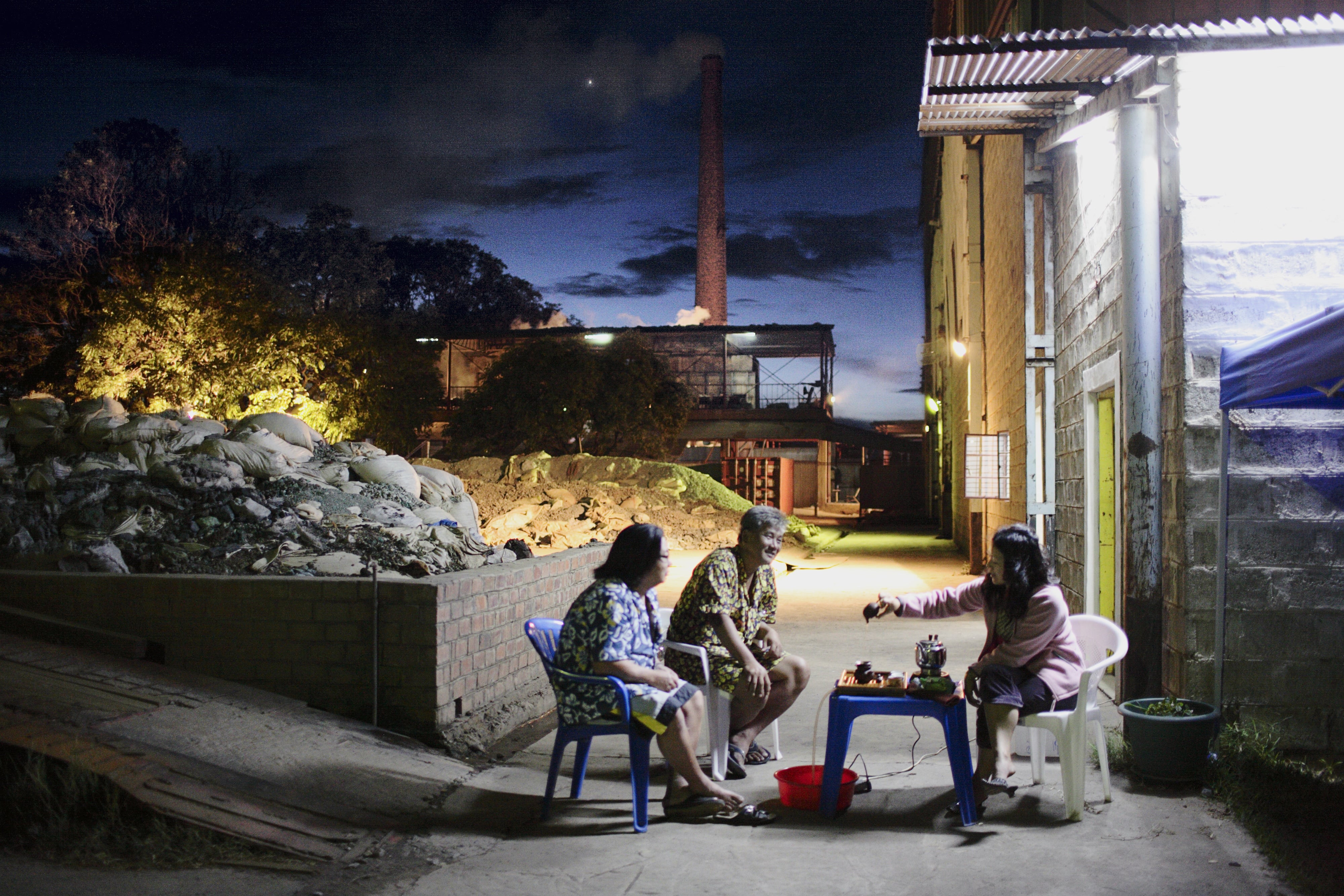
Witnesses hosted social gatherings that seemed designed to appeal to these kinds of desires among Chinese migrants: sharing dinner, playing games, and then, at the end, screening a film with subtle religious themes.
When Chinese migrants did express some amount of interest in Witness teachings, it was often with regard to the positive lessons they could apply in daily life rather than faith in a supreme god or biblical authority. One Chinese migrant I spoke with who felt he had problems with anger management, for example, expressed interest in biblical stories that seemed to offer practical wisdom on how to reign in one’s temper.
When I discussed with Witnesses the apparent lack of success in evangelizing Chinese migrants, even after many years of trying to master Mandarin, they explained that the success or failure of their actions was not the important part. What was important, for them, is that they abided by God’s admonition to spread what they perceived as the universal truths contained in the Bible—regardless of whether others chose to heed this message or not.
Even if their intentions don’t always line up, these efforts to connect across cultural and language differences do have an impact. It might be a tiny step, but in a place where xenophobia and racism often characterize these relations, walking into a Witness Hall and seeing Zambians and Chinese sharing a meal and chatting together feels to me like a breath of fresh air—and offers hope for the future.

Justin Lee Haruyama is a British Columbia–based writer, researcher, and anthropologist. He is a fellow with the American Council of Learned Societies and assistant professor at the University of British Columbia, Okanagan. He received his Ph.D. from the University of California, Davis, and has received grants and fellowships from the National Science Foundation, U.S. Fulbright Program, and Wenner-Gren Foundation. Haruyama’s research examines the controversial presence of Chinese migrants and investors in Zambia today. His writing has appeared in The Chicago Tribune, The South China Morning Post, African Studies Review, Somatosphere, Cultural Anthropology, and elsewhere.
