









Surveillance and Suspicion From the Margins
I knocked on Marta’s door many times. I came bearing gifts: diaper packs for her new baby girl. [1] [1] The names of interlocutors have been changed to protect people’s privacy.
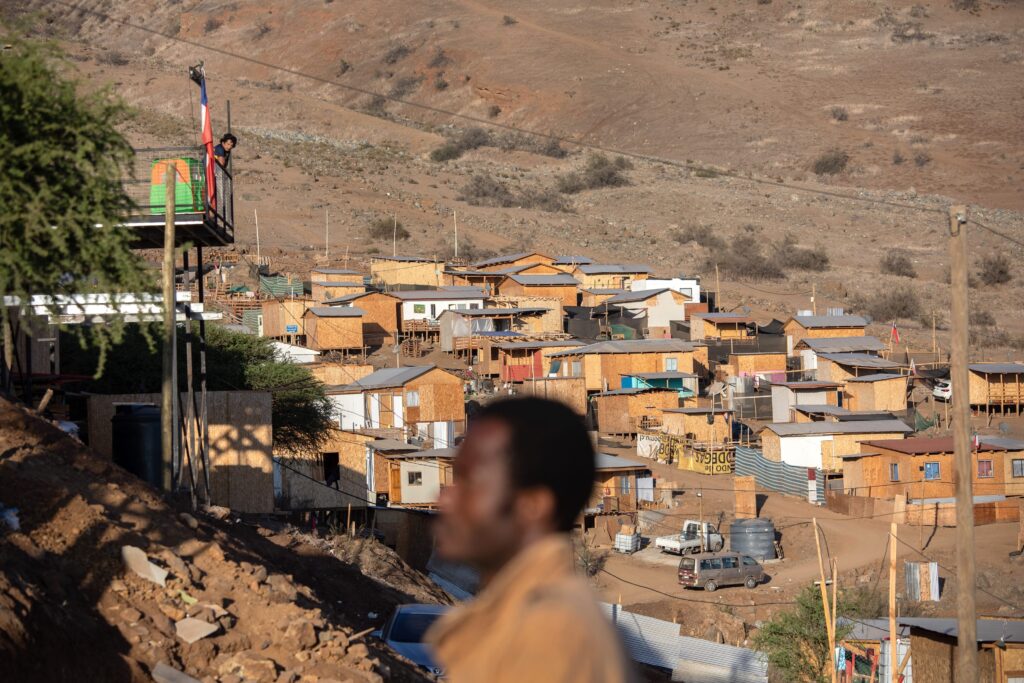
Loud music playing inside probably prevented her from hearing my knocks. I sat on a pile of old tires, waiting outside her home on the outskirts of Santiago, Chile.
A neighbor, standing in the threshold of his front door, barked at me: “Who are you looking for, friend?”
“Marta.”
“Marta? No Marta is living here,” he stated categorically.
“She lives there.” Twisting my neck, I stared at Marta’s house, fashioned from pallets and tin.
The neighbor answered: “I’m watching you.” He vaguely pointed to a spot behind the gate where a surveillance camera was installed.
As an anthropologist, I study the politics of people in precarious circumstances. This research often brings me to seemingly unsafe places, such as contested borders and neighborhoods controlled by criminal gangs. In those cases, I expect risk and to be treated with suspicion.
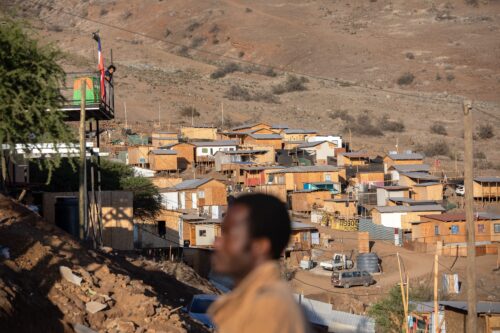
But Marta—a Venezuelan migrant I befriended during fieldwork—was living in a campamento, an informal settlement that residents built after occupying abandoned land. Because of housing shortages and high rent prices, many people in Chile are living in campamentos. Meanwhile, people who do not live in campamentos have stigmatized the settlements as dangerous and outside state control.
Given the community ethos of the campamentos, I assumed residents would see me as an ally in their housing struggles, although I am Venezuelan and Black—two characteristics associated with criminal gang membership, according to pervasive stereotypes in Chile. I assumed wrong.
Even in places on the margins, like Chile’s campamentos, increasing immigration has fueled xenophobia and discrimination. The suspicion and surveillance I experienced typifies a global trend of fear overtaking freedom and concern for basic needs. As an anthropologist, it made me wonder what is lost when protection against “others” becomes a community’s primary concern.
YOUR COUNTRY, MY COUNTRY
According to the latest estimate of the Chilean National Service of Migration, of Chile’s total migrant population just shy of 2 million, more than 700,000 people come from Venezuela—constituting nearly 40 percent of all foreigners in the country. Many Chileans blame Venezuelans for crimes and making the country unsafe. Consequently, Venezuelan migrants have become targets of xenophobic acts including violent evictions, police beatings, and arson fires set by anti-migrant demonstrators.
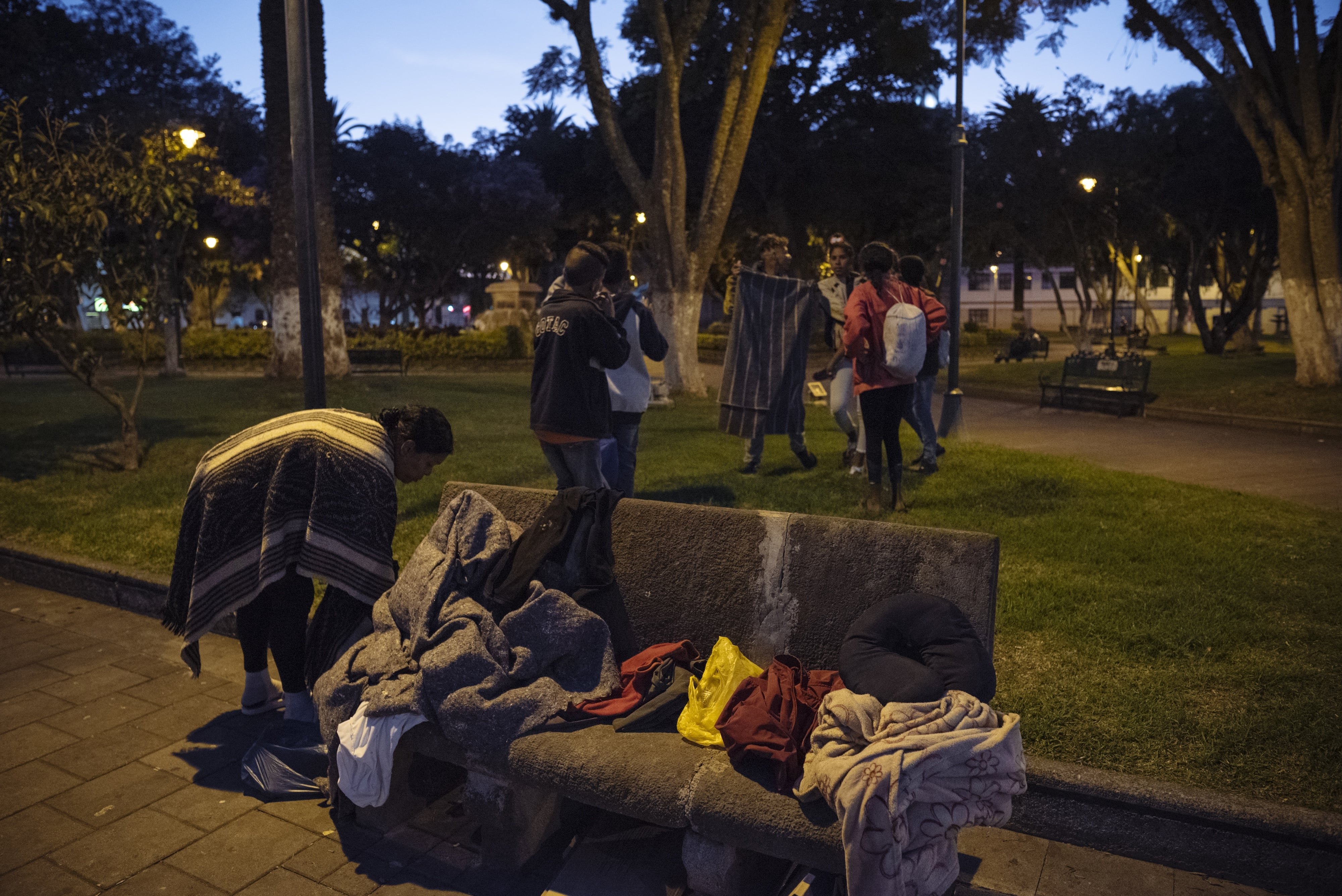
Racism underlies this discrimination: As research has shown, many Chileans perceive themselves as White and distrust darker-skinned immigrants from Colombia, Haiti, and Venezuela.
Christopher—a Haitian migrant in Chile and one of my closest collaborators—often complained about others’ distrust of him. He felt I understood because “we’re Black.”
I mentioned I also felt that distrust in the campamento.
After apologizing, he added: “It’s just that people from your country—not all of them, not you, but some—have done bad things. It’s all over the news and on social media, bro.”
Marta had similar thoughts: “You know how it is. It’s not all of us. It’s just some.” Like me, she is Venezuelan. But she is not Black.
Like many people in Chile, Christopher and Marta had seen news reports about Venezuelans committing crimes. The media particularly liked to focus on Tren de Aragua, a violent criminal gang that originated in Venezuela and expanded to Chile, Peru, Colombia, and reportedly to some U.S. cities. The gang engages in human trafficking, drug trafficking, extortion, and murder to establish social control over poor communities.
The expansion of Tren de Aragua beyond Venezuela has prompted some governments to enact reactionary policies, such as the U.S. administration’s wrongful deportation and imprisonment of Venezuelans. These actions have destroyed the lives of many innocent people.
CHAINS OF SUSPICION
In the campamentos, I researched how migrants organize their lives together, considering their divergent national origins. Informal and precarious, the campamentos emerged from the occupation of abandoned land, which was not authorized by the state for building or housing construction. Many of their foreign residents are considered “illegal” by the Chilean state. Therefore, the state, media, and many Chileans who do not live in campamentos usually depict the neighborhoods as “outside the law.” Campamento residents often complained that whenever a crime happened nearby, police would immediately target them as the presumed source.
I foresee a world where suspicions toward difference and others play out at every scale.
So, I was surprised to find that compamento residents also distrusted outsiders who entered their community.
In the campamento where Marta and Christopher live, whenever I chatted with a Haitian shop owner named Claude, he would barely peek his head out the window, covered by wire mesh for protection.
During our first encounter, he asked: “What are you doing here?”
Without letting me answer, he shot, “It is rare that somebody from your country is here, asking.”
Claude’s distrust arose from a mingling of gossip, disinformation, and facts about Venezuelans’ responsibility for criminal acts and insecurity in Chile, spread by news stories and social media.
Claude also had a camera pointing at customers in his shop. Cams in a Santiago campamento follow a worldwide trend in utilizing surveillance hardware to prevent crime at the community level. Cameras have become widespread and are now used not only in government buildings, businesses, and banks but also in the homes of ordinary people.
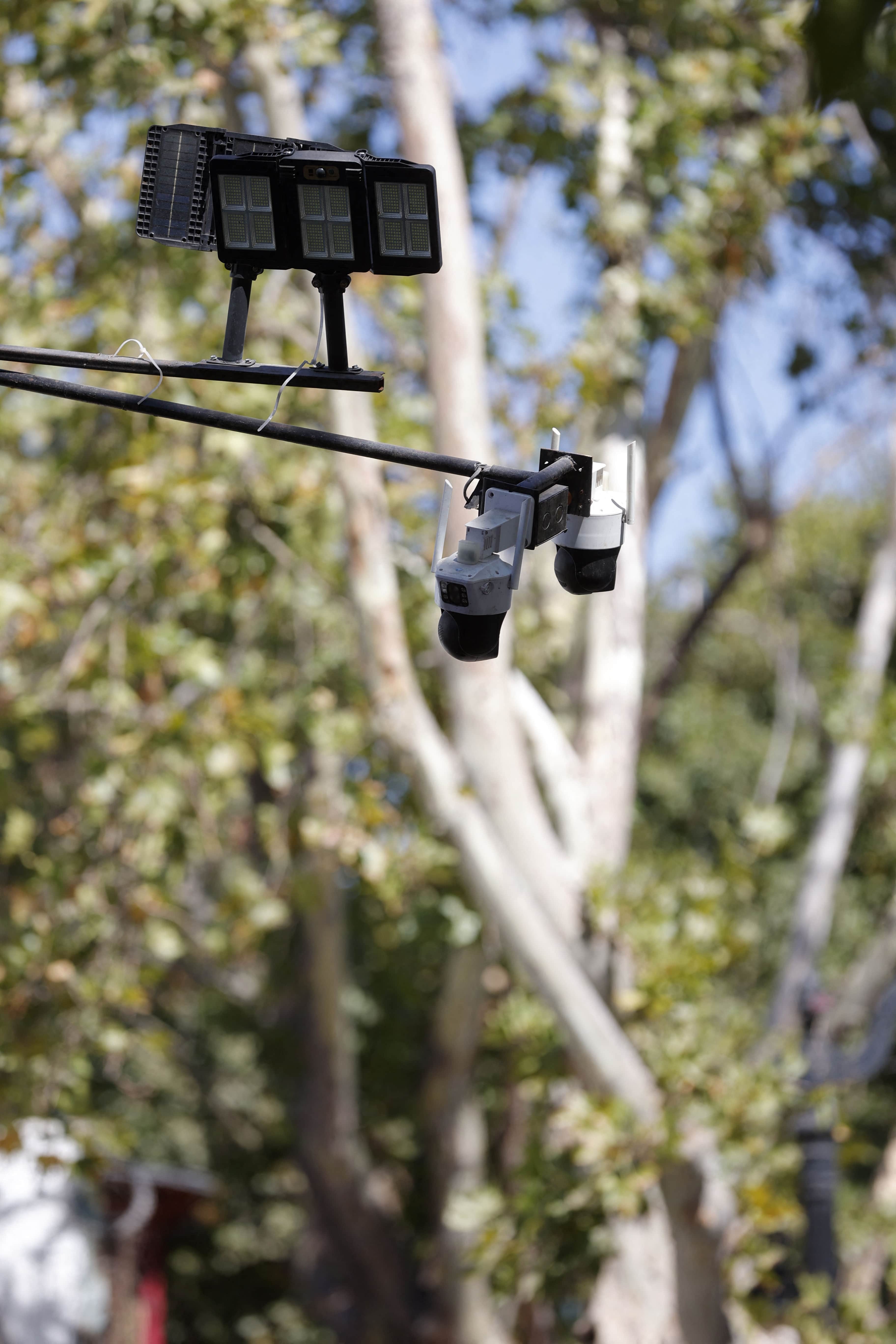
Speaking with campamento residents about the cameras, they expressed a concern and need to protect their families. I understand and empathize.
But citizen surveillance can be a double-edged sword. In Latin America’s past and present, civilians providing security to their communities have led to vigilante lynchings, disappearances, persecution based on gender, and other forms of violence.
Reflecting on the reality on the ground in Santiago’s campamentos, I foresee a world where suspicions toward difference and others play out at every scale: States monitor entry into the territories they protect; police officers patrol the streets; shopkeepers record their customers; civilians surveille their neighborhoods.
FEAR OR FREEDOM
Freedom will be lost to security, surveillance, and suspicion toward “others.” In that world, anxieties may tempt anyone into becoming a vigilante. As British sociologist Zygmunt Bauman once wrote, freedom and security are equally needed goods in our lives, but it isn’t easy to balance them. For Bauman, people’s traditional community ties are being severed into fragile, ephemeral affiliations by globalization, rising inequality, and displacement. These “unsettlements” cause “the slow expansion of fear, anxiety, and surveillance, even in the most intimate spaces, as a sense of danger takes root in the world and the home,” as scholar Ash Amin put it.
Listen to the author, “A Venezuelan Election… in Chile.”
At least that’s how I interpreted a dream I had after I was questioned by Marta’s neighbor. I walked through a street flanked by zinc roof sheets and soft materials like clipboards and plastic, a street in the campamento. The sky in the neighborhood used to be beautiful, a comforting infinite blue. But in the world of this dream, buzzing drones filled the air. They even scared away the birds.
Surveillance cams in a place just beginning to be built are a dissonant aesthetic. Many of those cameras weren’t even transmitting due to poor internet or nowhere to send the signal.
One might think other things would take priority in a place with no running water, unpaved streets, and on-and-off electricity. It’s as if fear, doubt, and caution preceded everything else. Surveillance is becoming the only way to connect with outsiders—even in neighborhoods built by people also cast as outsiders.
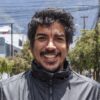
Luis Alfredo Briceño González is an anthropologist who studies the complexities of coexistence between strangers who meet to build a life together. He received his Ph.D. from the Pontificia Universidad Católica de Chile. Follow him on the social platform X @LuchoAnt82.
