










Following the Life of an Abandoned Bull in Nepal

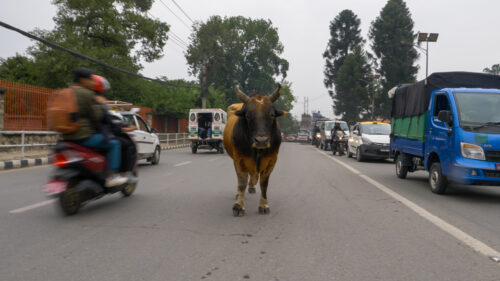
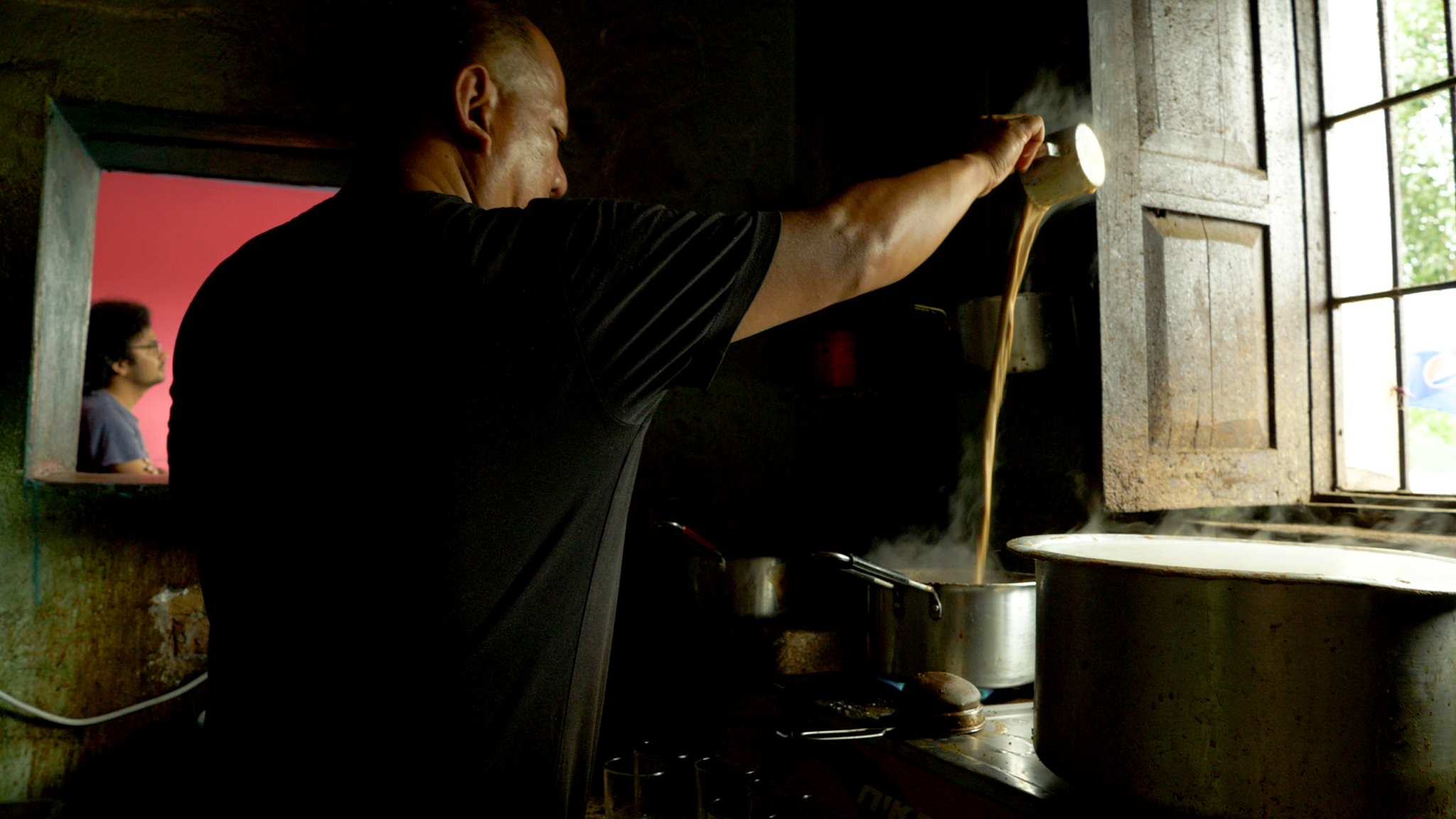
In the haze of dawn, Kathmandu exhales fog laced with the acrid tang of urban pollution. A bull named Ghaumandi—“the proud one” in Nepali—begins his daily circuit from Pashupatinath Temple. Nearly as wide as a rickshaw but far heavier, he moves with lumbering deliberation, nibbling shrubs that pierce the asphalt and nosing through plastic-laced scraps. At a steaming food cart, he seizes a fallen sel roti (rice donut) off the ground, prompting wary glances from the nearby commuters sipping chiya (spiced milk tea). Some toss scraps to placate him, which he devours; others clutch their breakfast, side-stepping his horns.
Amid the din—vendors’ calls, honking horns, and the bull’s low grunts—a few devotees pause. They see in him Nandi, the sacred mount of the Hindu deity Shiva. An elderly woman brushes his forehead with reverence before touching her own. Her grandchild mimics the gesture but recoils in fear. Ghaumandi chews, unperturbed. The vendor, a wiry man with a no-nonsense grin, emerges with a bucket, shouting, “Huss, huss!” Water sends Ghaumandi snorting and sauntering off.
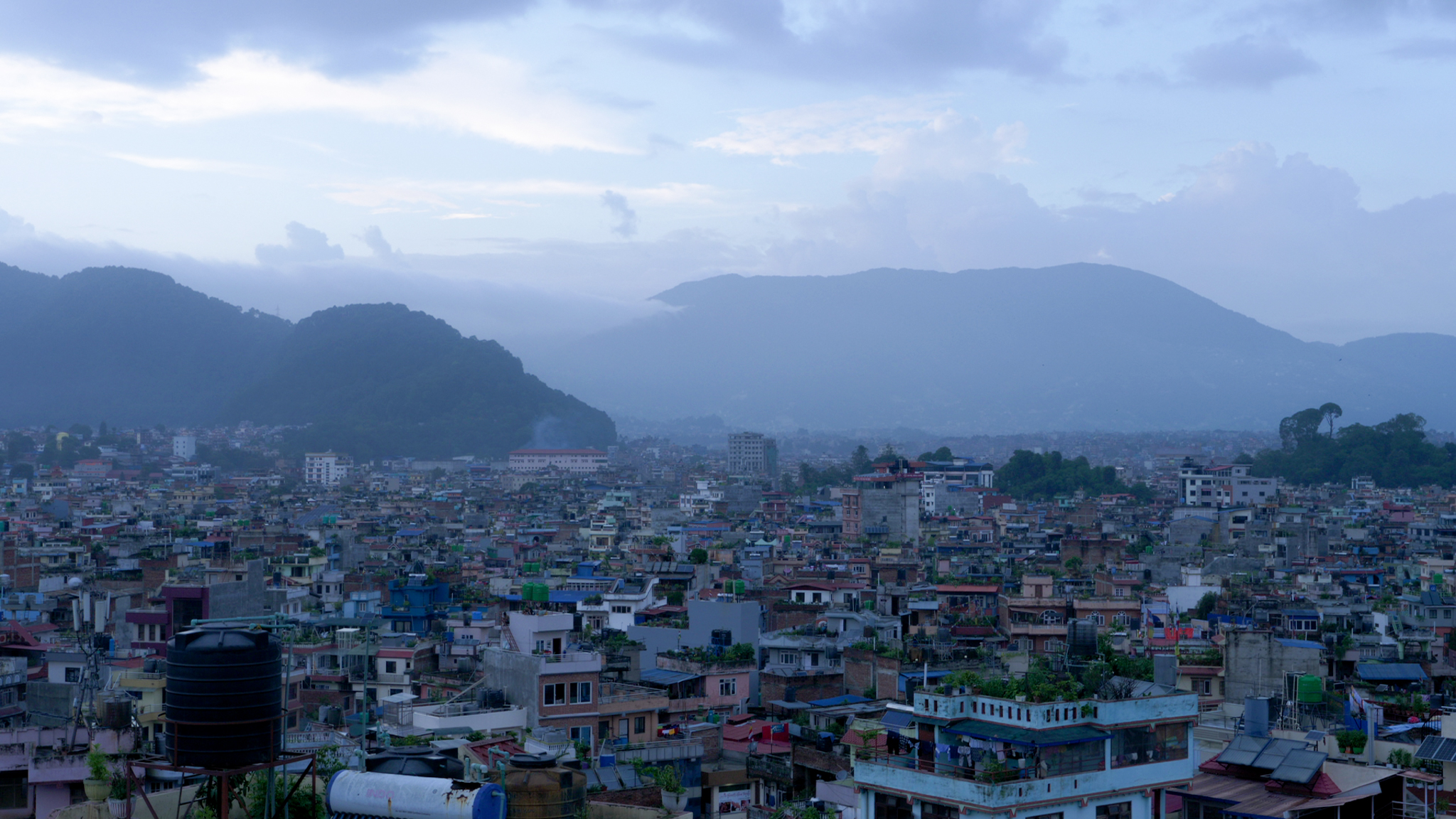
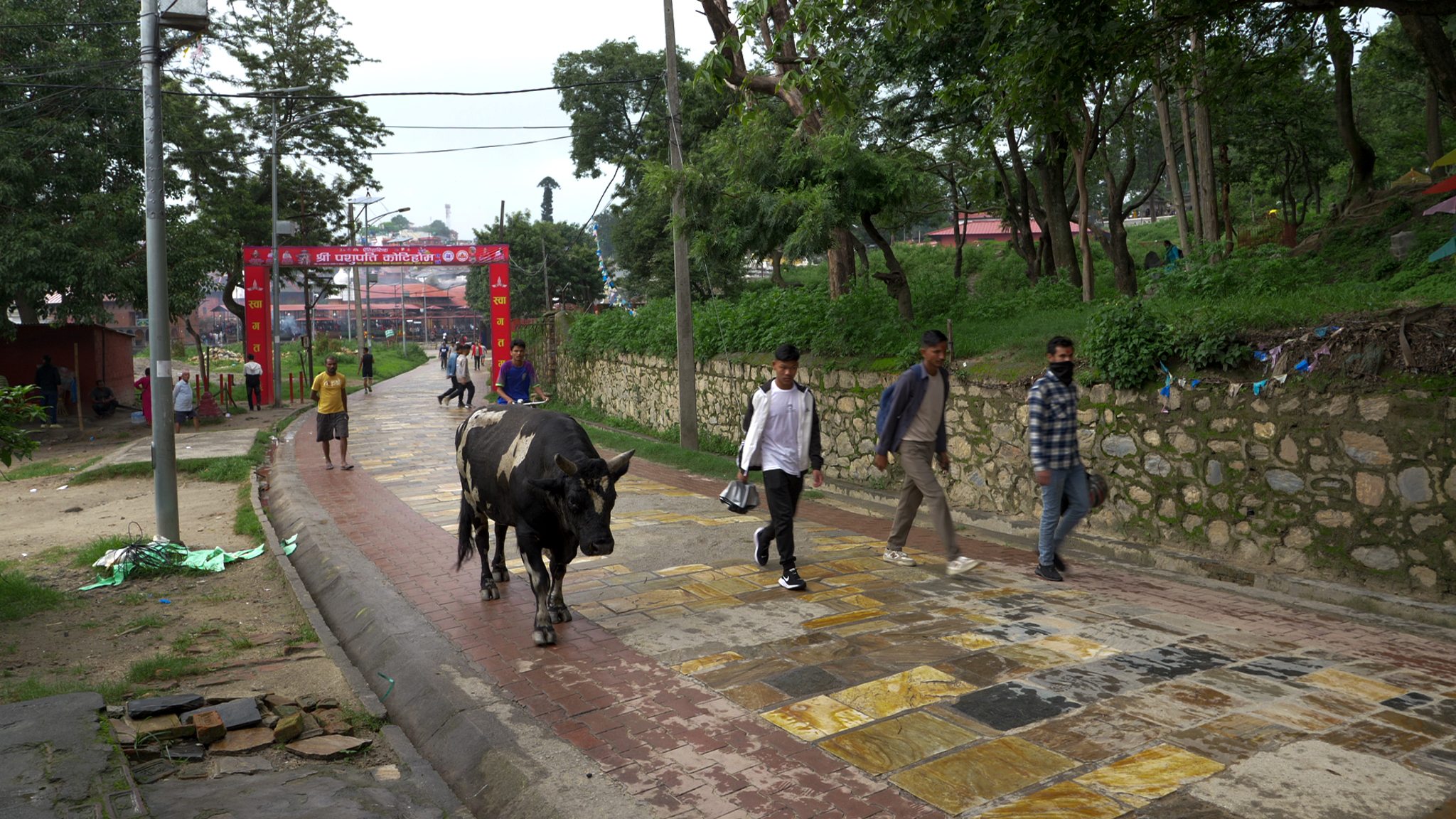
For two months in 2024, I trailed the bull as part of a visual anthropology project, documenting how his life entwines with humans on these streets. In many parts of an urbanizing world, nonhuman animals once bound to rural rhythms now tread concrete. Orphaned from dairy farms yet spared slaughter, Kathmandu’s cattle—sacred yet disruptive, tamed yet untamed—dwell at the margins.
In cities worldwide, similar contradictions play out—from stray dogs in Istanbul to feral cats in Rome to pigeons in London. Each represents the unintended consequences of humans’ partnerships with nonhuman animals caught between domestication and wildness. Following their lives at the street level reveals the often-fraught contradictions within these ever-changing multispecies relationships.
The bond between humans and cattle stretches back through millennia. Around 8,000 years ago, in Asia’s Indus Valley, early agricultural societies likely first domesticated the humped Zebu, beginning an interspecies partnership that would reshape both human communities and bovine existence. These magnificent beasts became walking cornucopias: Their frames bore the weight of plows and cargo, their dung enriched soil that fed growing populations, their milk nourished bodies, and their hides helped create countless daily necessities.
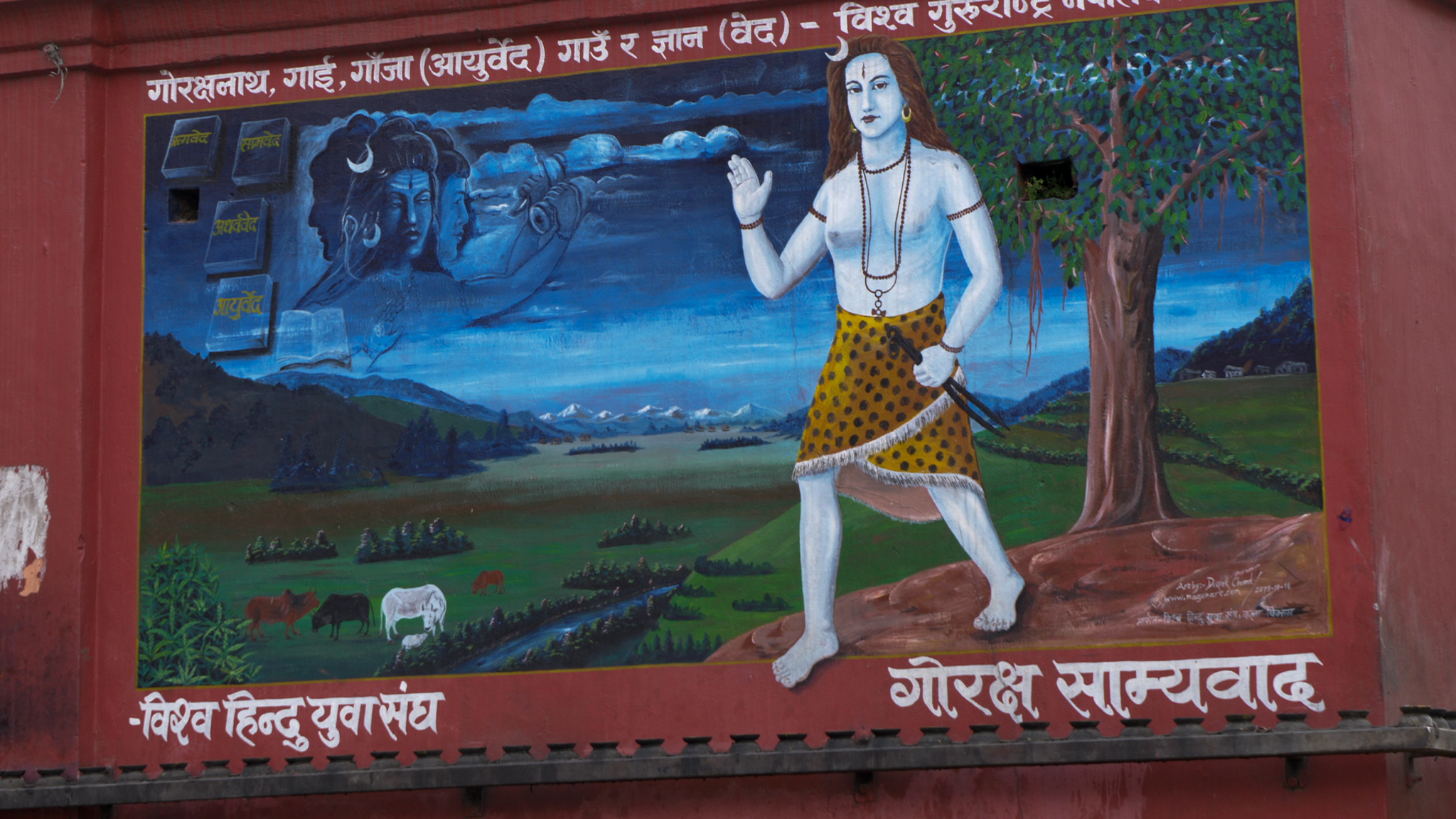
Yet domestication was never a one-way conquest. As humans managed zebu cattle across the Indian subcontinent, these relationships were profoundly reciprocal—cattle and people coevolved together. The biology and behavior of cattle influenced human management strategies, while human practices gradually transformed cattle populations, creating interdependent lifeways that would shape South Asian societies.
The profound reverence cattle commanded among some religious and cultural traditions reveals itself in the very names those civilizations chose for themselves. According to traditional origin stories I heard during fieldwork, Nepal’s first monarchy was known as the Gopala dynasty, from the Sanskrit words go (“cow”) and pala (“protector”). A legendary line of “cowherd kings” is said to have ruled for centuries, reflecting how deeply cattle were woven into the fabric of power and identity. Cattle transcended mere livestock; they became currency, status symbols, and markers of wealth that could elevate or humble entire bloodlines.
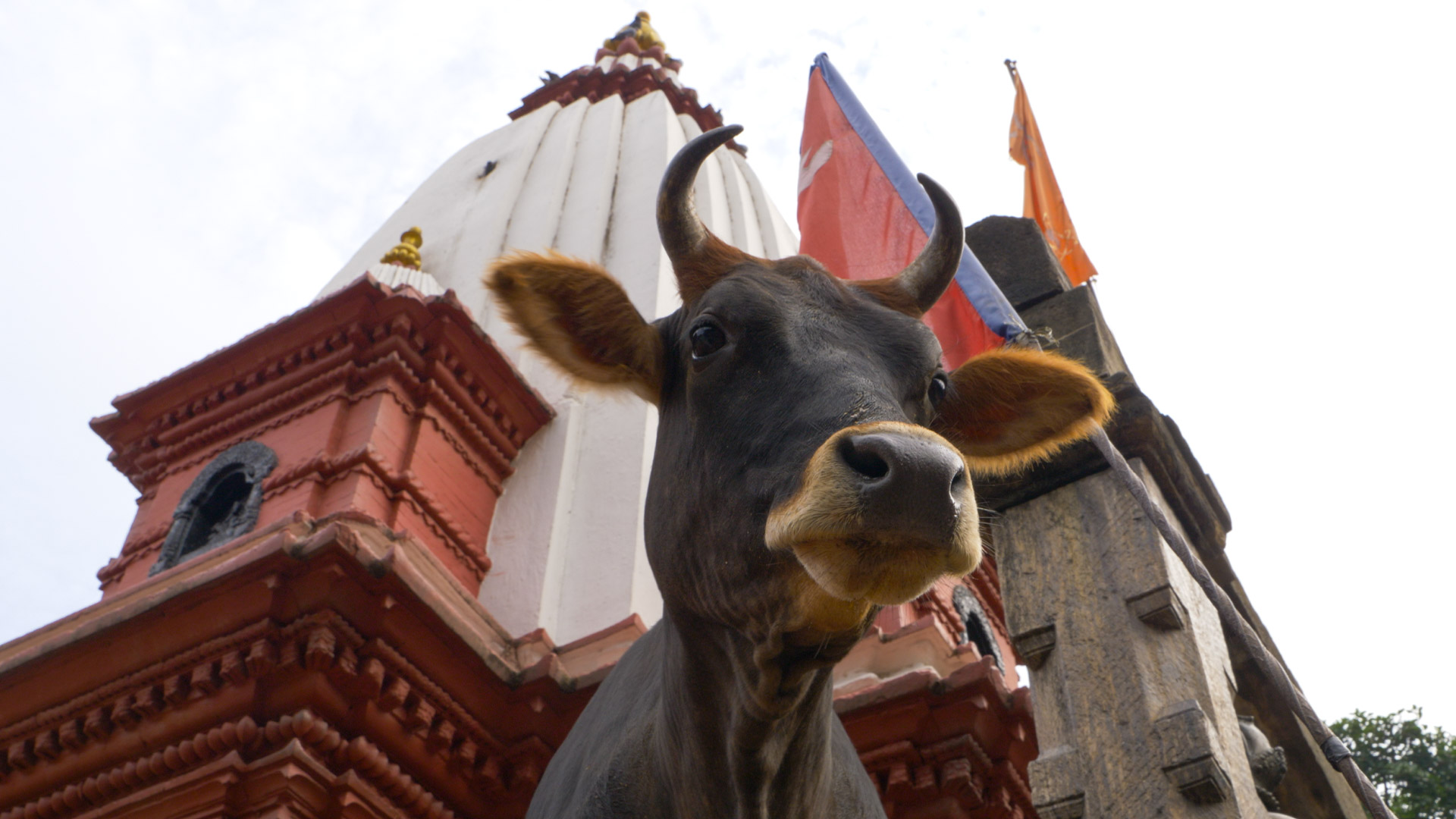
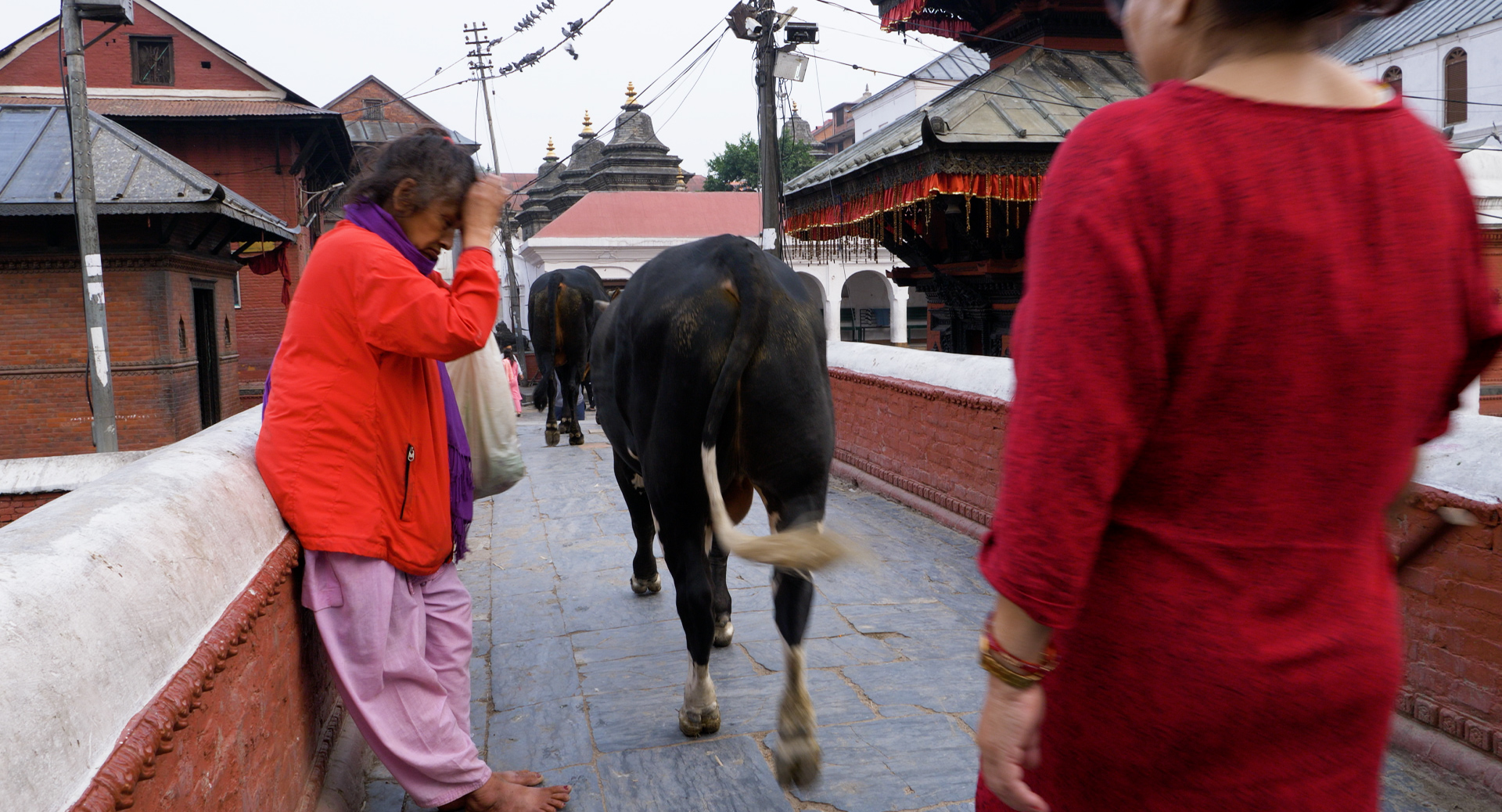
This earthly significance ascended to the divine. Vedic texts elevated cattle to sacred status, transforming them into vessels of reverence. Through centuries, this reverence became entwined with the social and political fabric of Nepal, where Hindu symbolism and state governance long intersected.
Today the sacred status of cattle remains deeply embedded in popular sentiment and political institutions. After a decade-long civil war (1996–2006), the Hindu-majority country transitioned to a secular republic in 2008. Even though Nepal has sought to separate religion from politics, the 2015 constitution still declares the cow the national animal, and the 2017 Penal Code reinforces this protection by banning cow and ox slaughter under penalty of up to three years’ imprisonment. But as political instability persists and urban development accelerates, critics increasingly question whether this symbolic protection serves the animals themselves—pointing to the government’s failure to provide for abandoned cattle left to navigate city streets without care.
In Kathmandu’s increasingly sprawling urban maze, this ancient covenant between humans and cattle faces its greatest test.
Cattle remain as vital as ever: Their milk and ghee (clarified butter) still sanctify Hindu rituals and nourish daily meals, from creamy kheer (rice pudding) ladled at festivals to curd stirred into morning dal. Yet the relationship strains under capitalist modernity. Urban demand for dairy products has far outpaced supply, driven by dense populations and limited local production capacity. Over the past decade, Nepal has emerged as one of Asia’s fastest-urbanizing nations, dissolving the intimate bond between families and individual cattle into something more anonymous: centralized production systems that threaten to transform cattle from cherished assets into mere commodities.
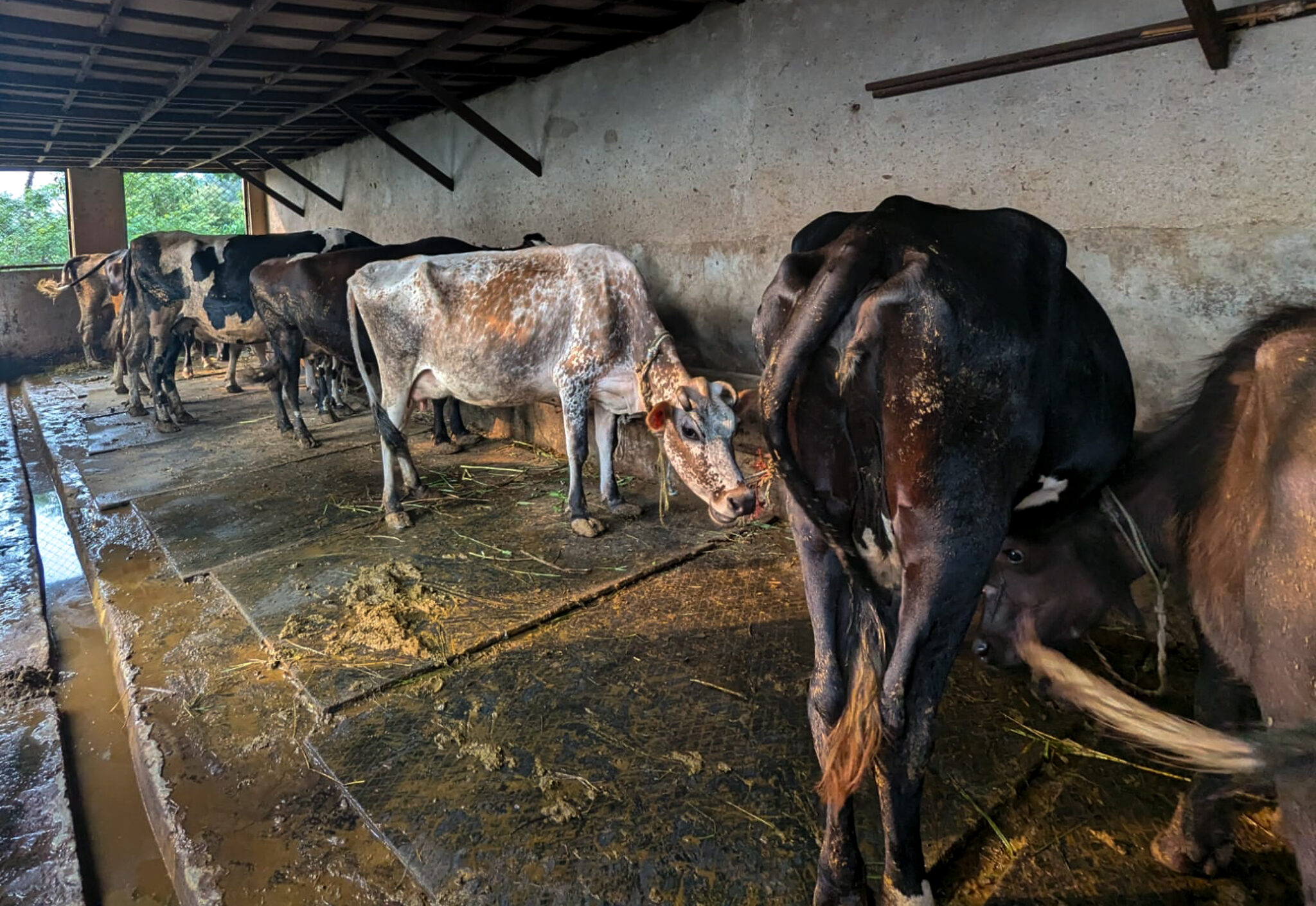
Consider Ghaumandi’s likely origins. He probably emerged from one of Kathmandu’s peri-urban dairy farms—liminal spaces where urbanization’s advance compresses traditional agriculture into ever-shrinking parcels. These operations face soaring land values, prohibitive feed costs, and development threats that hit small farms far harder than large commercial operations.
Born into air thick with hay dust, dung, and diesel exhaust, Ghaumandi inherited his black-and-white patches from a high-yield Holstein crossbreed, genetically optimized for dairy production. Yet as a male calf, his birth marked not celebration but economic catastrophe: Bulls are obsolete in an era of mechanized farming and artificial insemination. Within hours, he would have been separated from his mother and released into the urban wild.
Here lies the cruel paradox of sacred economics: Hindu reverence and constitutional protection collide with harsh financial reality. Male calves represent pure cost—mouths to feed with no promise of financial return—and older or barren cows, once they stop producing milk, add to the burden. Faced with these pressures, farmers resort to a time-honored solution cloaked in religious justification: night-time releases, or “donations” of cattle near sacred sites like Pashupatinath Temple. Though abandonment is considered a crime and subject to fines, enforcement remains virtually nonexistent.
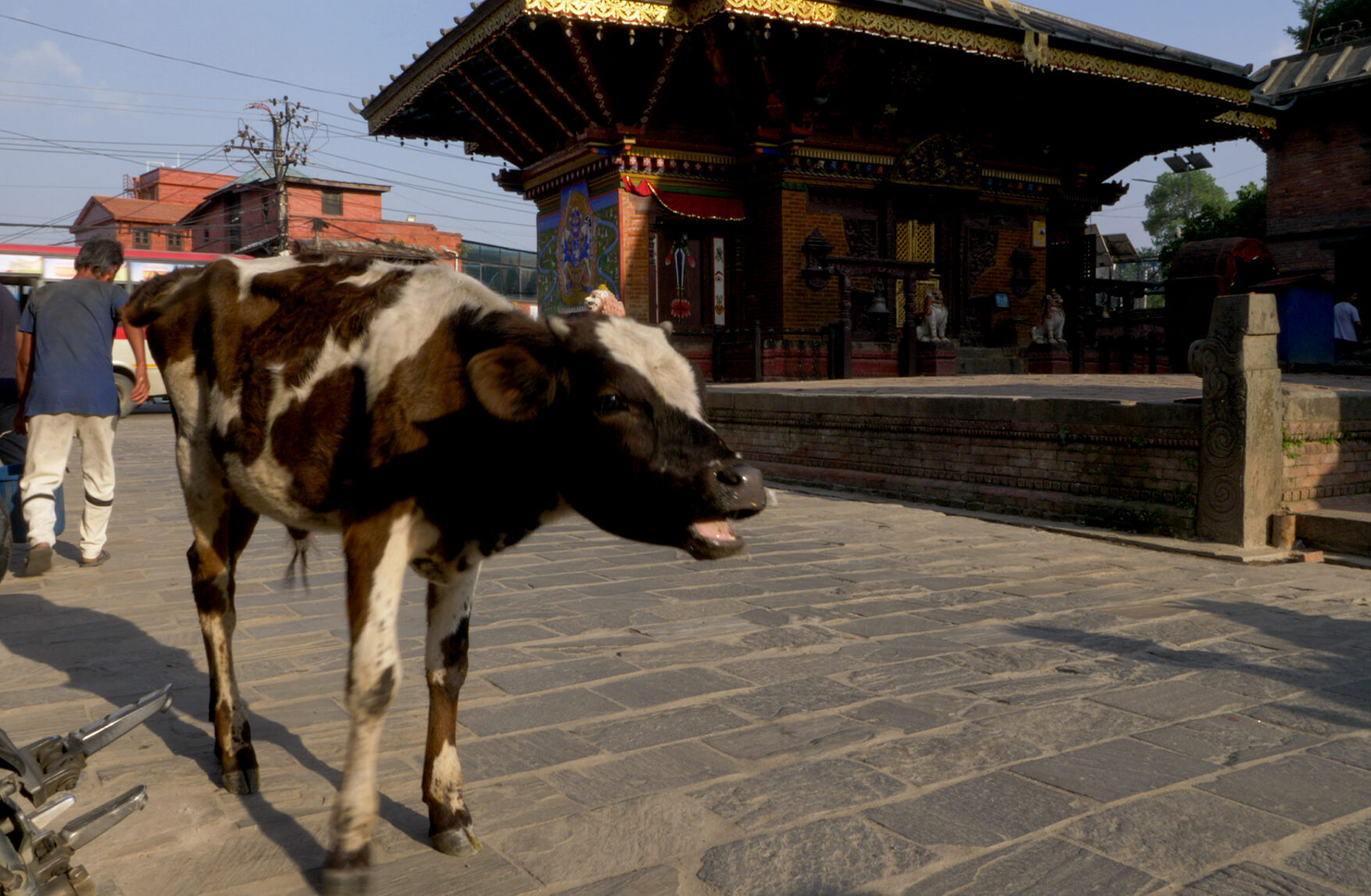
By dawn’s first light, as devotees arrived with offerings of bananas and mangoes, a wide-eyed, spindly-legged calf would have begun his transformation from industry surplus to sacred scavenger.
Pashupatinath Temple—named for Pashupati, “protector of all animals”—became Ghaumandi’s sanctuary. The Hindu temple’s UNESCO status protects it from urban expansion, creating a haven where cattle can access the Bagmati River, Nepal’s holiest yet most polluted waterway. The temple grounds offer a steady stream of devotees bearing offerings that sustain both nonhuman animals and ascetics. The bulls often congregate near the area where human cremations take place, along the ghats (steps leading to water). In the air that hangs thick with leathery smoke of teakwood and burning bodies, I watched bulls receive funeral meal scraps and nibble marigold flowers from cremation pyres.
Young Ghaumandi likely joined a cluster of stray male calves. At maturity around 2 years old, his playful headbutting turned competitive as he claimed prime foraging territory. By the time I met him, vendors had named him the “don” of Pashupatinath. Ghaumandi had ousted an aging bull—relegating his former competitor to a busy thoroughfare, the Ring Road underpass. Though cattle spark road accidents as cars swerve to avoid them, a taxi driver I met remarked they also slow traffic, paradoxically improving safety.
As a living sacred symbol, Ghaumandi ignites social fears.
I sometimes heard rumors from Hindus of cattle being kidnapped for illegal slaughter by Muslim or Dalit minorities. While unverifiable, such stories reveal deeper truths about interreligious conflict between the Hindu majority, which makes up about 81.19 percent of the population, and the multiple minority groups that call Nepal home, including Muslims, Buddhists, Christians, and members of Indigenous Kirat communities, as well as Dalit castes who remain marginalized within Hindu society.
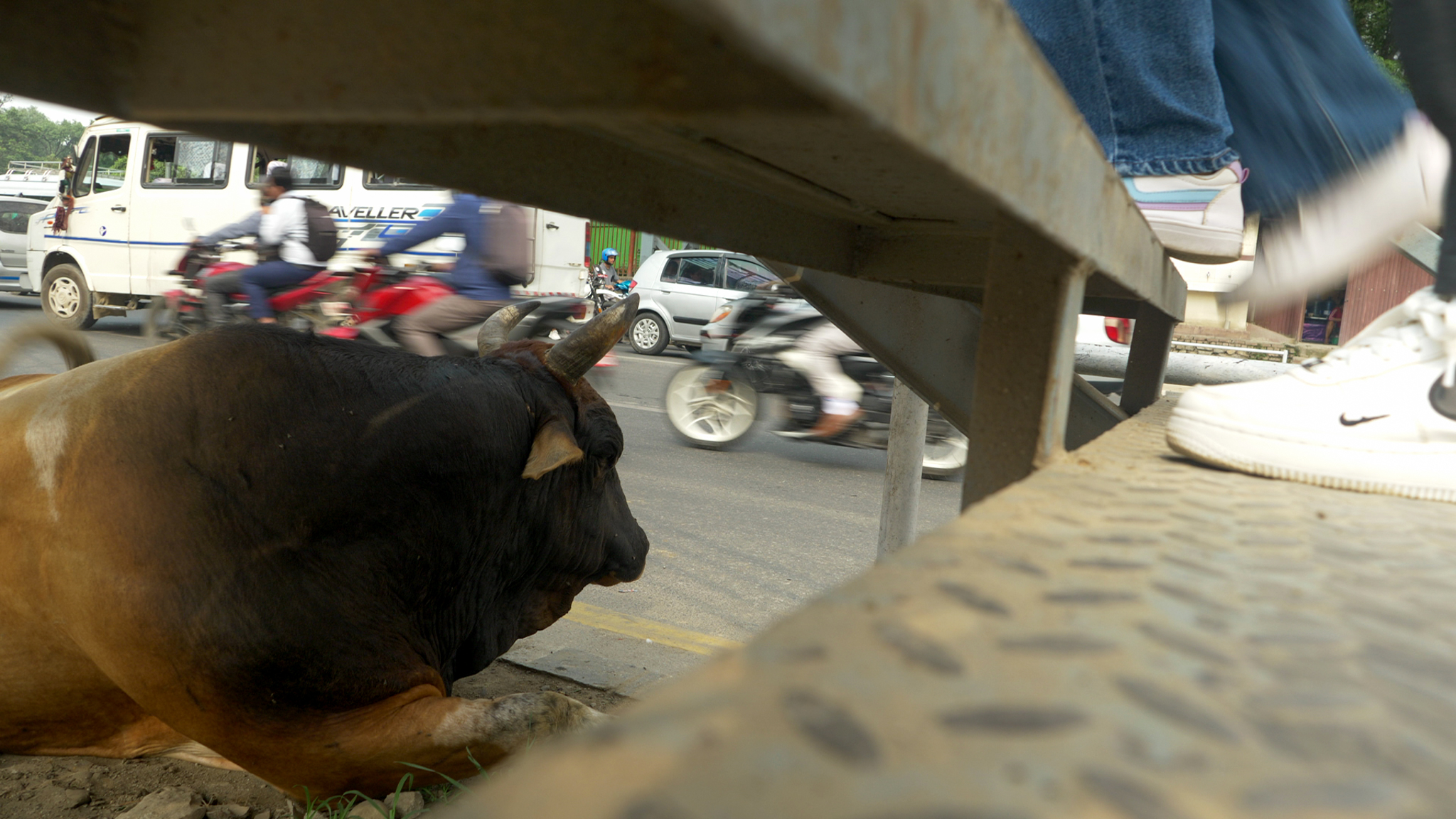
Critics of cow slaughter bans argue that they violate religious minorities’ rights, preventing Muslims from Eid al-Adha practices and Adivasi-Janajatis from consuming culturally significant beef. Although domestic slaughter of cows is illegal, beef can be imported under tightly controlled licensing arrangements—for instance, five-star hotels are permitted to bring in beef with special authorization. Some urban supermarkets and restaurants in Kathmandu reportedly offer imported beef, though its availability is limited and often framed as a niche or luxury product. Meanwhile, their genetic cousins, buffalo, fill street-side momo (dumpling) stalls and face slaughter by the thousands at Nepal’s massive animal sacrifice festivals.
While rumors of illegal slaughter capture public attention far beyond their actual frequency, Ghaumandi faces a more mundane but deadly danger: his urban diet. When offerings dwindle, he scavenges through municipal waste. Of the 1,200 daily tons of garbage created by over 3 million city dwellers, less than 50 percent is collected, leaving plastic-strewn heaps throughout the city.
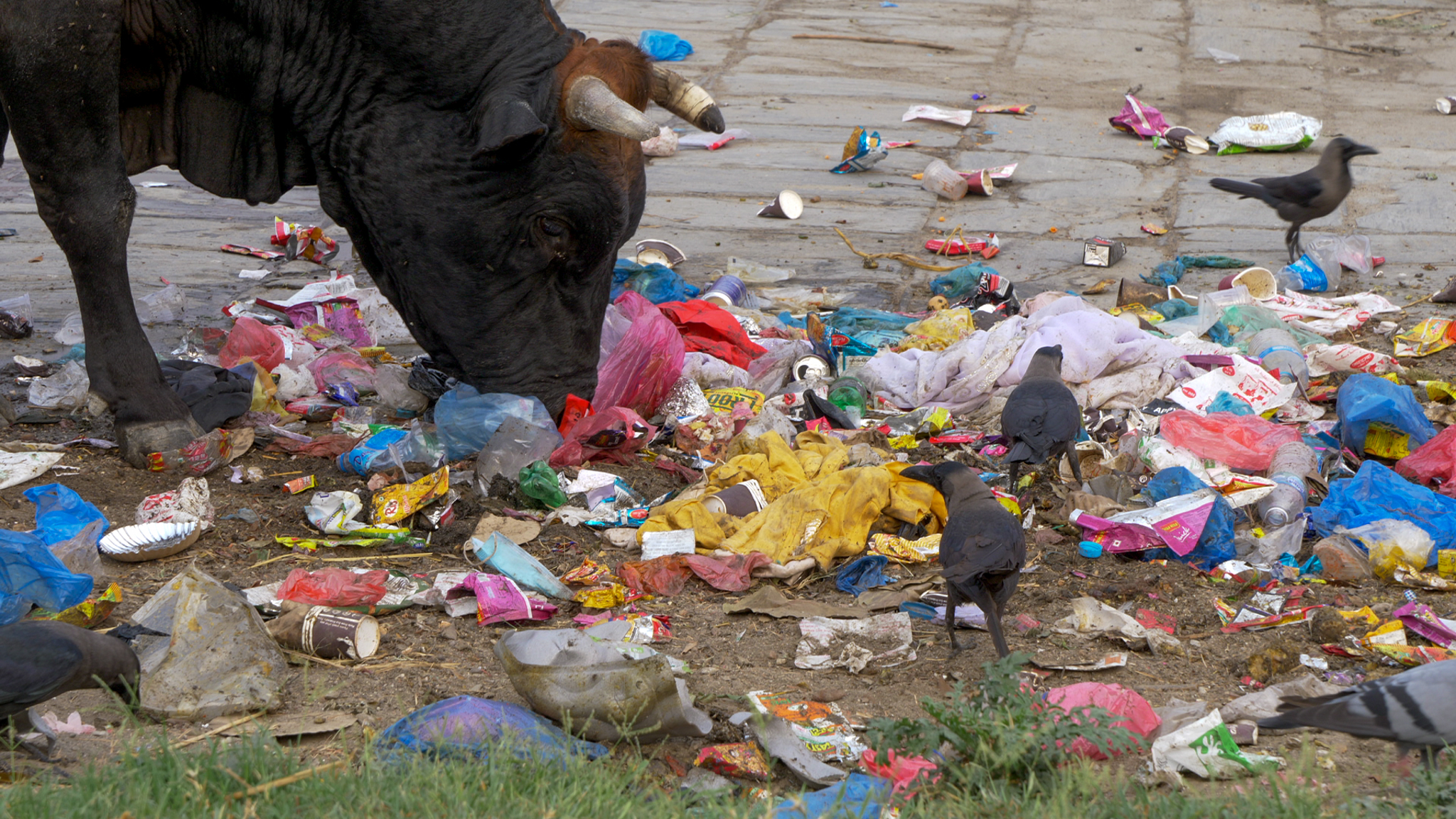
While cattle are known for their impressive digestive abilities thanks to their rumen—a microbial digestive chamber in their stomachs that breaks down plant materials—their bodies cannot break down plastics. I repeatedly witnessed devotees offering cattle plastic-wrapped fruits, often dropping them and fleeing when bulls approached. Consuming these foods—combined with widespread microplastics in the environment—leads to a dangerous accumulation of indigestible plastic waste in the rumen. Cattle suffering from this condition require emergency surgery, known as a rumenotomy, to remove up to 70 kilograms of indigestible waste, or face death.
Meanwhile, residents navigate bovine dung that slicks city streets. Once considered a rural treasure in the form of fertilizer, dung is now a hygiene hazard—but also considered a harbinger of luck. When I saw a boy slip in fresh dung, my concern met laughter from an onlooker: “He’ll be lucky all day!”
Street cattle cast shadows of neglect over Nepal’s revered national animal, prompting authorities to round up strays for gaushalas (cattle shelters)—urban sanctuaries that weave tradition into city life. At Pashupatinath’s shelter, devotees can pay a 1 rupee daily membership to support the bulls, an act they regard as a small act of merit-making (punya) believed to bring good karma. Proud mothers with newly engaged sons will sometimes feed the cattle to seek blessings.
Yet some animals resist confinement. Ghaumandi is known to shelter staff as a “bull who wants freedom.”
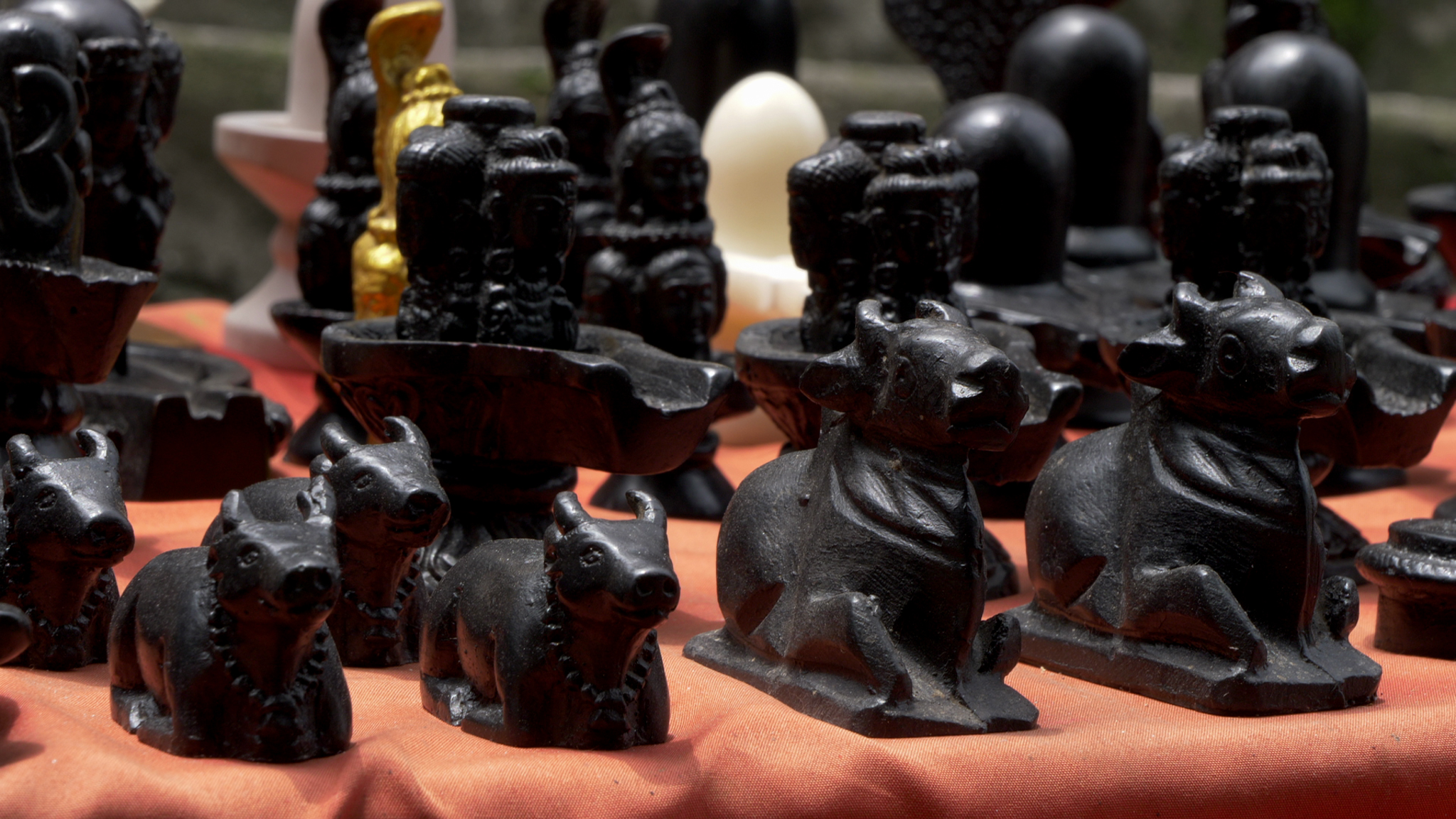
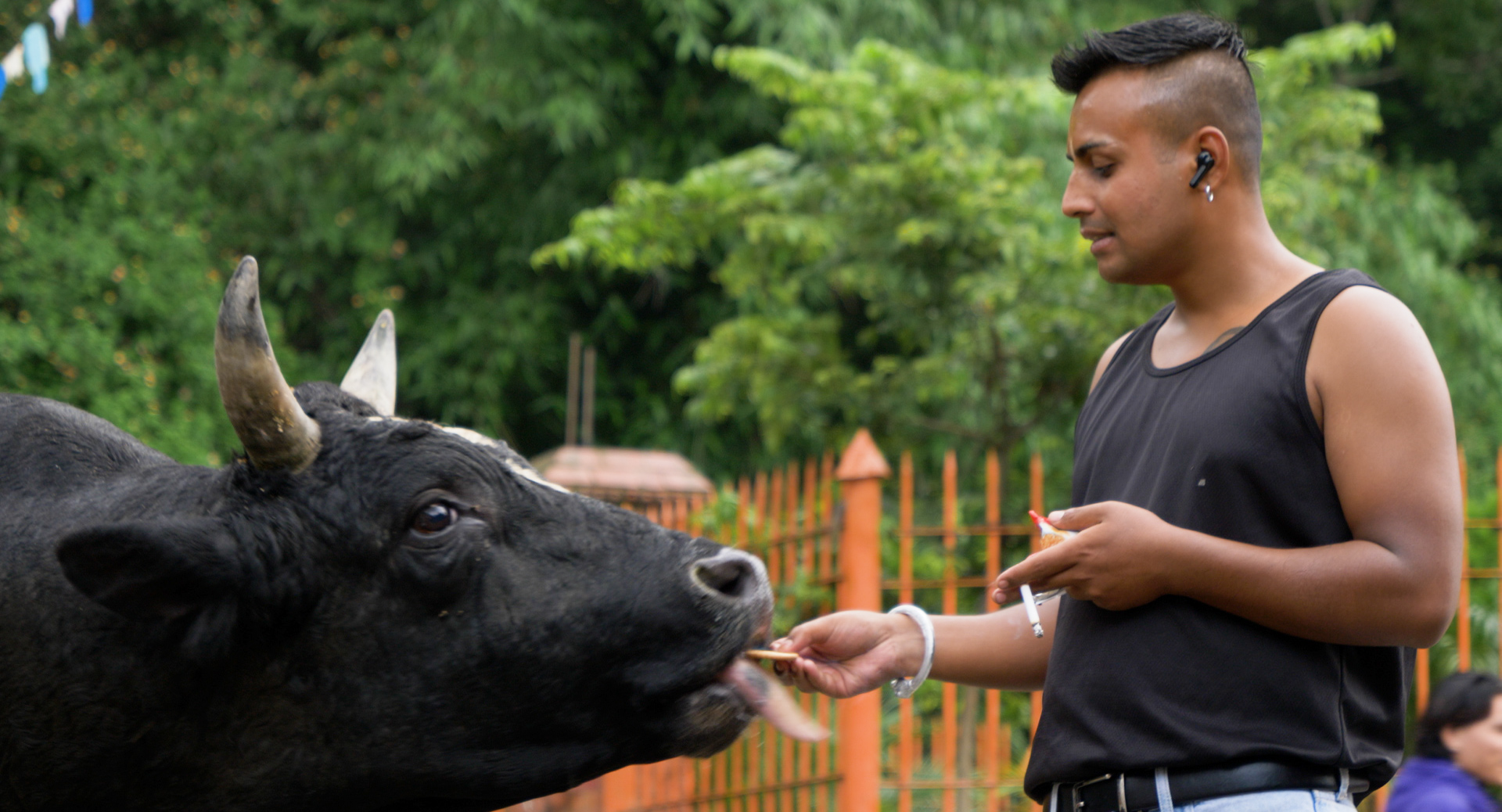
Considered dangerously stubborn, he lumbers through evening routines, clearing obstacles with his horns—an act that has left people hospitalized. Vendors accustomed to his patterns pack down stalls selling miniature Nandi figurines, hoping he passes without stopping—for when he does, no customer will approach until they satisfy him with sweets or urge him onward with water. He wanders past homes where residents maintain the rural habit of offering their daily leftovers mixed with water in bowls to the bulls. As the evening aarti (prayer ceremony) rises with bells and chants, Ghaumandi settles on his gravel patch, stirring only to watch passing sadhus (holy men) after ceremonies conclude.
The bull’s story reveals a broader urban paradox: Humans engineer nonhuman animals for utility, then often abandon them when economic situations or cultural practices shift. As cities expand and technological innovations change the nature of many multispecies relationships, these urban exiles multiply, forcing us to confront what we owe the nonhuman animals our choices have shaped.
Ghaumandi wanders Kathmandu’s streets as a living question: When ancient bonds become modern burdens, who bears the cost of change?

Xena White is a multispecies audiovisual anthropologist whose work explores entangled ecologies—the relationships weaving together humans, nonhumans, cultures, and environments. She recently completed her master’s degree at the Granada Centre for Visual Anthropology. White is currently a workshop facilitator at the Dean Heritage Centre and is working on an Arts Council–funded project exploring the folklore surrounding the elements of stone and water in the Forest of Dean. She is a member of the London-based visual anthropology collective KONTEKST. You can follow her work on Instagram @entangledecologies, watch her documentaries on YouTube, or listen to her audio productions on Spotify under Xena White Stories.
