




Padi Nyawa Urang
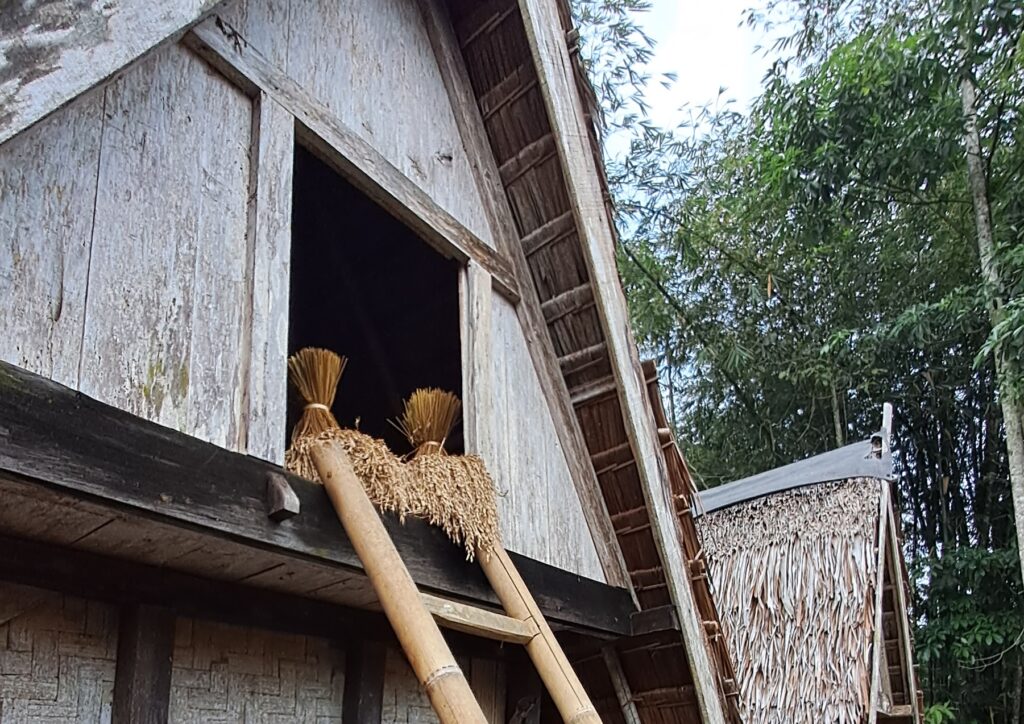
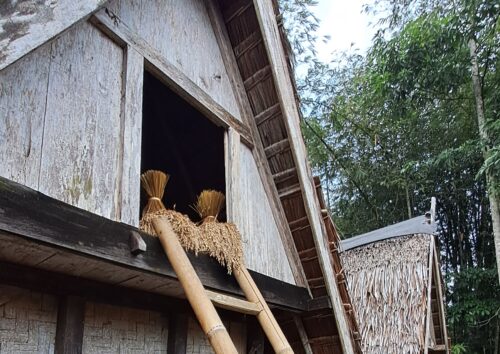
I WROTE “PADI NYAWA URANG,” which translates as “Rice Is Our Lifeblood,” to reflect on a weeklong stay for a school program at a traditional village in Lebak, Banten, Indonesia. It was a 9-hour trip from my hometown, Bandung. We alternated between bus rides and finally a minibus with our rucksacks tied on the vehicle roof guarded only with rope and an experienced minibus roof-climber. Although this village has access to modern technologies, such as electricity and automobiles, villagers still value their traditional forms of cultivation and cooking.
During my stay, I witnessed firsthand how the traditional Sundanese lunar calendar shapes and is shaped by rice cultivation. Many aspects of the people’s lives are geared to what they need and what the Earth needs. This village was only one of many in the Sundanese area that still hold onto local wisdom and values, the fact that we are all part of the Earth and so must live accordingly alongside it. These are values that have followed all of our ancestors—ones we should still hold within us.
Padi Nyawa Urang
i.
golden—brown—gently—bowing
rustling—reaching—rice
lets wind run through their calm.
stroke the seeds and sow the soil,
bury
your
qualms,
ancients reborn in your palms.
—kukuruyuk!
rooster breaks the calm.
mothers and daughters in a line
straight from the leuit
[1]
[1]
A leuit is a Sundanese stilted wooden rice barn.
to the lesung: hair tied back,
[2]
[2]
A lesung is a traditional wooden mortar to grind rice.
yellow-brown patterns on their samping waist-wrapped,
[3]
[3]
A samping is a traditional cloth worn around the waist, in this context, as a sign of respect and modesty.
“treat rice with grace as you would a guest.”
they
pound
grind
smooth
the grains out of their pods, crinkling soft,
spilling clattering down. tomorrow,
when morning comes,
steam will rise in puffs of white
from the boboko, and you will smell
[4]
[4]
A boboko is a Sundanese container handmade from woven bamboo.
the gentle scent. upon your lips, a cradle.
ii.
golden—rays—brightly—glowing
shining—sheen of—sun
sending beaming lights across
rows of paddy fields
mind
your
step.
tanned skin bowed over endless green.
deft hands do what the blood in their veins
has known for centuries.
hoeing, planting, aren’t these a kind of prayer?
when midday comes,
crescendo of sun,
run back home: don’t stay outdoors for tangari.
[5]
[5]
Tangari means midday, where in tradition everyone must cease work and stay indoors to leave room for other nonmortal beings.
“every mortal being must share its time with the immortals.”
iii.
golden—phrases—etched—known
old—unquestioned—true
we tread this land
like our ancestors before us,
wrinkled arms
hold
cherish
guide
dimpled, mud-streaked children
across green and brown and gray.
they sing and whisper,
“padi itu nyawa urang”: “rice is our lifeblood.”
when nighttime comes,
see the tungku light up, beads of fire
[6]
[6]
A tungku is a traditional stove.
swirling, stretching, stroking warmth.
see the houses and their bamboo walls, ijuk roofs.
[7]
[7]
Ijuk is a strong black fiber from sugar palm trees, used for various objects such as rooftops and brooms.
see the slow crawl of moonlight,
cloaked above gold-soaked grains,
see them glimmer in silent sacredness.
Correction: November 25, 2025
A previous version named the village as in Southern Banten, West Java. It has been corrected to Lebak, Banten.

Ara Djati is a high schooler from Indonesia. Her writing has been featured in several literary magazines and a compilation about women’s rights for the United Nations Association in Indonesia. Her zine Nenek Moyang, Kusuratkan Padamu (Ancestors, This Letter I Write to You), reflecting on her Chinese Indonesian heritage, has been featured in national and international zine festivals. Djati also publishes essays and poetry on Medium. She aspires to pursue an education in anthropology while continuing to be a creative writer. Follow her on Instagram @ara.djati.
