Table of contents
Announcement

After ten years of exploring humanity in all its diversity, SAPIENS has concluded its publishing chapter.

While the magazine has closed, its living archive endures—open to all and preserving the many ideas, voices, and discoveries that deepen our understanding of what it means to be human.

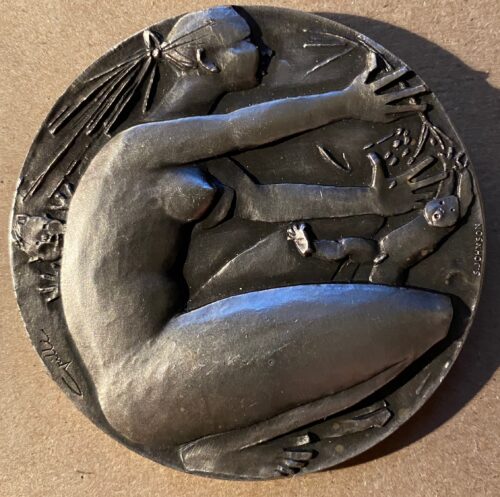
A close-up image features a large, dark-gray silver medal embossed with the profile of a crouching naked woman reaching for a child, with another child appearing behind her.

Post-

An Indigenous poet-anthropologist writes to her daughter of the limits of her motherly protection.
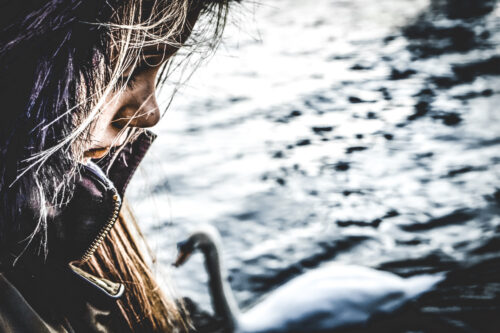
A close-up image features the profile of a child with long, stringy hair and a brown coat on the left side of the picture with a swan, sandy shoreline, and water in a blurred background.

In the Event of Flooding

An Indigenous poet-anthropologist speaks to the survivance of Native communities in the face of colonialism and genocide.

A photograph features a person with short, wavy hair holding a child near an ocean with a bright line shining from the background, blowing out an otherwise dark image. Matt Hoffman/Unsplash

Born of “All That Good”

An Indigenous poet-anthropologist and new mother interrogates the idea that, overall, historic Indigenous boarding schools brought a lot of “good.”
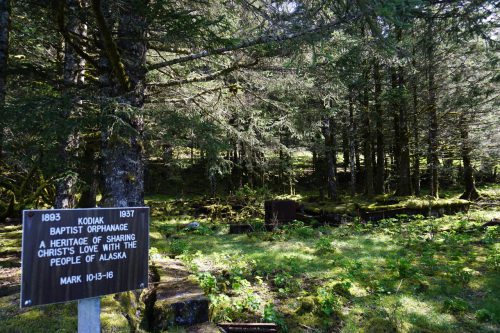
A black sign with white letters is on the left beside a grove of tall trees and the moss-covered ruins of a building.

When Asked if the World Would End They Answer No

An Indigenous anthropologist-poet visits Woody Island in Alaska, formerly the site of the Kodiak Baptist Orphanage in the early 20th-century, where her great-grandfather lived before being sent to the Carlisle Indian School.
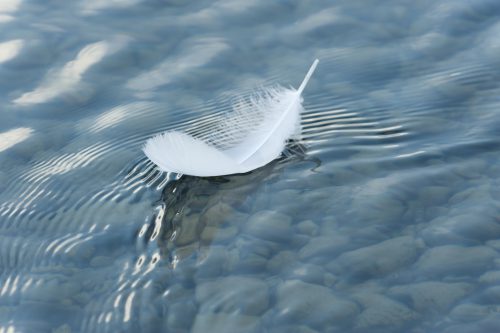
white feather floats on clear water with rocks at the bottom.

Matrilines

An Indigenous anthropologist-poet searches for ancestors while acknowledging the need to adapt.
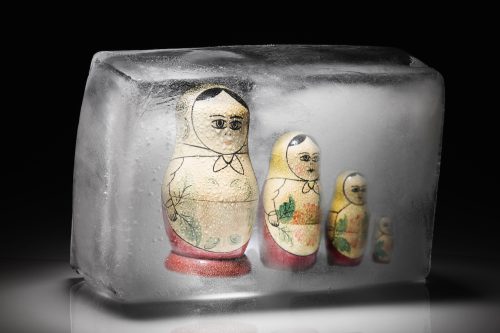
Four painted Russian dolls of different sizes lined up from largest to smallest frozen in a block of ice.

Matryoshka Song

An Indigenous anthropologist-poet speaks to the Russian colonization of Alaska from 1784–1867 and how stereotypes and histories shape the lives of Indigenous women.
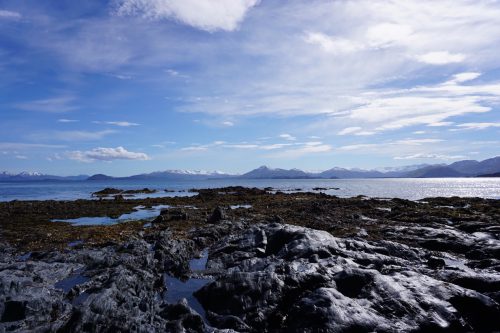
A landscape image shows a blue sky with clouds over rocks leading out to water and mountains in the distance.

Dressing Fish

The Sugpiaq people in south-central Alaska have faced Russian colonialism, American assimilation policies, and Native American boarding school violence. A descendant and anthropologist-poet claims a radical presence in looking to the past and the future.