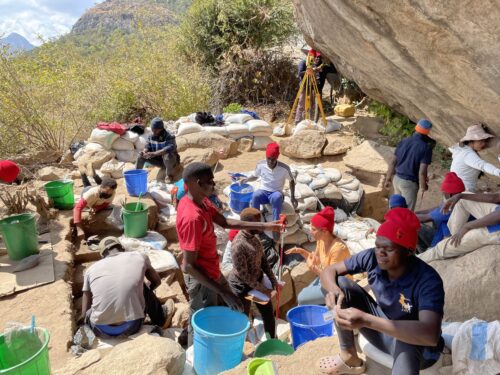
In Human Origins Research, Communities Are the Missing Link
A paleoanthropologist reflects on relationships between researchers and communities living around sites relevant to human evolution.
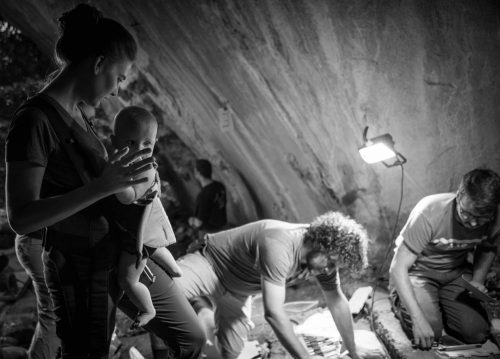
Decisiones difíciles en la encrucijada de la maternidad y el trabajo de campo
Dos antropólogas que han realizado trabajo de campo estando embarazadas, o recientemente convirtiéndose en madres, comparten con valentía sus experiencias personales y hacen un llamado a crear culturas laborales favorables a la familia que se alineen con la evolución humana.
Impossible Choices at the Crossroads of Motherhood and Fieldwork
Two anthropologists who’ve conducted fieldwork while being pregnant or new moms bravely share their personal experiences and call for family-friendly work cultures that align with human evolution.
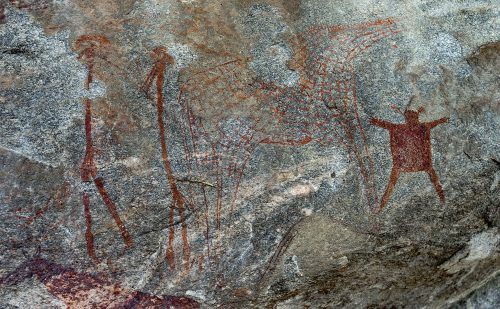
What Ancient DNA Reveals About Life in Africa 20,000 Years Ago
Newly sequenced African aDNA shows dynamic ancient migratory patterns and interactions around the Later Stone Age that shaped human history.
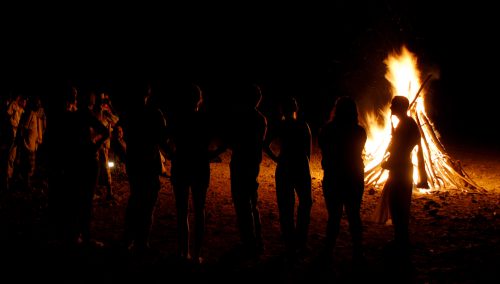
How Early Humans Shaped the World With Fire
An archaeological project in Malawi shows how nearly 100,000 years ago, humans used fire to create wide-scale, permanent transformations of the natural environment. It's time to abandon the idea of “pristine nature.”